- Sustainable fashion, darling.
- “The world’s leading international researchers will review the history of climate change, appraise the current state of the science and identify adaptations for the future.” It says here.
- Fiji suddenly discovers yams.
- Genebank romance in Durango. Well, that felt good.
- Animal Genetic Resources vol 8 is out.
- Locavores go crazy on Guam.
- Cocoa origins celebrated. And why not?
- Seems like every few months there’s something else on how those southern Iraq marshes are being brought back to life. But what I really want to know, and nobody is saying, is if there are any crop wild relatives there.
Variety Savers of Europe try to unite
The European Network of Breed and Seed Savers is a website for listing all keepers of indigenous livestock breeds and culivators of indigenous cultivated plants found in Europe. Variety-Savers should be used to network, to share information, to list events and to sell products and services relating to conservation of European agrobiodiversity.
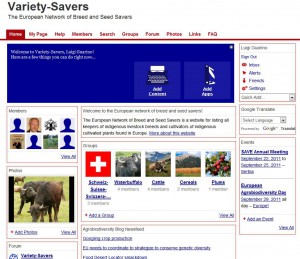 Just off the ground, and only 14 members so far, but this looks like an interesting initiative. Especially if it manages to bring formal-sector genebanks closer together with on-farm conservation practitioners and amateur heirloom enthusiasts. You do have to register, but it’s fairly painless, and the website provides some fancy social networking tools. Very best wishes!
Googling crop production
Speaking of Google, can it be used to map crop production, the way it can be used to map outbreaks of flu or dengue? Well, according to Google Insight for Search, this is the pattern of searching for the word “soybean” you get for China.
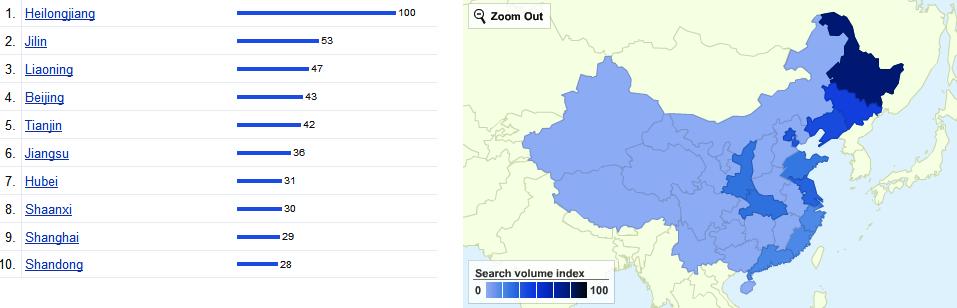
And this is one of the nicer maps of soybean production in China I was able to find online:
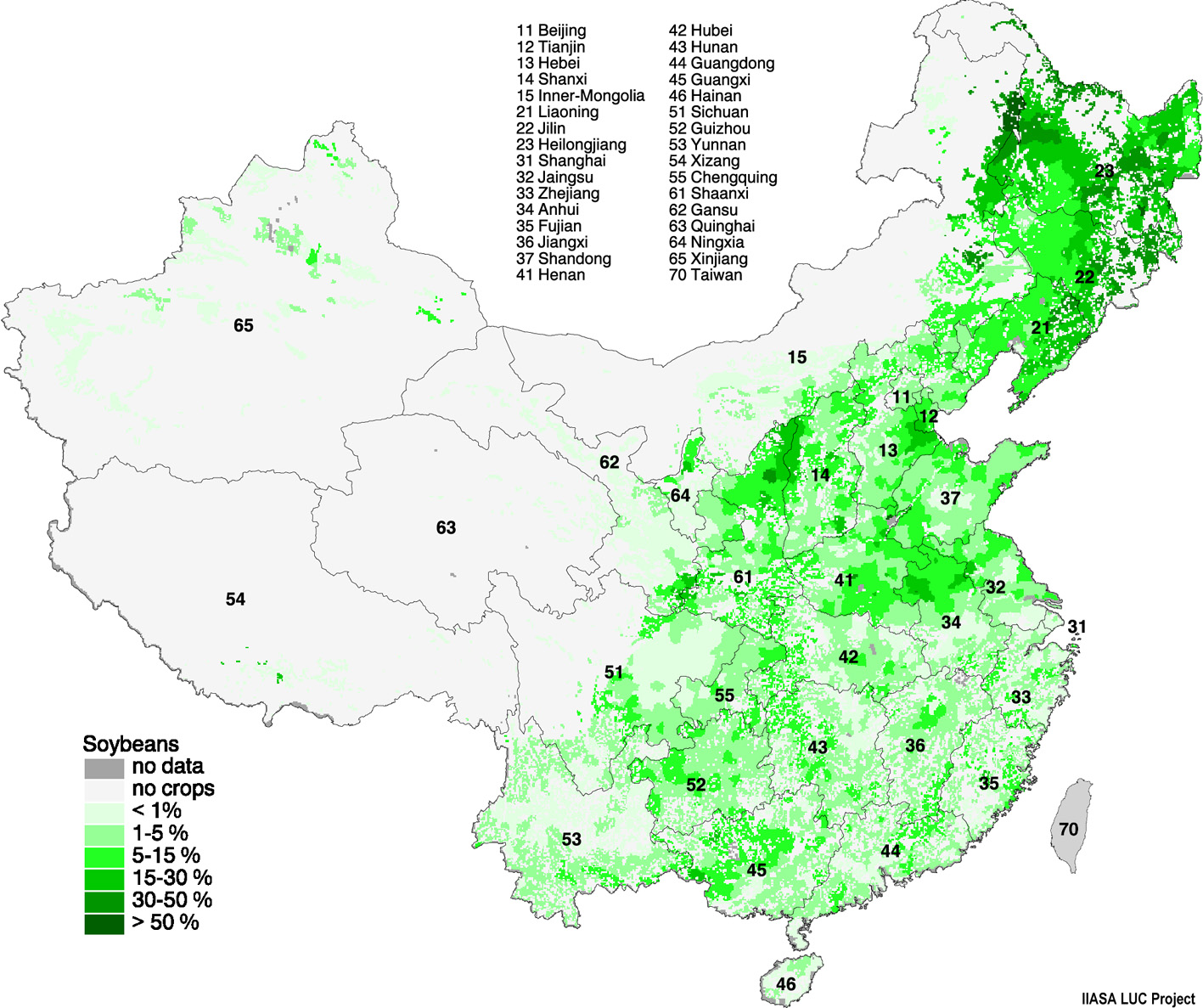
Not bad, but not great. Pretty much the same for Brazil. I guess it was worth a try, but if you want production maps for crop X, your best bet is still to just search Google Images for, well “X production map.” Or maybe ask the CGIAR or FAO GIS tribe. No, wait…
Food Desert Locator smackdown
We expressed some doubts about the Food Desert Locator a few days back. Now it’s Gary Nabhan’s turn.

Causation sought between seed banks and vitamin D deficiency
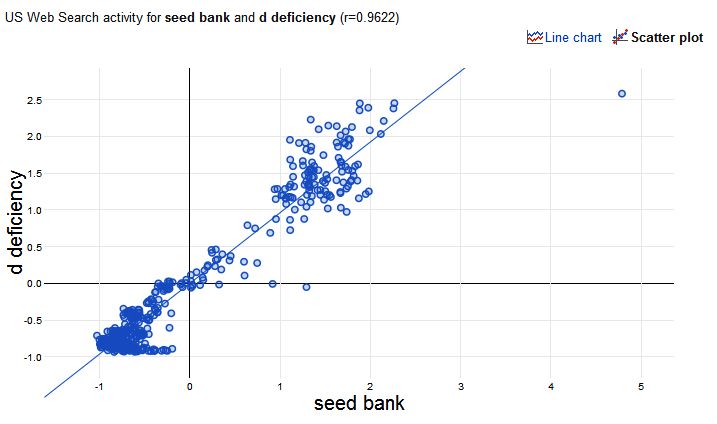 Google has a new thing where you put in a search term and it tells you what other terms showed a similar pattern of search over time since 2004, at least in the US. So of course I played around with it for way too long, but pretty much nothing of interest turned up. Except for one, strange thing. It seems that the time pattern shown by searching for the term “seed bank” is very highly correlated with a number of permutations of the search for “vitamin D deficiency.” Any idea why that should be?