- Newly-named urban extremophile fungus survives on angels’ share.
- 1493. An oldie but goodie. And the book version is on its way.
- AVRDC lists the 6 principles of food value chain research.
- El cuexcomate, un nuevo blog en español, acerca de “agricultura, plantas útiles, etnobotánica, comida … desde México.” Bienvenido!
- Women more interested than men in better-tasting maize. Maybe El cuexcomate will comment.
Wanna talk to a coconut expert?
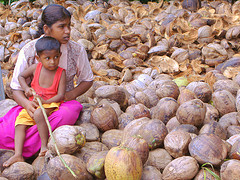 Via the Coconut Google Group, Coconutexperts.com
have announced that they are planning to interview Dr V. Arunachalam, Principal Scientist (Horticulture) and section-in-charge of the Indian Council of Agricultural Research institute in Goa. Dr Arunachalam has wide experience in horticulture, plantation crops, plant genetic resources, cropping systems, biotechnology and bioinformatics.
If you are interested in any specific topic or subject which requires clarifications or information, please send an email to admin-at-coconutexperts.com or coconutexperts-at-gmail.com. We will make sure to include your questions during our interview. We will publish the interview script in our Web site. The interview is tentatively scheduled on 8 June, 2011. Please make sure send your questions before 8th June.
An interesting initiative.
The mother-in-law and the Useful Tree Species for Africa
ICRAF have a nifty new tool out called “Useful Tree Species for Africa.” I’ve been playing around with it and I have to say it’s impressive. Not altogether easy to use, but impressive. If you’re at all into using native trees in Africa — for whatever reason or purpose — you’ll want to explore it. Here’s a taste of what it can do.
You download the kmz files from the ICRAF website and open them in Google Earth. 1 Then you think of somewhere you’re interested in. In my case, as usual in these situations, I chose the site of the mother-in-law’s spread above Limuru in Kenya. Useful Tree Species for Africa first tells you what sort of vegetation is potentially found there, according to White’s iconic Vegetation Map of Africa.
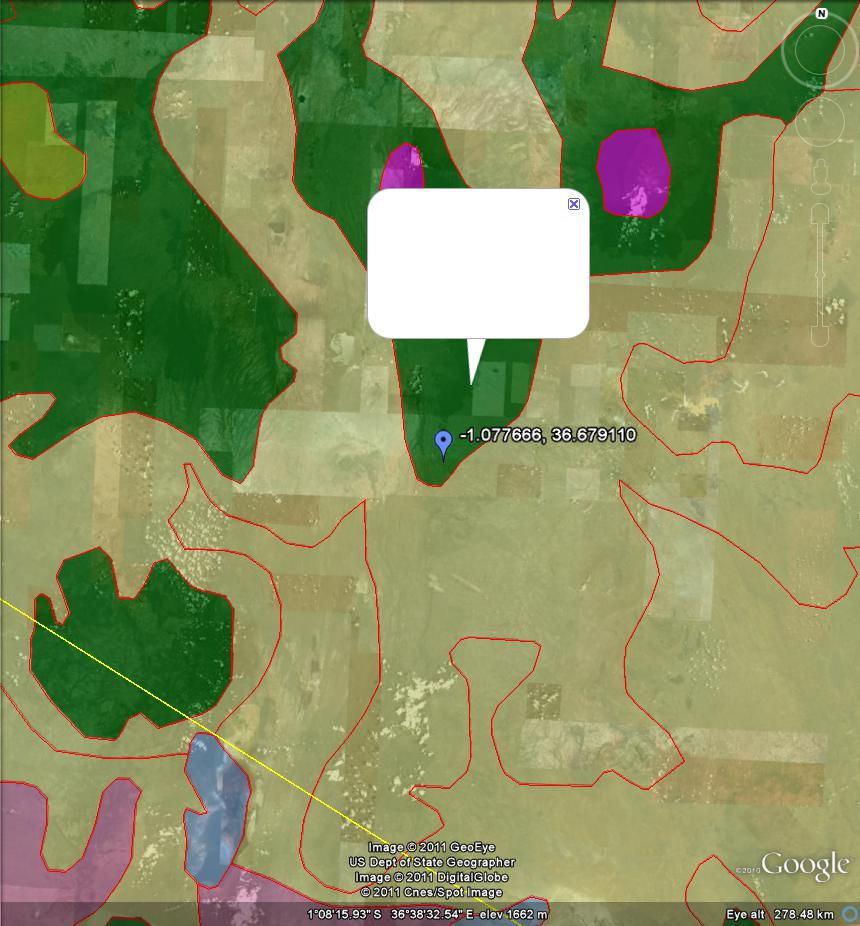
In this case, it’s “M19a Undifferentiated Afromontane vegetation (viii AMCE)”. What does that mean? Well, there’s a hyperlink which gives you more information on Mapping Unit 19a:
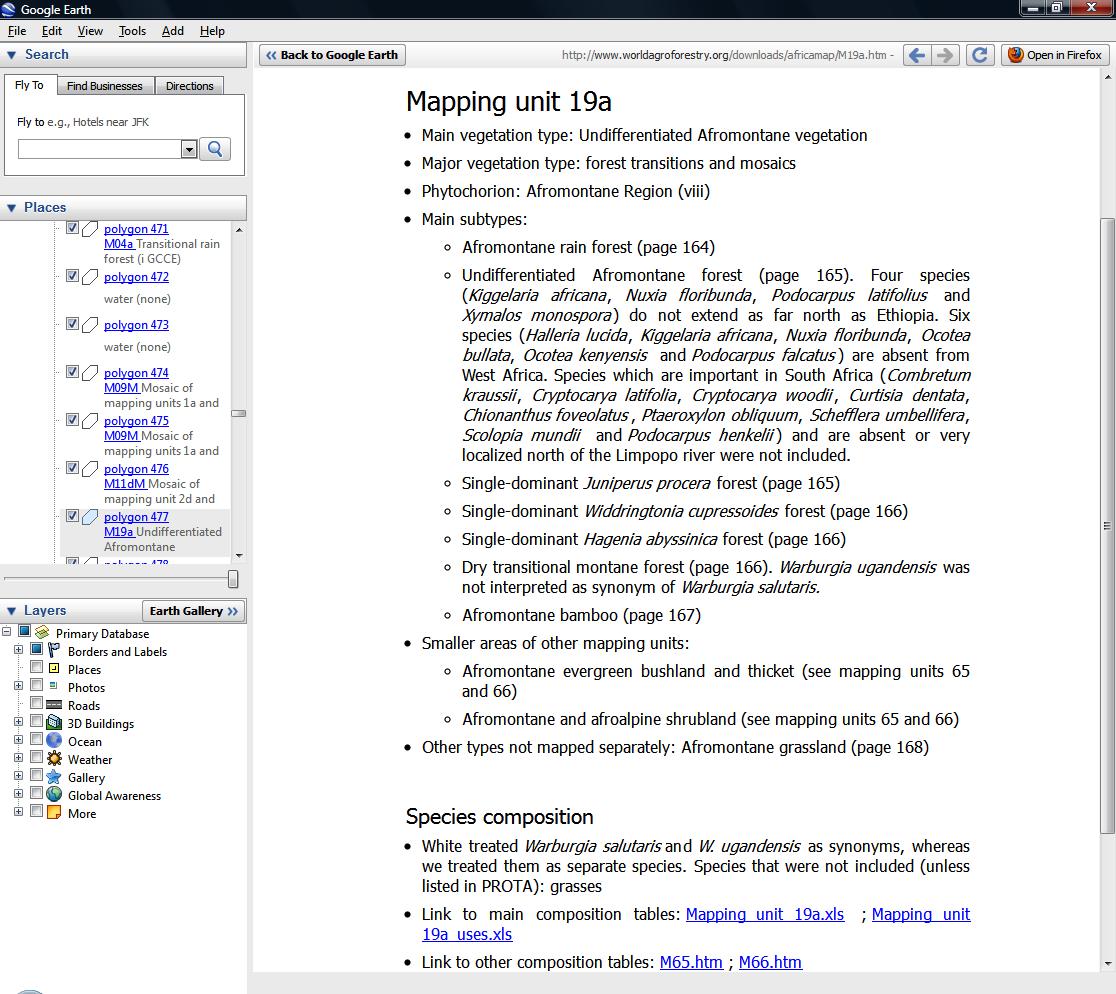
Crucially, this page, which opens in Google Earth, includes more hyperlinks, to four different species tables. Say you are interested in tree species found in this sort of vegetation that can support honey production. You click on the hyperlink labelled “Mapping unit 19a_uses.xls.” That in turn opens an Excel spreadsheet with a list of about 50 tree species and lots of different types of uses. You sort the species on “Bee fodder” and you get a shortlist of about 17 species, from Albizia gummifera to Syzygium guineense. Clicking yet again, this time on the species name, takes you to the PROTA page on the tree, with lots more information. Now, what would be really cool in due course would be a cross-link to ICRAF’s Tree Seed Suppliers Directory, so that you could work out where to get seed of your useful tree.
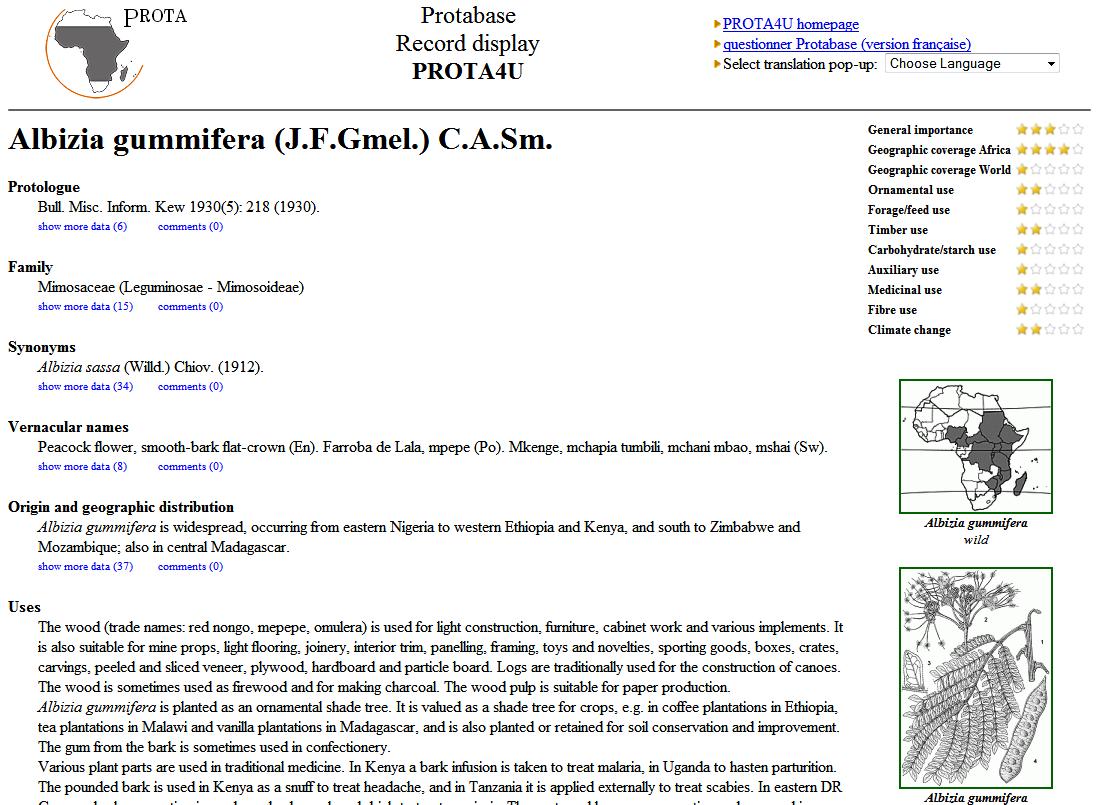
As I say, nifty. Lots of clicking, and opening of webpages, and of spreadsheets, and of more webpages, but you do end up with the information you want. If your query is place-based rather than species-based, that is. I don’t think the tool will let you start with a useful tree and work out where you can grow it, rather than start with a place and work out what can grow there. But let me play around with it a bit more. Maybe I’m wrong.
Fear not, teachers of FGR, help is at hand!
In response to increasing demand for capacity building on forest genetic resources (FGR), Bioversity has just launched a training manual for forestry practitioners, lecturers, trainers and students to increase understanding of how to manage diverse and complex forest and other tree based ecosystems sustainably. It can be used for teaching and learning about FGR issues both in formal education and on-the-job training.
So we are told, and so we believe, and we’re more than happy to spread the word. The training materials include, among other things, videos on Youtube (see below), and PowerPoint presentations on Slideshare. All that’s missing is a Facebook page and a wiki and the Web 2.0 makeover will be complete. Happy learning — and teaching!
CIAT and climate change and blogging
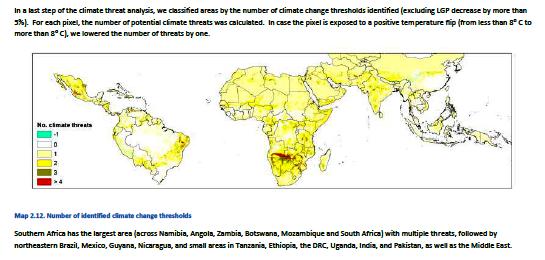
“Using blogs and new media to tell the story of climate change and adaptation”, did you say? Let CIAT show you how. On the same day, their multifarious blogs sport a post on the new climate change book on the block, “Crop Adaptation to Climate Change,” from Wiley, to which they have contributed massively. And also a handy summary of the CGIAR Climate Change, Agriculture and Food Security Research Program’s “Mapping hotspots of climate change and food insecurity in the global tropics,” CIAT being the lead centre in CCAFS. There’s also a press release on the hotspots report. However, if the word “hotspots” conjures up visions of the possibility of precisely and reasonably narrowly targeted interventions, beware. In this game, as in many, I suppose, it really does all depend. This below is as good a candidate for the money map as any. But you really do have to read the whole thing, and look at all the maps. And there’s a lot of them. They’ll all be available as Google Earth files soon, right guys?
LATER: And they make it into Time!