- The conservation value of germplasm stored at the Millennium Seed Bank, Royal Botanic Gardens, Kew, UK. 10% of about 40,000 taxa, >8% of collections, are either extinct, rare or vulnerable at global and/or national level; 20% of taxa, representing 13% collections, are endemic at the country or territory scale. And the cost, though?
- Genomes of 13 domesticated and wild rice relatives highlight genetic conservation, turnover and innovation across the genus Oryza. Lots of things for breeders to play around with. Australians especially pleased.
- Our House Is Burning: Discrepancy in Climate Change vs. Biodiversity Coverage in the Media as Compared to Scientific Literature. Biodiversity conservation community really bad at getting the message out.
- Diversity of management strategies in Mesoamerican turkeys: archaeological, isotopic and genetic evidence. Separate domestications in Mesoamerica and SW USA; two types in former, one fed crops and the other, more flamboyant type, left to roam; neither eaten.
- Functional traits in cover crop mixtures: Biological nitrogen fixation and multifunctionality. Design mixtures with complementary plant traits for maximum on-farm benefit.
- Plant genetic resources for food and agriculture: opportunities and challenges emerging from the science and information technology revolution. The future is Norway.
- Quantifying progress toward a conservation assessment for all plants. A quarter done.
- The earliest occurrence of a newly described domesticate in Eastern North America: Adena/Hopewell communities and agricultural innovation. Erect knotweed used to be a crop, a mainstay of the Eastern Agricultural Complex. Now it’s a weed. Can the same be said of other plants? Well, maybe.
- Conserving honey bees does not help wildlife. Wild bees, that is.
- Breeding implications of drought stress under future climate for upland rice in Brazil. Wide adaptation of upland rice in Brazil is not going to cut it.
- Farm production diversity and dietary quality: linkages and measurement issues. Cash is often better than production diversity at predicting dietary diversity.
- Tropical forage legumes for environmental benefits: An overview. Ruminant livestock production need not be bad for the environment. Useful list of research needs to make sure.
- Complete mitogenomes from Kurdistani sheep: abundant centromeric nuclear copies representing diverse ancestors. There are lots of bits of mitochondrial DNA near the centromeres of all chromosomes bar the Y. Is that a problem for phylogenies?
Nibbles: African pollinators, Wild wheat, Brazilian meet, Bamboo meet, Old seeds, Rice diversity, 5282, Frozen grapes
- Call for proposals on African pollinator informatics.
- The Linnean Society puts “Wheat Taxonomy: the legacy of John Percival” online. Heroes all.
- The Brazilian genetic resources congress gets a Facebook page.
- There’s also a bamboo and rattan congress coming up.
- A time capsule is dug up in Canada, and it’s got seeds!
- Seeking rice SNPs? Use snp-seek.
- What links the Dutch Easy India Company with a measles outbreak in the US? The answer will probably not surprise you.
- We really need some new wine grape cultivars. I mean REALLY new.
Martha has a winner!
https://twitter.com/Prizeo/status/959228601899061250
Congratulations, Jennifer. Have a great time.
O Canadian genebank, we stand on guard for thee
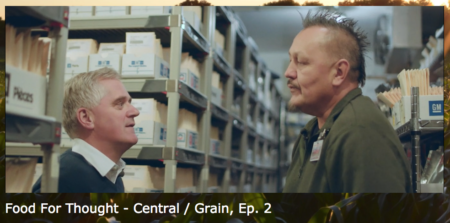
Art Napoleon is a Canadian “TV producer/songwriter/adventurer/wild game foodie…weekend shape-shifter & extreme berry picker,” which sounds like a pretty cool gig. You can watch him talk about Canadian agriculture, and the role the national genebanks plays in it, on the documentary Food for Thought. He visits the genebank about 16 minutes in, but watch the whole thing. In the screenshot below, one guy is Art, the other is the head of the genebank. I’ll leave you to guess which one is which.
Nibbles: Wild wheat & rice genomes, Lost American crops, Bread Lab, Tea symposium, Burping cows, Australian botanist, Ecuadorian landrace pics, Red listing, Fermentation PhD, Cheese rind microbes, HRH reception
- Goat grass genome to the rescue.
- No, some other weedy grass genomes to the rescue!
- Weeds could actually be lost crops.
- Clif Bar endows Bread Lab.
- Symposium on the future of tea. Mother-in-law alerted.
- You’ll need milk for that tea: breeding cattle for more production and less burping.
- Aunty Fran Bodkin: Australian botany hero.
- Field Museum field guide to Ecuadorian landraces. Of all things.
- Learn about red-listing.
- Study the microbial communities of cabbage leaves.
- Cheese rind has complex microbial communities too.
- So, anyways, this was fun.