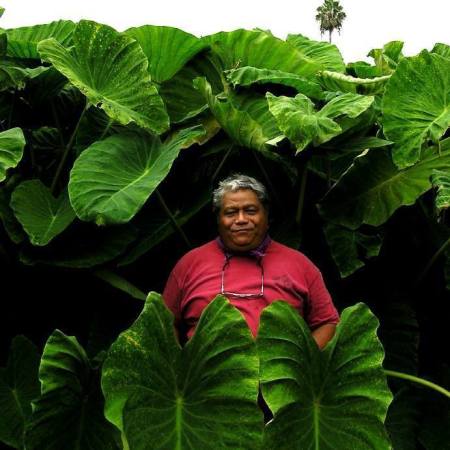
Could not resist reposting (with his permission) this photo of Jerry Konanui that he shared on his Facebook page recently. That’s just the largest taro I’ve ever seen. You can read more about Jerry on the Kupuna Kalo website.
Jerry Konanui is a Native Hawaiian Mahi‘ai (farmer) who gathers, grows, maintains and provides the many varieties of Hawaiian food crops. As a resource person he is called upon to provide hands on workshops on identification of Hawaiian food plants, their varieties, their propagation, cultivation, harvesting, processing and use throughout the Islands.
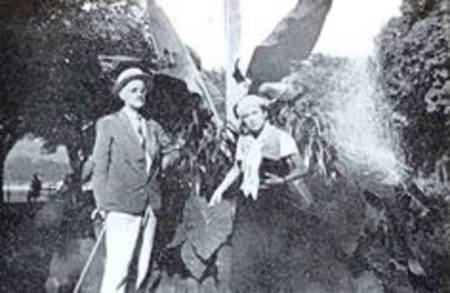
Oh, and just for good measure, feast your eyes on another impressive aroid photo.