- A distinctly US flavour to Nibbles today, for some reason.
- A map of every goat in the US. Texas is the goat hotspot.
- Not there with dogs yet, but at least we now know when they arrived.
- How about sheep, though?
- Interestingly, there are more wineries than breweries in Texas.
- Saving the winegrape, molecule by molecule. Including in Texas?
- Saving Southern cooking, seed by seed. You remember that peanut thing from yesterday?
- But Pennsylvania cooking?
- How about Cherokee cooking?
Nibbles: Svalbard recruitment, Barley breeding video, Orphan crops breeding, Agroforestry double, Afghan pomegranate, Australian hazlenut, DivSeek video, Raspberry breeding video, Strawberry fungi, OFSP, Genebanks, Old chiles, Mexican cuisine, Shakesperean sallat, Dietary diversity, Seed exchange, European wild animals, Dutch AnGR, UK indicators, Millets promotion, Wheat extravaganza, Deforestation map, Chickens & turkeys, Ancient horses, Kenyan grass, Olive pests, Penang anniversary
- Sorry about the light blogging lately. I’m on leave and Jeremy is in the manure. Thankfully Robert has been picking up the slack lately, apparently because he has nothing better to do. Anyway, here’s a juicy roundup of Nibbles covering the past week and more. Starting with this stunner: Svalbard needs an adviser!
- Breeding better barley: The video. No videos, however, on breeding Africa’s orphan crops. Yet.
- Some of those are agroforestry species. Which is not confined to Africa, of course. But pomegranate is not included, alas for the Afghans. Nor the hazlenut, alas for the Australians, who will however admittedly probably sequence the thing themselves.)
- DivSeek does have a video, though.
- Even raspberry breeding has a video. But if this strawberry hack works for other plants, breeders might not be needed at all :)
- Orange-fleshed sweet potato folks meet in Ghana for annual jamboree.
- An insurance policy for agriculture? Yes, you guessed it.
- Recovering the NM chile. Hot stuff from a cold place. Yes, you guessed it. Again. (BTW, not only important in New Mexico.
- How to make a 17th century sallat. You heard me.
- CIAT on getting ahead of dietary trends. No, not from the 17th century. This being the current situation, however. And more specifically for dietary diversity among women. Yes, it’s all about diversification. Including in homegardens. Which were the great love of the great, late Olga Linares.
- The benefits would be so great to get nutrition right. And yet we haven’t. And without Olga it’s not going to be any easier. Maybe we could start by curing Indians of their pizza habit.
- The largest seed exchange in the world. It says here. There I was thinking it was the CGIAR genebanks.
- Rewilding Europe. Kinda sorta.
- The Dutch have new policies on conserving livestock genetic resources. At least yaks are not an issue.
- Meanwhile, the UK biodiversity indicators include one on crop genetic diversity.
- Maybe all it needs is better marketing, like these millets?
- Or perhaps a data portal, like wheat’s.
- Which may soon be out of date for the Punjab. Or should be, anyway, according to this IFPRI study. And also for the US, according to this maverick breeder getting a writeup in the NY Times.
- Be that as it may, help is on the way for wheat, in the form of its wild relatives. According to some people who should know.
- Interactive global deforestation map. Because we can.
- Black chicken? And why not? Not Icelandic, though, I’m willing to bet. Chickens? “…it was the forced opening of China by the West in the 1840s that made the modern [chicken] possible.” Not so the turkey, though.
- Ancient horse breeders liked spots. And then they didn’t. And then they did…
- Disease resistant Napier grass in Kenya. Must ask the mother-in-law whether she has some.
- Oh dear, Italian olives are in trouble. Again. Ah, yes, the olive, symbol of peace.
- Penang Botanic Gardens has a big birthday.
- Hope that keeps you going for a while…
Jerry and the Giant Kalo
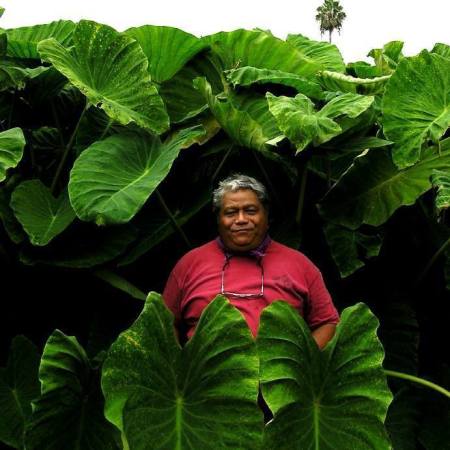
Could not resist reposting (with his permission) this photo of Jerry Konanui that he shared on his Facebook page recently. That’s just the largest taro I’ve ever seen. You can read more about Jerry on the Kupuna Kalo website.
Jerry Konanui is a Native Hawaiian Mahi‘ai (farmer) who gathers, grows, maintains and provides the many varieties of Hawaiian food crops. As a resource person he is called upon to provide hands on workshops on identification of Hawaiian food plants, their varieties, their propagation, cultivation, harvesting, processing and use throughout the Islands.
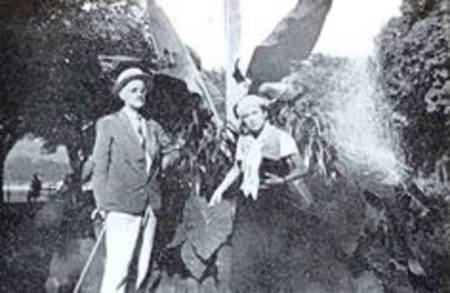
Oh, and just for good measure, feast your eyes on another impressive aroid photo.
Nibbles: Quasilocavore, Returning potatoes, Singapore veggies, Floating gardens, Timber trees, Allanblackia, Cranberry glut, Wild turkeys
- Sure, eat locally. But not too much.
- Andean farmers don’t have much of a choice about eating locally, but at least now they have more potato varieties to choose from.
- Growing your own is about as local as you can get in Singapore.
- Maybe they should do it the Bangladeshi way.
- A list of the world’s commercial timber trees (pdf). Can’t help thinking they should have made more of this.
- Which doesn’t include Allanblackia.
- Let them eat cranberries.
- Wild turkey with that?
Nibbles: R&D, Cheese double, Cali candied yams, Sustainable joe, Soy & deforestation, Cereals in Sudan, Big Ag, History of breeding
- ASTI says agricultural research investment in Africa is bearing fruit and needs to double.
- There’s a cheese revolution going on in America’s heartland.
- Meanwhile, the UK is worried about fake goat cheese.
- “Apparently, Californians like well-tanned sweetpotatoes.” Well of course they do.
- Good coffee AND conservation? I’ll take it.
- Soy AND conservation in Brazil? Well, not quite, but good news nonetheless.
- Cereal cultivation in Sudan pushed back several hundred years.
- What are the conditions for success in large-scale agricultural initiatives? You tell them.
- The history of crop improvement 101.