- Do they know it’s Christmas? Stocking-filling books for do-gooders.
- Wonder if any of them talk about using markets to deliver nutritious food.
- The surprising secrets of baobabs, among other plants. I thought we knew all there was to know about baobabs, what with all those factsheets.
- The Global Nutrition Report in 12 sound-bites. No sign of baobabs.
- Russians in a tizzy about their buckwheat. If only they’d had a factsheet.
- Everybody in a tizzy about European olive oil. Maybe they should try the American stuff?
- “When skunk was created the people doing it had no idea they were altering the ratios of CBD and THC — they just kept breeding the plants that gave the strongest high and threw the rest away.” Ouch. But fear not, help is at hand.
- Restoring wild turkey populations is screwing up its subspecific structure, pissing off taxonomists no end.
- Bolivians do not appreciate cheap Peruvian quinoa. Hipsters unavailable for comment.
- No, LA’s wild quinoa is not going to put too much of a dent in global food shortages, nor interest many hipsters, but it’s a fun story. Too bad wasn’t mashed up with the US crop wild relatives prize-winning paper.
- Cool crop domestication infographics.
- Plant geneticists are from Mars.
Nibbles: Farmers’ markets, Pacific news, Solanaceae news, Globally Important Agricultural Heritage Systems, Tibetan barley, Rice roundup, David Lobell interview, Native American crops, Mesopotamian recipe, Insectophagy, Cities, Land purchases, Dormancy in evolution, Bad news from some crops, Good news from others, Creative Commons at Gates
- Hell of a week in the office again, so catching up on accumulated Nibbles on a Sunday. Because we’re here to serve.
- Cynical, funny take on farmers’ markets: “No, I don’t save seeds. That’s time-consuming nonsense for backyard gardeners. Yes, I’ve heard of Monsanto. I’m a farmer. I know about goddamn Monsanto.”
- Uncynical double from the Pacific: Samoa’s agricultural show and more detail on the aroid breeding work.
- High tech breeding of solanaceous crops. Nothing like this for aroids yet, alas. Yeah, but first you have to collect the little blighters.
- On the other hand, you also need an awareness of the past. Ask the Tibetans.
- And here’s kind of an example of that involving rice in India. Compare with that first Nibble: seed saving not just for backyard gardeners after all? Convinced? Go do it, no, really. Or read Bob Zeigler; you can listen to him too. We could go back and forward on this forever. I know: let’s get some data.
- And another example involving wild not-rice in the US and Canada. Though there are some things that haven’t survived quite as well among Native Americans as those wild rice recipes.
- And speaking of ancient recipes, here’s one from another wetland, far far away from the above.
- Yeah but not all ancient recipes are so resilient, take beetles for example.
- Urban farming is big, needs to be bigger.
- Meanwhile, agricultural land is being bought up all over the place, for what it’s worth, so maybe cities will be all we have to grow stuff.
- International Cocoa Organization calls bullshit on all those chocolate-is-running-out stories.
- Maybe we should chill about wine too? I dunno, I think I’d prefer to play it safe with both. Or get help from above. Or from the Fascists.
- The banana was going extinct too, wasn’t it?
- British apples (and other trees, to be sure) are of course perennially in trouble, but help is on the way, courtesy of Kew. And not just British or apples that get help from that quarter.
- “The potato will not only survive climate change, it will help us to survive it as well.” Good news at last.
- Mapping cassava, all of a sudden an exciting new crop, if you can believe it. No stopping it now that Bill Gates has called it the world’s most interesting vegetable.
- Incidentally, he’s also decided to go totally CC-BY.
- And that’s all she wrote. For now.
Nibbles: Chocolate, MAS, Cash crops, Medicinal plants, Rice domestication, Cat genome, Banana research, Artichoke history, Root vegetables, Diabetes data, eMonocot, Paris herbarium, Appleseed, Seed saving, Potato safety duplication, Seed atlas, Botanical Jurassic Park, Mapping urban fruit, Midwest road trip, Iraqi marshes, World Digital Library, World Parks Congress, Plant demography
- Ok here goes, there’s a week’s work of Nibbles we’ve got to catch up on.
- World running out of chocolate! Tell that to Cologne.
- Yeah well I prefer tea to cocoa.
- Greenpeace: “Smart breeding” will save us, not GMOs. Breeders: All breeding is smart.
- Guess the world’s biggest cash crop. Yeah, that one.
- Alas, it’s not included in the recent strategy for conserving medicinal plants. Not that it would need conserving.
- The domestication of the world’s biggest crop, period. Deconstructed. And if you want to drill down.
- And of the world’s biggest fruit.
- And of the world’s biggest pet.
- And of the world’s most difficult to eat vegetable.
- Root “vegetables” made simple. Because winter.
- And why you must eat your veggies, including the difficult ones.
- Videos on Kew’s monocot database and on the renovation of another famous herbarium.
- The real Johnny Appleseed.
- But you too can save seeds, just like Johnny.
- But don’t forget to safety duplicate, like CIP has done, at Embrapa.
- And this shows you what those seeds can look like.
- You don’t necessarily need seeds to save plants, though.
- Mapping fallen fruit. Because we can.
- Road trip!
- Boat trip!
- Selected Techniques in the Art of Agriculture. From French to Turkish to Arabic. One of many nifty agriculture-related resources in the World Digital Library.
- Oh yeah, the IUCN World Parks Congress has been on and its all over the intertubes. Including with neat visualizations, natch.
- How many of the species in the COMPADRE database of plant demography information are in protected areas? How many are crop wild relatives? I need an intern.
Lots of old book illustrations now online
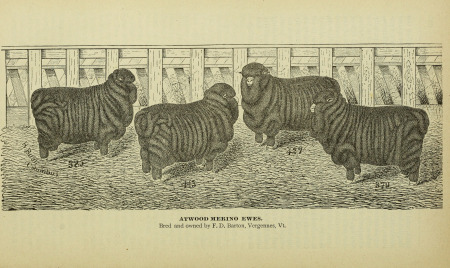
A Yahoo research fellow at Georgetown University, Kalev Leetaru, extracted over 14 million images from 2 million Internet Archive public domain eBooks that span over 500 years of content. Because we have OCR’d the books, we have now been able to attach about 500 words before and after each image. This means you can now see, click and read about each image in the collection. Think full-text search of images!
Very cool. Interested in sheep breeds, say? Go crazy.
Nibbles: Prof Brian Cox is cool, GRAIN vs Gates, Fragaria law suit, Central Asian fruits, Ecoagriculture, Forage breeding risk, WPC 2014, Nutrition trifecta, MSB funding, European seedsters support IT
- Final Human Universe episode features Svalbard Global seed Vault.
- GRAIN objects to where Gates Foundation spends its money. Nobody much cares.
- Latest on that UC Davis strawberry breeding programme debacle.
- Yes, bears do shit (apple seeds) in the woods. And some context.
- A conference for the hippy in all of us.
- The dark side of pasture breeding. Super-weed, I am your father!
- World Parks Congress on soon too.
- No access to healthy food? Use your mobile! Watch a video! Grow traditional crops!
- Toyota funds the Millennium Seed Bank.
- ESA supports the ITPGRFA. Speak Up For Seed!