- Thai king has crop genebank on palace grounds.
- Fish in jars.
- Planning Plant Clinics.
- Plant Breeding for Drought Stress: The Project.
- Wait, the Nebraska National Guard has an agribusiness development team? Maybe they should talk to the people responsible for the previous bullet point?
- Kids! (And adults!) An Art Contest to celebrate ‘Ulu. Breadfruit, that is.
- Use of Agrobiodiversity for Pest and Disease Management. A slide show from Carlo Fadda at Bioversity.
- 3rd Annual Biodiversity Working for Farmers Tour in Idaho. 23rd June, you have been warned.
- Huge New York Times story on plant breeding and climate change.
- Bill Gates hails creativity for small farmers challenge.
- American ginseng: use it or lose it.
- Do you live in Ann Arbour? Do you want native plants for your garden? Yeah but how about American ginseng?
Collecting germplasm in the Iraqi desert
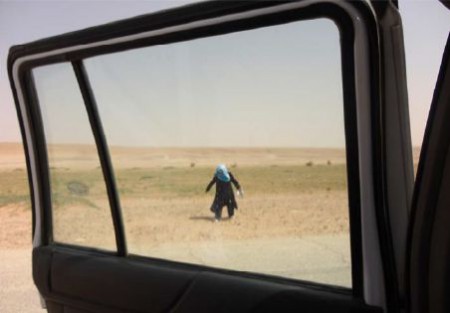
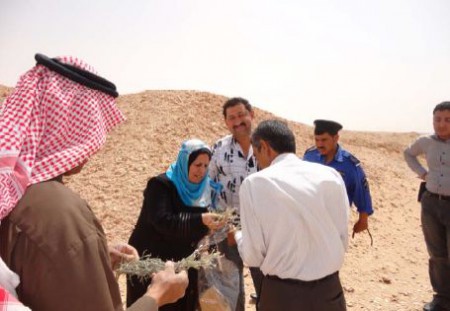
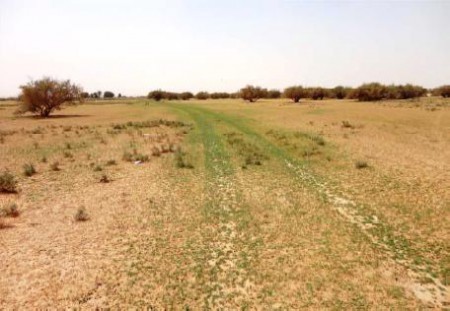
You may remember the story of Mrs Sanaa Abdul Wahab Al-Sheikh of the Iraqi genebank. Well, she’s still collecting away, most recently in the deserts of southern Iraq. Here are a couple of the photographs she recently sent me.
Nibbles: Genebank, Sweet wheat, Participatory Research, Land “grab”, Yampah, Vegetables, Tea, Chilling, Rainforest products, Asses, Climate proofing, Natural products
- A look inside the big USDA genebank at Fort Collins. Whatever next?
- Sweet wheat. Whatever next?
- Farmers must participate in agricultural research in Europe. Whatever next?
- “Come and farm our virgin lands, Ethiopia tells India.” Whatever.
- “You may already know that yampah (Perideridia gairdneri) is a North American umbellifer.” Er, no. Tell me more.
- After cloves, vegetables? Zanzibar’s farmers increase productivity.
- More news for Luigi’s MIL: Future Climate Scenarios for Kenya’s Tea Growing Areas.
- Is this the end of trail mix?
- Body Shop uses wins award for using Cameroonian rainforest honey and wax from CIFOR-supported beekeeping project.
- Fancy a glass of ass’s milk? Totally SFW.
- Everybody is climate-proofing crops.
- The BBC looks at medicinal plants.
What is and is not going to happen with antimalarial trees
 ICRAF’s project and publication on trees with antimalarial properties has made it into the prestigious medical journal The Lancet. Kudos indeed.
 UnLike that article, fortunately, the ICRAF publication is not behind a paywall. The project has been much in the news, and rightly so, but at least one report is inaccurate in suggesting that ICRAF are planning a major effort on ex situ conservation of antimalarial trees. This is how The Star entitled its article when the book was launched: “ICRAF starts trees gene bank project in Nairobi.” And this was their lede:
A project to document genetic properties of more than 3,000 forest trees across the continent has started in Nairobi.
In fact, ICRAF already has a genebank, of about 200 species, and there are no plans to either expand that to 3000 species or specifically focus on collecting antimalarials in the future. According to our sources, The Star correspondent may simply have conflated the malaria book project with the results of a recent meeting at ICRAF on the State of the World’s Forest Genetic Resources.
LATER: My sincere apologies to The Lancet. That paper is NOT behind a paywall. You just need to register. Which takes a bit of time and effort but does not involve the exchange of currency. Sorry!
Nibbles: #Agchat, AGree, Tree genebank, Potato genebank
- Straws in the wind or portent of change? Why Farmers Are Embracing Social Media: the #AgChat Story
- Straws in the wind or portent of change? AGree (geddit?) Transforming Food and Ag Policy. See also Marion Nestle’s commentary and comments therein.
- More on the medicinal trees genebank in Nairobi.
- And just look at the new website of the International Potato Center genebank. Part of a complete makeover.