- Latest on the ICARDA genebank from the author of The Profit of the Earth.
- Honey diversity in Mexico.
- Speaking of which, did we already point to the new, improved Non-wood Forest Products Newsletter?
- The schisandra berry is apparently helping save the panda. Yeah, I never heard of it either, but more power to its elbow.
- Make your day better by looking at pictures of aquatic camels.
- Oh, here we go, cue the endless stream of stories about how genomics will save beer.
- “In the last century, 94% of the world’s seed varieties have disappeared.” No, they bloody haven’t. Only linking to this for completeness.
- Breeders get into flavour. Because celebrity chefs.
- That’s one tall maize plant. No, but really tall.
- The Great Plains are in Great Trouble: “Hundreds of species call the prairie home… A cornfield, on the other hand, is a field of corn.”
- A project dedicated to the genetic improvement of US rosaceous crops. Love that word. Rosaceous.
- Eat those millets!
- Sesame opens doors in Tanzania. See what I did there?
- Interview on conserving Europe’s livestock diversity.
- WorldVeg empowers women through gardening. I know how they feel. Well, kinda.
- Want a Forbidden Apple? You know you do. #resist
- “Accustomed to seeing crops planted in straight rows featuring one or a few different varieties, Muir and his European predecessors were not prepared to recognize this subtler form of horticulture. And so they viewed California Indians as lazily gathering the fat of a landscape they had hardly touched.”
Canadian peas in India
Speaking of nifty websites, I’ve just come across resourcetrade.earth, from Chatham House, which enables
…users to explore the fast-evolving dynamics of international trade in natural resources, the sustainability implications of such trade, and the related interdependencies that emerge between importing and exporting countries and regions.
That of course includes agricultural trade, with the data coming mainly from FAO and USDA. Which means you can do interesting mash-ups with the global diets data we blogged about a couple of days back.
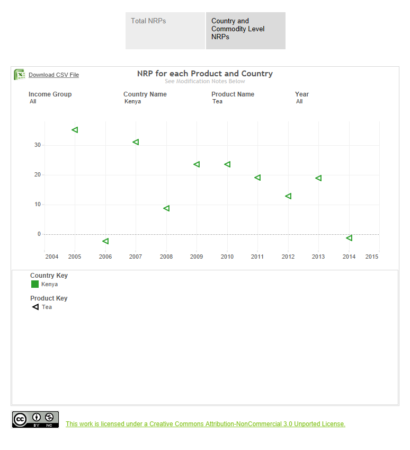
For example, here on the left are the data on the contribution of pulses to total food weight in the Indian diet, courtesy of that fabulous CIAT website. Note the steady increase in pea consumption over the past 30 years or so (click on the image to make it bigger, it’s the plot in the bottom right hand corner).
A lot of those peas, it turns out, now come from abroad, Canada mostly (as you can see on the map below). It’s a $500 million market, up from $30 million in 2000.
Now, I don’t know what proportion of Indian pea consumption is down to Canadian imports, but it should be possible to figure it out. I’m betting a fair bit of the aloo mutter you have in Amritsar is made in Canada.
Nibbles: Investing in food, Henna botany, Buckwheat promotion, Mapping India, Optimism, Genetic diversity, Forest cocktails
- Psst, you have any examples of investments for healthy food systems? What do you mean, you don’t.
- Paint it henna.
- Pleading for pseudocereals. In Switzerland?
- Mapping India’s trees. Among other things.
- To save biodiversity, look on the bright side. Easy for you to say.
- The genetic level of biodiversity makes important contribution to ecosystem services. In birds. Right.
- Taste the forest. In cocktails.
Exploring global diets
You may remember the paper Increasing homogeneity in global food supplies and the implications for food security, which we blogged about a couple of times when it first came out in 2014. National Geographic did a pretty good job of visualizing some of the data online, but CIAT have blown them out of the water now with a fabulous interactive website.

You can listen to Colin Khoury, the brains behind the whole thing, on Jeremy’s latest Eat This Podcast. And you can read about the most surprising results on CIAT’s blog. Spoiler alert:
1. Almost everybody eats a lot more food than their grandparents did. And it’s more diverse.
2. African, Asian, and small island countries have the world’s most diverse food supplies. Also the least.
3. Crop immigrants are the key to dietary diversity.
4. The world’s average diet means eating like people do in Cape Verde, Colombia, and Peru.
5. Political unrest can lead to greater diversity in people’s diets, or less.
There’s also a companion piece by Colin on the Global Plant Council website. And this is what Colin says on his Facebook page:
We built a big data website! When we published our findings of increasing homogeneity in global food supplies, we hadn’t yet found a good way to make the underlying national-level data readily visible to interested readers. This is why I’m tremendously excited to announce the publication of our new Changing Global Diet website, which provides interactive visuals for 152 countries over 50 years of change. We that hope you will enjoy your own investigations of dietary change over time. Perhaps you can tell us where you think the changing global diet is headed.
If you do play around with the website, you can share any interesting stuff you find using the hashtag #changingglobaldiet on Twitter. Me, I’m going to have a bandeja paisa and feel like a proud citizen of nowhere.
Nibbles: Treaty & UPOV, Minor millets redux, Maize replacement, Amaranth et al., Squash story squashed, Potato podcast, Food security webinar, Plants Day, Repast magazine, German beer, Coffee strategy, ILRI genebank
- The ITPGRFA and UPOV need to sort out their connection.
- Bring back our millets.
- And our sorghum and pigeonpeas too.
- And the milpa.
- And speaking of milpa crops, the real story of that large, old squash.
- Since we’re at it, bring back the potato too. To the people.
- Yet another interesting webinar which I missed. Wonder whether they talked about the above. Anyone?
- Still have time to prepare for “Fascination of Plants Day” on 18 May 2017, though.
- Repast: “the First-Ever Food History Magazine”. ‘Nuff said.
- Gotta love those German purity laws.
- A strategy for conserving coffee genetic resources takes shape. Now for the money…
- New forages genebank opens at ILRI in Ethiopia.