- Data geeks tuck into bananas.
- Will it help the Filipino smallholder, though?
- Dietary diversity suggested as an indicator of welfare at national level. Wow.
- Seeds of Discovery discovers it has made progress.
- Celebrating a potato breeder. We should do more of that.
- Beer-fueled conservation. Not what you’re thinking.
- Milling minor millets means more money.
- CIRAD breaks down intercropping rubber. And nutmeg?
- Better forest governance by the numbers. How about savannas
- Arab region gets an environmental atlas. Also in Google Earth.
- The Pacific learns about the ITPGRFA. Not for the first time…
- I guess these guys didn’t know about MTAs.
European Commission report on agricultural genetic resources sets pulses racing
The European Commission is disappointed. Back in 2004, it established a Community programme on the conservation, characterisation, collection and utilisation of genetic resources in agriculture.
The Community Programme co-funds 17 actions, involving around 180 partners located in 25 Member States and 12 non EU countries, with around EUR 8.9 million. The actions started in 2007 with a maximum duration of 4 years.
It’s done ok, but not as well as hoped, it seems, according to a new report just out.
As underlined by the evaluation report, the programme was helpful in improving the scientific knowledge of the nature, management and potential of various agricultural genetic resources, and advanced the understanding of local practices and needs. It also helped to build effective cross-border cooperation, to stimulate contacts and active networking, and to attract attention of stakeholders concerning the importance of conservation activities. However, a gap remained in the form of limited involvement of end-users with direct consequences on the “use” of genetic resources and insufficient cooperation and exchange of information and knowledge among the relevant actors.
Ah, the dreaded “use.” How does one get those pesky users to play the game?
The vast scientific knowledge gathered has to find its way into breeding and farming practice, where it needs to be adapted to practice needs and joined with traditional knowledge existing at farm level. In order to encourage the co-creation and sharing of knowledge among all actors involved, active networking and facilitation of communication needs to fill the gap between the science-based work, including the characterisation and evaluation of genetic resources and the development of more diverse varieties to expand the sustainable use of genetic resources.
So there you have it, “active networking and facilitation of communication.” Much like we do here, in fact. We await the Commission’s call. And euros.
Nibbles: IK, Magi, Yield gap maps, ICRISAT DG, Maize and drought, Phenotyping workshop, Clone epigenetics, Root & tubers, Botanical social networking, Mexican archaeobotany, LOTW
- Intergovernmental Platform on Biodiversity and Ecosystem Services documents examples of how indigenous people’s knowledge conserves biodiversity, including of the agricultural kind.
- The truth about frankincense and myrrh. Talk about traditional knowledge.
- Can global crop production meet future demands? The Story Map.
- What ICRISAT is doing about the above, from the horse’s mouth.
- Progress in Achieving and Delivering Drought Tolerance in Maize — An Update: “Germplasm collections are assuming greater importance if gains from native genes are to be sustained. Efficient and accurate field phenotyping remains essential for genetic progress.”
- Workshop in Field-based High Throughput Phenotyping. Next April, in Arizona, you maize people.
- A clone is a clone is… no wait.
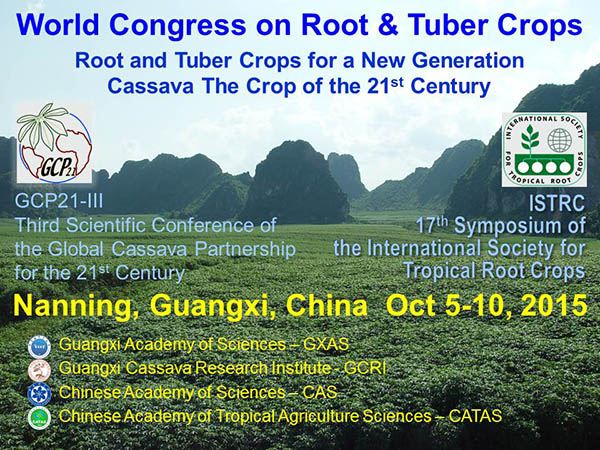
- Root and tuber people already planning their next big shindig, in October 2015. Meanwhile, they’re getting down to work in the Pacific.
- AoB Blog on plant science on Facebook. Also on Facebook.
- Solanum expert Dr Sandy Knapp on the of Global Plants Initiative.
- Archaeological remains of agriculture found in Nuevo Leon are oldest for that Mexican state.
- Legumes (genera) of the world now online, thanks to Kew.
Brainfood: Gaming landuse decisions, Natura 2000, Expressing pears, Medicinal rice, Agroforestry and conservation, Grasslands, Cotton diversity, Ancient cattle, Neolithic Balkans, Indian guar
- Gaming for smallholder participation in the design of more sustainable agricultural landscapes. Board game can be used to facilitate communal decision-making in landuse planning in the buffer zone of a Man and Biosphere Reserve. What’s not to like?
- Mixed effects of long-term conservation investment in Natura 2000 farmland. It has been good for some things, not so good for others. No word on how CWRs have fared.
- Microarray analysis of gene expression patterns during fruit development in European pear (Pyrus communis). They’re different to those of Japanese pear (Pyrus pyrifolia).
- Quantitative and molecular analyses reveal a deep genetic divergence between the ancient medicinal rice (Oryza sativa) Njavara and syntopic traditional cultivars. Njavara is a cryptic variant of traditional Kerala varieties.
- Relationships between Biodiversity and Biological Control in Agroecosystems: Current Status and Future Challenges. Management should aim to suppress pests while maintaining diversity of natural enemy guilds. Easier said than done, I suspect.
- Agroforestry and Biodiversity Conservation in Tropical Landscapes. Between agroforestry cause and conservation effect are a bunch of pesky assumptions. I wonder if gaming would help.
- Livestock grazing and biodiversity in semi-natural grasslands. It can be good. Just one paper in the proceedings of a recent major conference on grasslands.
- Genetic diversity and population structure in the US Upland cotton (Gossypium hirsutum L.). Who needs wild relatives when you have diverse obsolete varieties?
- Morphological and genetic evidence for early Holocene cattle management in northeastern China. Archaeology and DNA suggest parallel domestication of cattle in China.
- Domesticated Animals and Biodiversity: Early Agriculture at the Gates of Europe and Long-term Ecological Consequences. For thousands of years the impact of agriculture in the Balkans was limited.
- Characterization of released and elite genotypes of guar [Cyamopsis tetragonoloba (L.) Taub.] from India proves unrelated to geographical origin. And?
The real cost of food
The True-Cost Accounting in Food & Farming conference is wrapping up today. There are plenty of videos on the Sustainable Food Trust website. And of course there’s a hashtag, #TCAConf, if you want to follow live. You just missed Jules Pretty, for example. Are any of our readers there, I wonder?