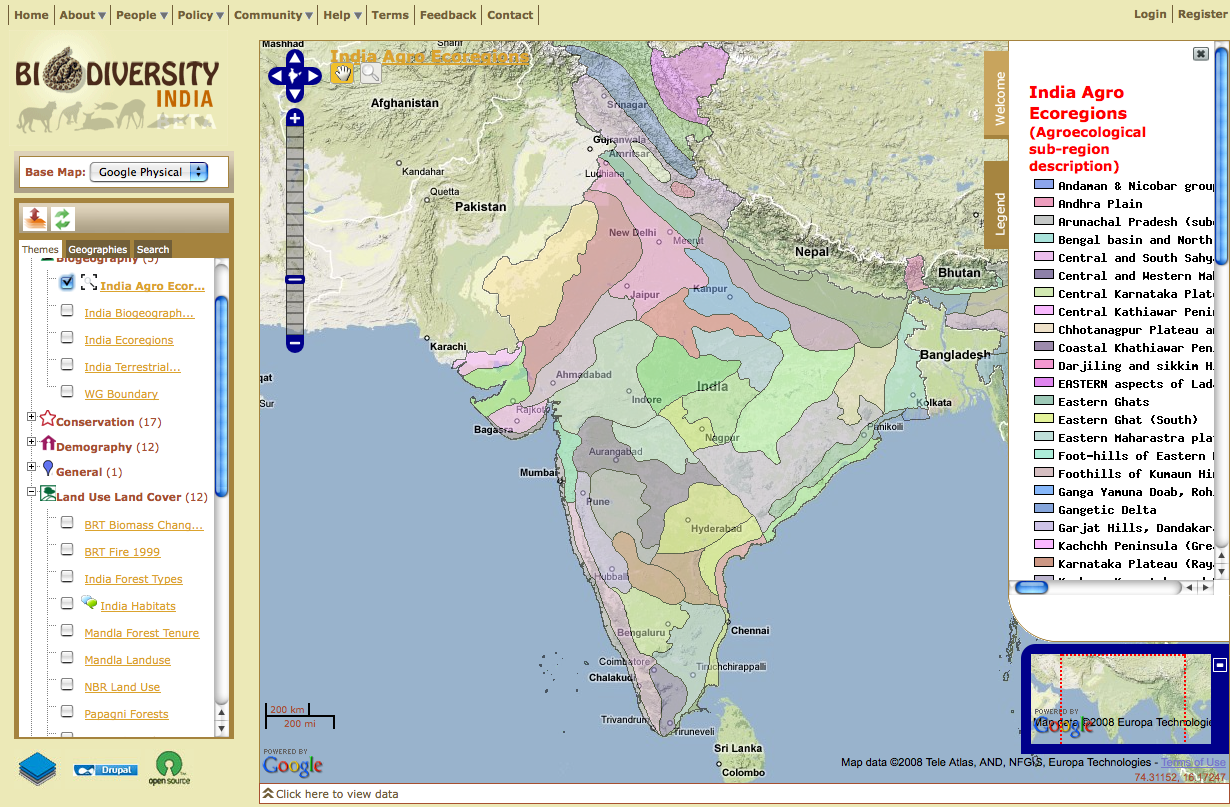
 There’s been a bit of buzz on the intertubes recently about a shiny new portal on India’s biodiversity. At last, it is live, and I have had a preliminary play with it. The first thing to say is that it is very, very slick. The information is well presented and appears quickly. The second thing to say is that while there is definitely some information there about things agricultural, it is a little high level at the moment. But that could easily change. The portal is open source and open to users, so people who really know about farming in India can get in there and make it their own, with reports from the field, performance data, and who knows what else.
I wonder whether it would be possible to give them layers (I believe that’s the technical term) of information about, say, genebank accessions, or predicted climate changes, or crop suitability, or …