Exploring a Sarajevo market

I spent an interesting hour or so with Elcio exploring an open-air fruit and vegetable market in central Sarajevo last week. I think it is the very same market which was tragically attacked during the war with much loss of life. No sign of that now, thankfully, except for a memorial to the victims.

You can see some pictures of the fruit and vegetable diversity on display on my Flickr page. Here I just want to point out two curiosities. Or at least they were to me. Here’s the first.

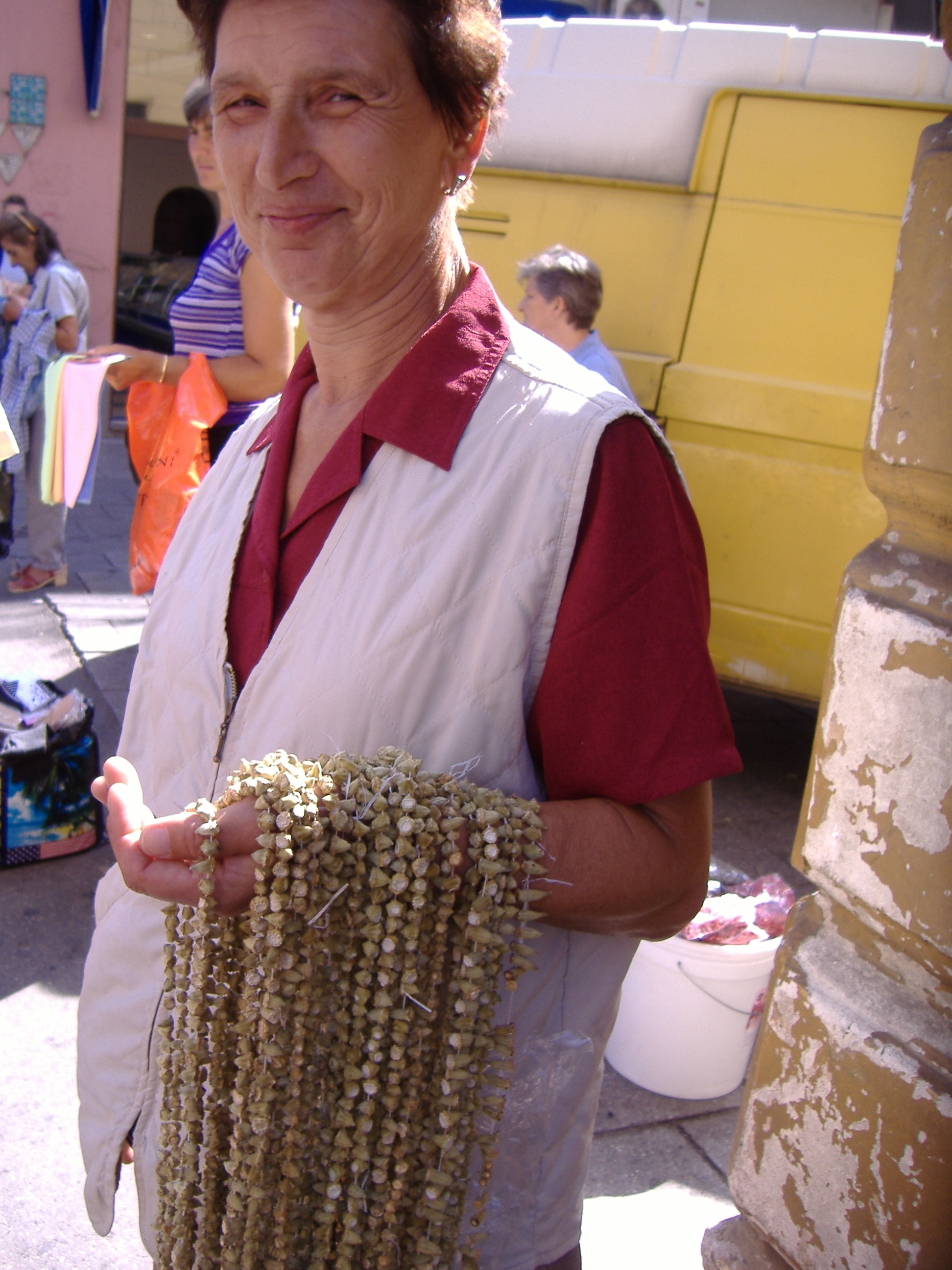
This lady is selling necklaces of dried, perhaps immature but certainly small, okra fruits, called bamia in Bosnian (and indeed in Arabic for that matter). They are soaked in water and vinegar for a few minutes, then added to fried onions and meat to make a local stew. Or that’s what a lady buying some told us. I bought some and will try it. I’d never heard of okra being used in this dried form.

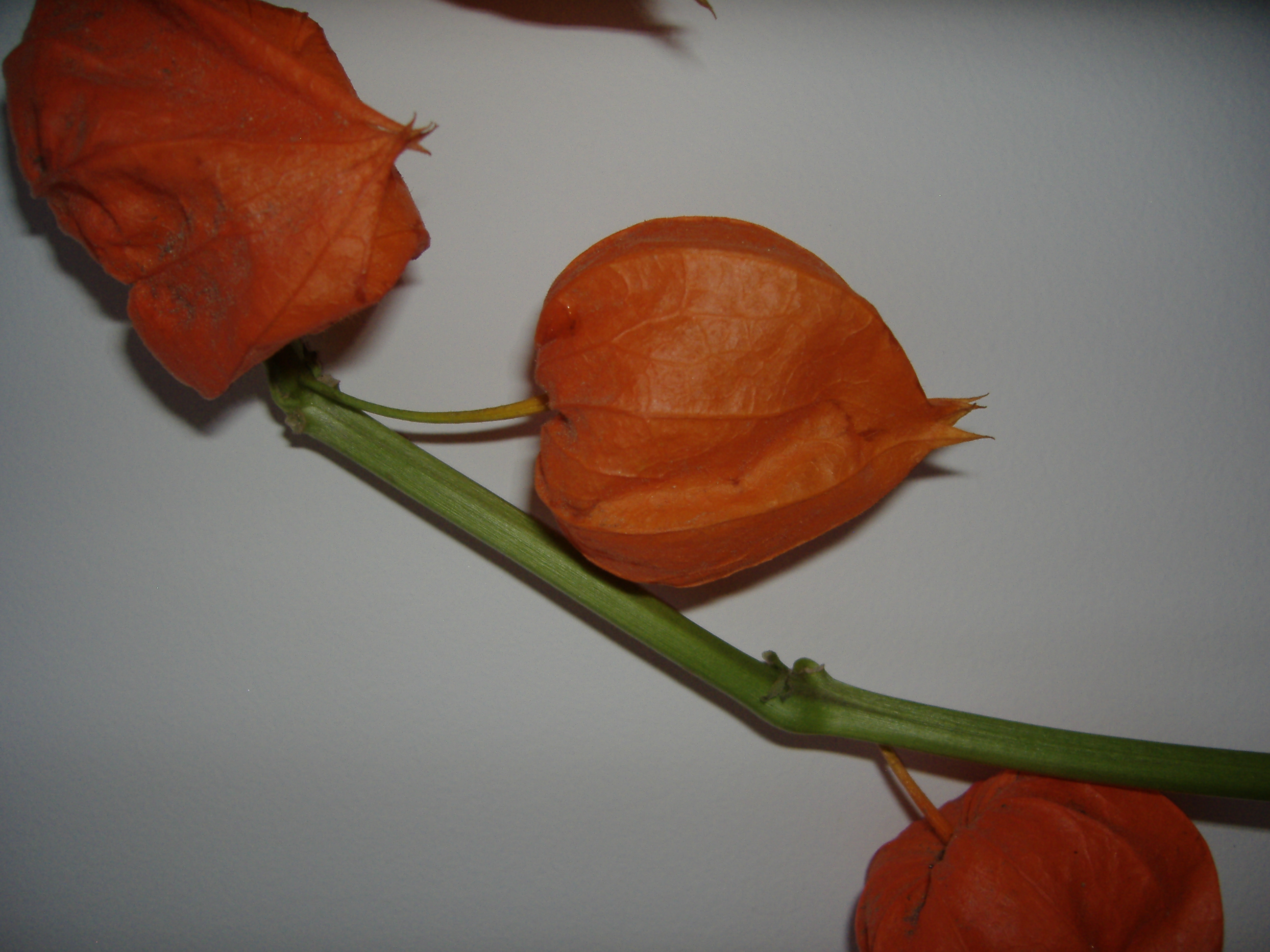
The second thing that came as a surprise to me was this fruit. Sorry I don’t have a decent picture of it being sold in the market.

Clearly some kind of Physalis, perhaps P. alkekengi? It was being sold a few fruits at a time, so probably for medicinal purposes (LATER: or as ornaments?) rather than food. I couldn’t communicate with the lady selling it, the only one in the market. Any ideas?

Climate change risk hotspots mapped

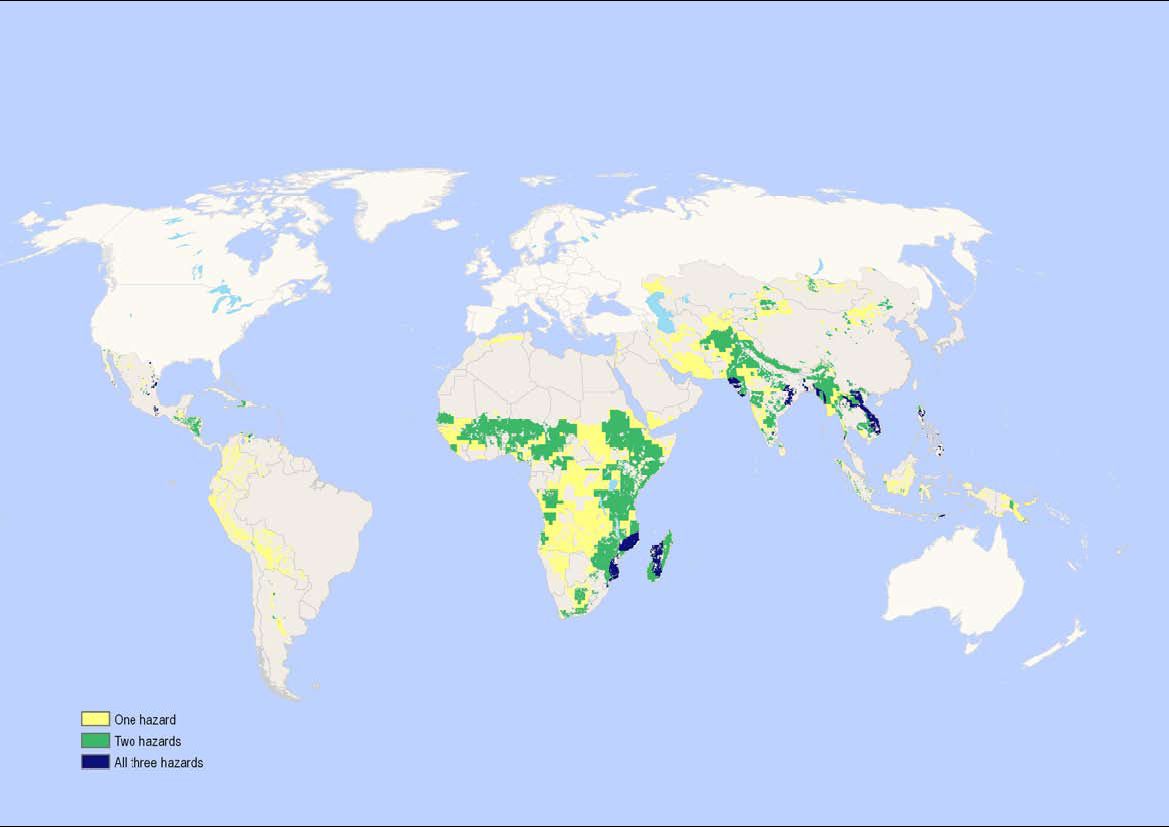
A SciDevNet piece on the report “Humanitarian Implications of Climate Change: Mapping emerging trends and risk hotspots” says that

The report, commissioned by CARE International and the UN Office for the Coordination of Humanitarian Affairs (OCHA), identifies Afghanistan, India, Indonesia and Pakistan as countries particularly vulnerable to extreme weather conditions.

But actually, looking at the map on page 26 from an agrobiodiversity conservation point of view, the countries I’d target — for germplasm collecting, for example — are Mozambique, Madagascar and Vietnam. The authors looked at flood, cyclone and drought risk. These countries are in for all three.

LATER: At least Cuba doesn’t seem to be at much increased threat, which is just as well!

An approach to extension in Africa

Sharron responded to my thoughts on extension in Africa with this remark:

Sounds like the kind of work Peace Corps volunteers have been doing for decades.

Not quite. Peace Corp volunteers do wonderful work, but in essence they parachute in and often, though by no means always, apply solutions that are not necessarily entirely appropriate to the situation in which they find themselves. What is needed is local people, locally trained, but exposed to a world of experience among similar farmers facing similar obstacles. Agreed, we don’t yet know how to fund this sustainably, or exactly how to establish the e-aspect of it. But those details could be worked out, with a will.

Meantime, here’s a little video interview with Getachew Tibuket, whose Farmer Field Schools have trained something like 25,000 farmers in Ethiopia. I’ve no idea what they are trained to do, but it sounds like a useful approach.

Other examples welcome.

Bosnian bee-fest

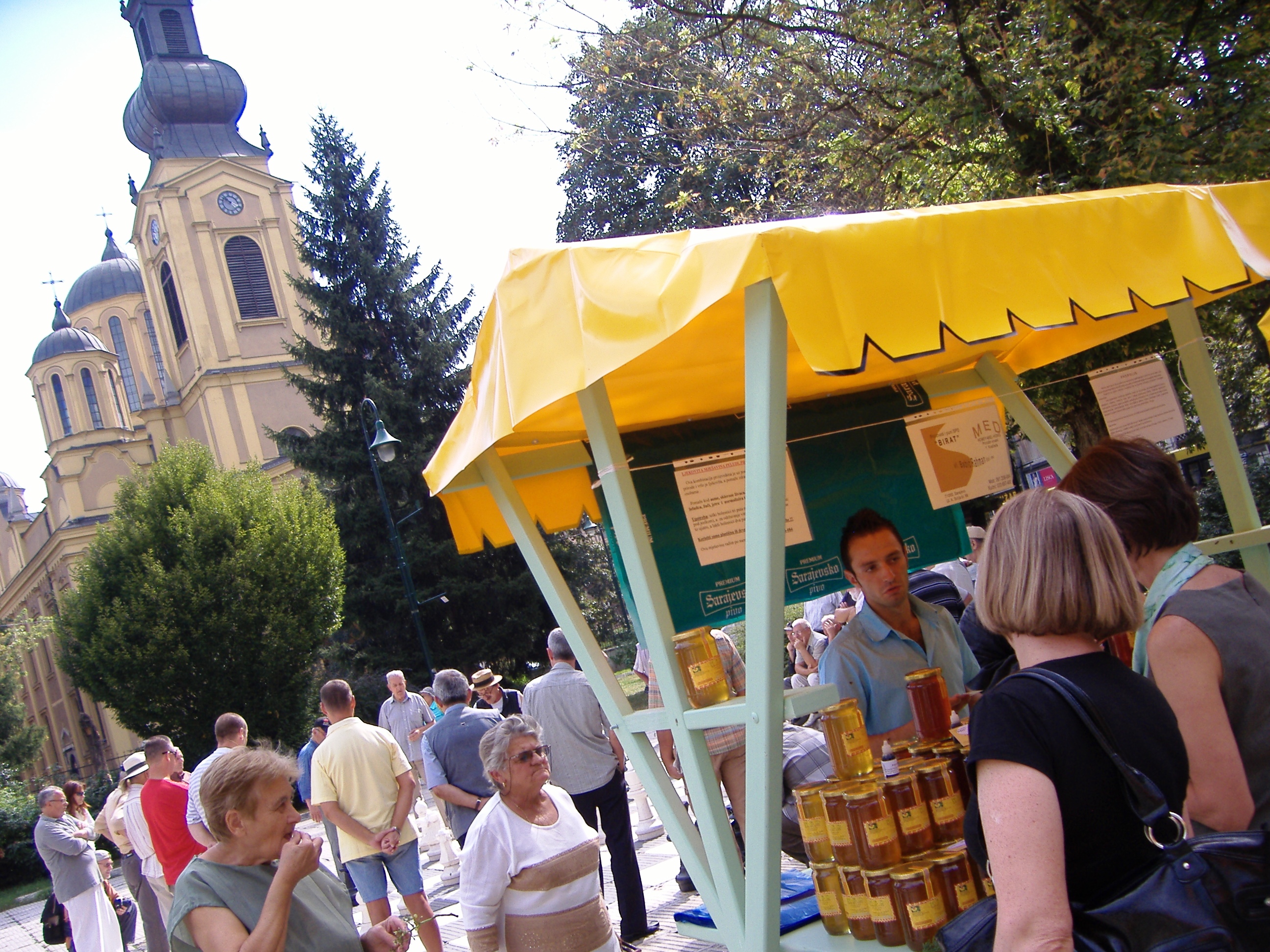
Spent the whole week in Sarajevo for a meeting, but did get a chance to explore on Friday morning. Doing so, I stumbled on the Sarajevo Bee-Fest: lots of stalls with people selling all kinds of different local honeys, other bee products, and bee-keeping equipment. No sign of worry about colony collapse disorder.

Wheat a surprise

I am, I confess, very confused by two items I read yesterday. The first is an extensive report on India’s readiness to deal with the UG99 variant of wheat rust disease. The headline declares India’s wheat immune to Ug99, but on alert. Making allowances for the difficulties faced by sub-editors the world over, I read on, and discovered that 12 wheat varieties popular in India have shown some level of resistance when grown at test sites in Kenya. The article goes on to say that these are being bulked up and offered to wheat breeders and that an eagle-eye is watching “the higher hills of Himachal Pradesh, Jammu & Kashmir, Southern hills in Tamil Nadu to detect and track down Ug99 or its variants”. There’s also reassuring talk of the time it will take for the disease to build up to a scale large enough to cause economic losses. The article’s broad, soothing conclusion:

Thus a multi-pronged strategy is already in place to render the rust ineffective even in the most unlikely event of Ug99 striking Indian territory. “We are confident and feel that such a vibrant technical programme will stand by Indian farming community and will be able to avoid any crisis likely to be caused by this disease,” ICAR said in a report.

My confusion: is this really the approach you would expect from a support-seeking government agency? ICAR is the Indian Council of Agricultural Research, and its press release on UG99 is the only source for the Commodity Online story linked to above. I’d have thought that, far from seeking to downplay fears, ICAR should be informing India and the world that without a lot more research the country’s wheat crop will remain in grave danger.

Item number two is from Reuters, seen at Guardian.co.uk. It reports on a speech that Thomas Lumpkin, the new Director General of CIMMYT, gave in Canberra, Australia. In essence, Lumpkin used current high food prices (dropping now, as farmers respond to market signals) to warn that unless the world accepts genetically modified wheat, “People will die, a lot of people will die.”

“Governments should try to help the public appreciate how much the high price of food affects the poor in developing countries,” Lumpkin told Reuters in an interview on Wednesday. “By denying them this technology, you are keeping them hungry, they are dying.”

He obviously feels strongly about that. My confusion: is CIMMYT actively researching GMO wheat, putting its money where its DG’s mouth is? Yes, but not much — roughly 0.5% of the “total research portfolio” in 2004. The greedy capitalist pigs at Monsanto and Syngenta aren’t willing to take the risk. CIMMYT doesn’t have pesky shareholders or customers to satisfy. Perhaps it will now get stuck in.

Oh, and, one final confusion. CIMMYT’s Lumpkin, unlike India’s ICAR, does think UG99 is a problem. “Wheat breeders world-wide are racing against time to control this new threat,” said the summary of his speech. Reuters didn’t mention that part.