Spare a thought for those fortunates slaving over a hot stove today to give thanks for their good fortune. And if you’re not in the kitchen, consider these Thanksgiving Genomes.
Crops, livestock, microbes, pollinators, wild relatives, agroecosystems, foodways …
Spare a thought for those fortunates slaving over a hot stove today to give thanks for their good fortune. And if you’re not in the kitchen, consider these Thanksgiving Genomes.
They’ve been busy at the Breadfruit Institute of late. Or even more busy than usual. The director, Dr Diane Ragone, has won one of the prestigious “Star of Oceania” awards, which this year recognize
…women of and from Micronesia, Melanesia, Polynesia and the state of Hawaii who reaffirm the capacity of women to serve, lead and inspire regionally, nationally and globally through aloha, courage, perseverance, precedence and faith.
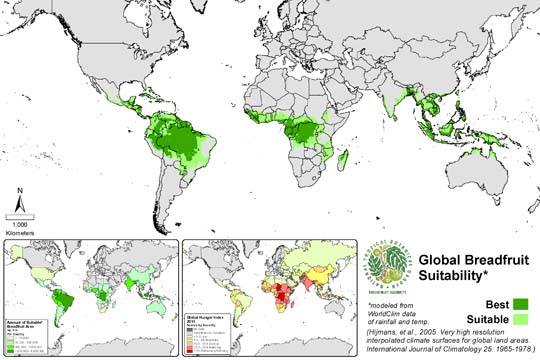
The final version of the breadfruit climate suitability map is also now online, according to a post on the Institute’s Facebook page. Here it is:
I’m not sure if we already blogged about this, but that map reminds me that WRI has a set of global water stress maps online now. Here it is for coffee.
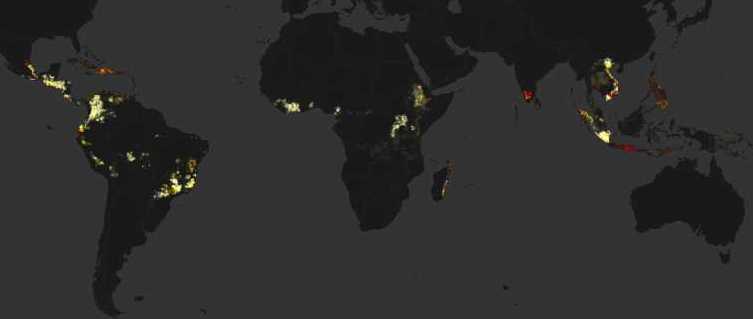
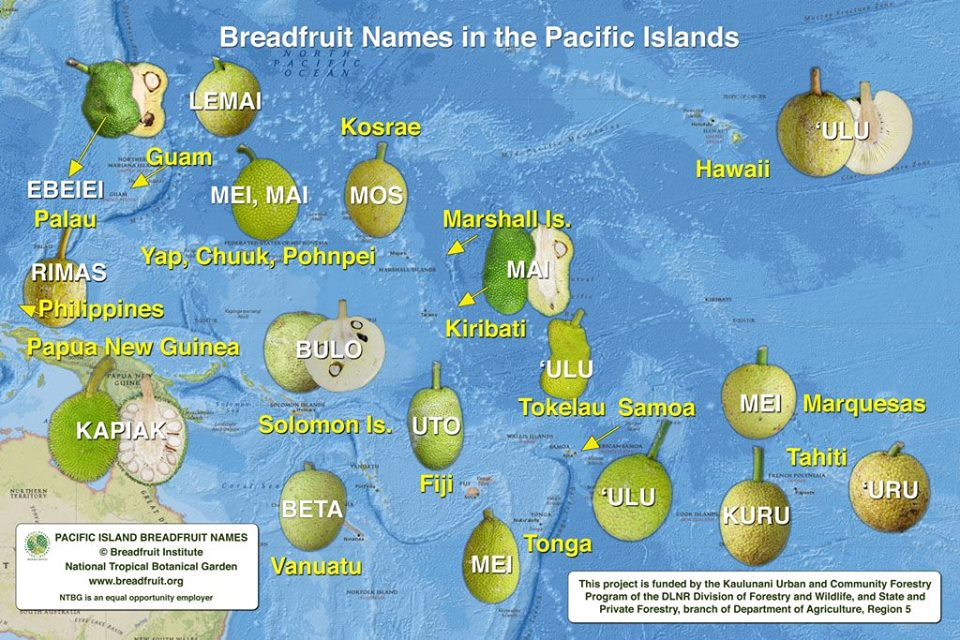
Maybe one for breadfruit could be added sometime? Anyway, as if that weren’t enough, Diane has also put online various materials in support of a “Breadfruit and You” curriculum, including a nifty new graphic of breadfruit diversity and local names.
Our congratulations to Diane, for all of the above!
LATER: And breadfruit is not just good to eat, we also learned.
Pretty interesting 20-minute talk from Dennis Dimick, National Geographic Magazine’s Executive Editor for the Environment. NatGeo will be launching a Year of Food in May 2014, and I’m guessing that some family farms will be involved. While I’m not a betting man, I’ll offer two wagers:
In case you’re wondering, I do believe those are oca at 16’43” in.
Near the end, Dimick says “maybe we just need to grow more farmers”. Now there’s a thought …
Yes indeedy. A new international year has begun, the International Year of Family Farming. Could be fun to keep a vague eye on, especially to see how it includes — or excludes — these family farmers. And do families who farm quinoa now get a second bite at the cherry of global awareness?