Seed Savers (online) Exchange

Having given pickacarrot.com a brief Nibble, I feel duty bound to report at greater length on the new online exchange of Seed Savers Exchange. The arrival of the SSE Yearbook, with its hundreds of pages of densely printed listings, heralds, for many, a winter of wondering, speculating, dreaming and, occasionally, frustration. It lists all the varieties offered by members of SSE, from whom you request seed directly. If you are after lots of different seeds, from lots of different members, that means lots of different requests.

The online exchange, while probably not as comfortable to curl up with in front of a fire (I haven’t tried it on a tablet computer) is equally enticing and a lot easier to use. At least, I think it is. In the old days, you actually had to write to someone asking for seed, and if you were doing so from outside the US, as I was, you had to find International Reply Coupons and all that stuff. The online exchange has a wishlist to which you can add your requests, so to test it I thought I’d look for Cherokee Purple, a tomato I’ve grown successfully in the past and that might amuse my Italian neighbours.

I found it easily enough, and then had to choose a member to ask for it. I decided on Neil Lockhart, in Illinois, for no good reason. Then I pressed the button to complete my order, and nothing happened. I’m not sure how I’m supposed to pay the $3 handling fee (plus, I hope, a little more to account for additional postage to me), or what happens next. Perhaps that’s because the online exchange is still in beta test. Perhaps nothing is supposed to happen. Of course, had I read all the details in advance, I would have learned that the online exchange is actually just streamlining the process of requesting seeds, by sending an automatic email from me to Neil. Now it is up to us mutually to sort out delivery and payment. It also streamlines the whole business of listing seeds members may have to offer, which is probably going to be very helpful too.

All in all, SSE’s online exchange has, I think, enormous potential. One of the most interesting and diverting aspects is the Seed Stories, which give a glimpse into the personal histories behind some of the varieties, and to which SSE is adding all the time. The online exchange has some glitches still to be ironed out, and I’m sure they will be. There might even be ways in which it could be improved but that would take inordinate amounts of human time. For now, though, especially if you are in the US, it seems like a wonderful gateway to a wealth of agricultural biodiversity.

Of course, you do have to be a member of SSE, but that’s no bad thing.
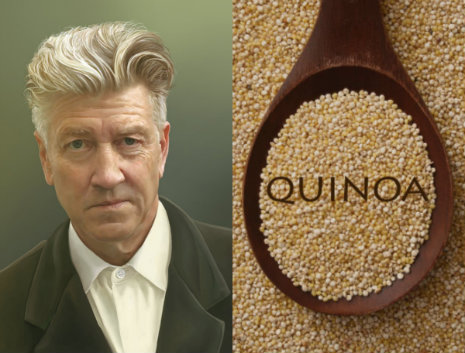
David Lynch cooks quinoa

David Lynch

I borrowed the image from the same place that brought this — David Lynch cooks quinoa — to the world’s attention. No really. But where’s the high-quality version? And the missing minutes? C’mon. And in Part II, what sounds like Inca Cola, but isn’t. In the dark!

Seriously, this has to be seen.

Brainfood: Italian almonds, Bamboo in Europe, Ethiopian barley, Cryo bird balls, Finnish cattle products, Adaptation strategies, Soil microbes, RSA droughty SP, Livestock integration

Stop vitamin A supplements

The editorial by Thorne-Lyman and Fawzi in 2011, (1) referring to the meta-analysis of the impact of vitamin A supplements by Mayo-Wilson, Imdad and others, (2,3) has now become more important than ever. The DEVTA results, only informally available in 2011, have now been published, (4) with extensive implications; indeed, as the editorial (1) says: ‘… the null findings have left lingering questions. Is vitamin A supplementation effective?’. These results have been the subject of conflicting comments recently in the Lancet, e.g. (5,6). But a number of inferences that should be drawn from the compilation and analysis of the evidence from trials prior to DEVTA (2,3) help answer this lingering question, and have not received adequate attention. There are three key related points, which now point to the need to seriously consider concrete steps to move beyond 6-monthly vitamin A supplementation at unphysiological levels.

OK, there’s a lot in that introduction to a recent paper in the British Medical Journal to digest, but it is worth it. I know I bang on about the colossal boondoggle that is high-dose vitamin A supplementation, but there’s a reason. It seems to be a complete waste of money based on a very limited reading of the evidence. In 2011 the BMJ published an editorial on Improving child survival through vitamin A supplementation (which is behind a paywall) that referenced a meta-analysis of supplementation. The new paper — Is vitamin A supplementation effective? — brings things up to date with a more detailed analysis of some of the research only hinted at in the original articles. Bottom line: there is no evidence for large-scale effectiveness of vitamin A supplements on child mortality.

As the authors of the rebuttal ask, why are resources still going into supplementation campaigns of the old sort? And they conclude:

Improved diets, fortified foods, and multiple micronutrient provision would surely bring broader improvements in nutrition to more people, including reproductive aged women who are now largely excluded.

Brainfood: Chinese wheat, Kenyan sorghum, Yugoslav maize, RSA homegardens, Oysters, Conservation decision making, CWR list, Soil biota, Arbuscular mychorriza, Land grabbing, Biofuels