ICRAF have a nifty new tool out called “Useful Tree Species for Africa.” I’ve been playing around with it and I have to say it’s impressive. Not altogether easy to use, but impressive. If you’re at all into using native trees in Africa — for whatever reason or purpose — you’ll want to explore it. Here’s a taste of what it can do.
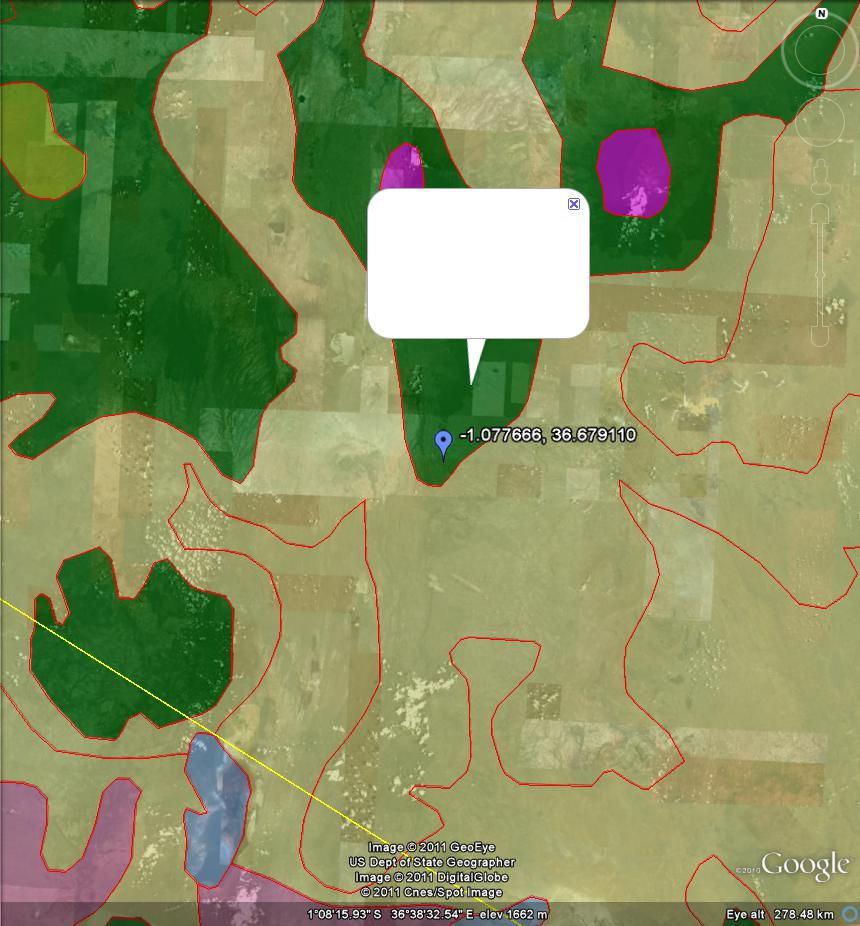
You download the kmz files from the ICRAF website and open them in Google Earth. Then you think of somewhere you’re interested in. In my case, as usual in these situations, I chose the site of the mother-in-law’s spread above Limuru in Kenya. Useful Tree Species for Africa first tells you what sort of vegetation is potentially found there, according to White’s iconic Vegetation Map of Africa.
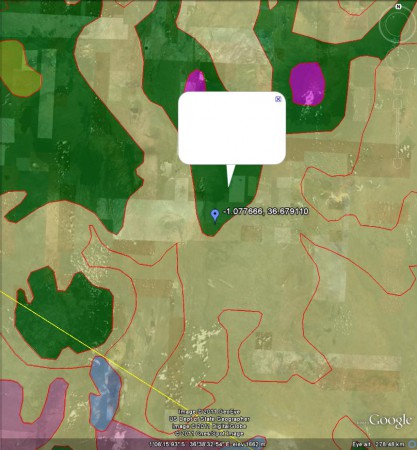
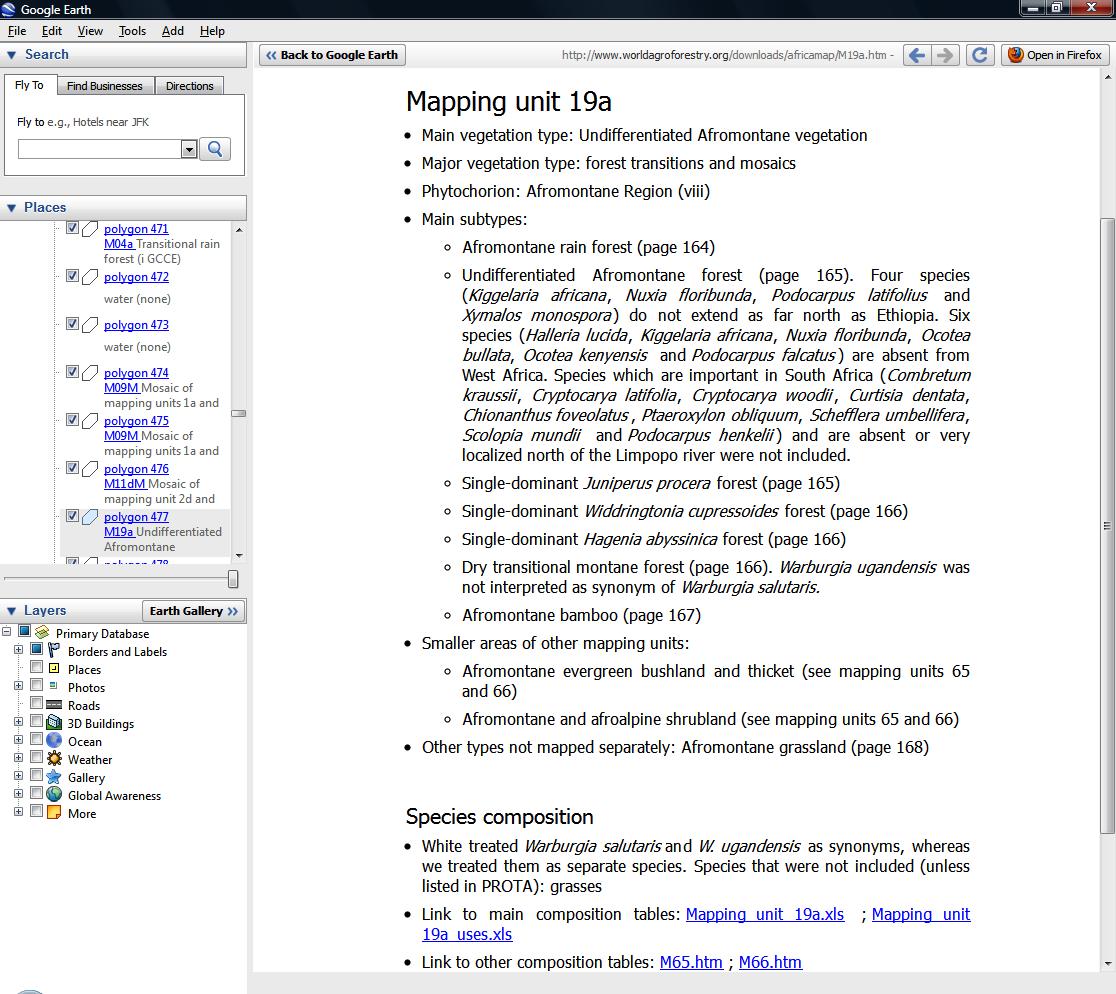
In this case, it’s “M19a Undifferentiated Afromontane vegetation (viii AMCE)”. What does that mean? Well, there’s a hyperlink which gives you more information on Mapping Unit 19a:
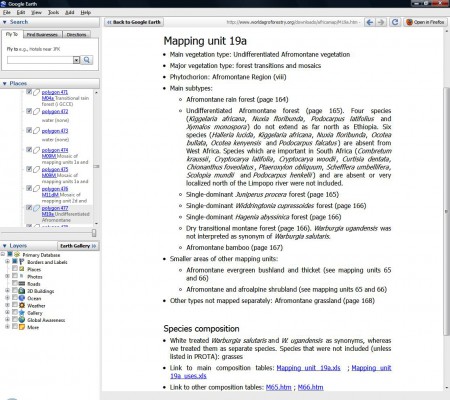
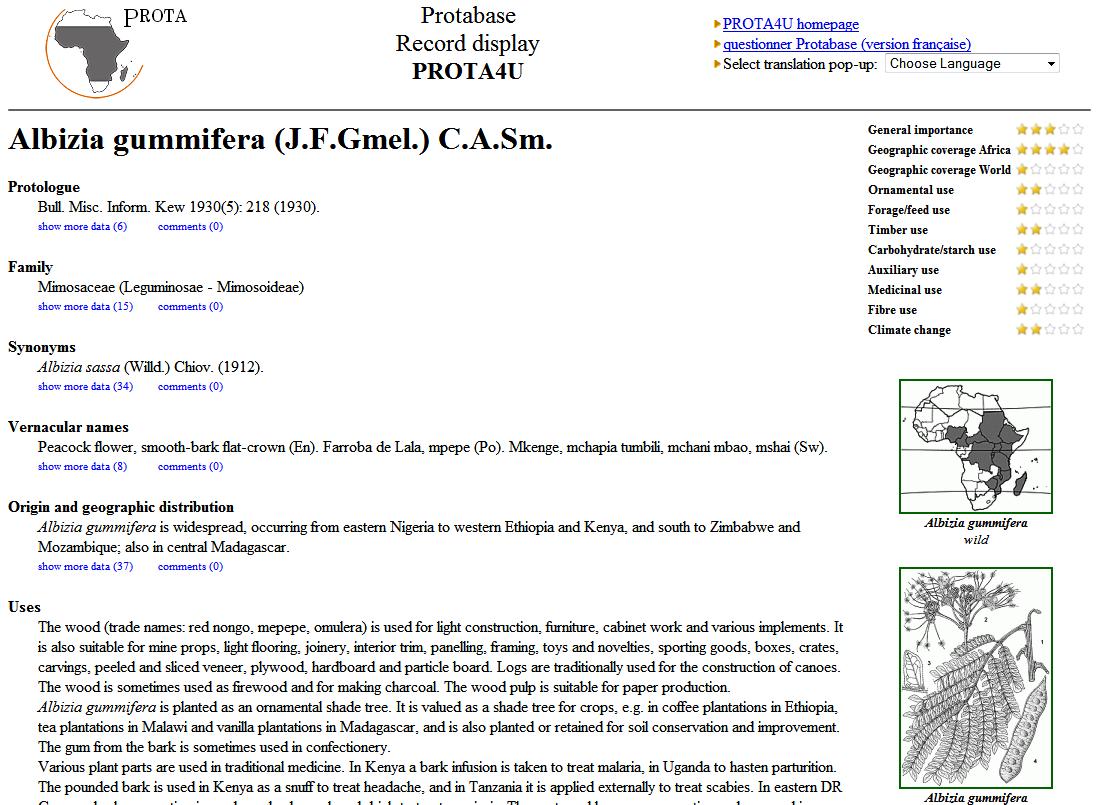
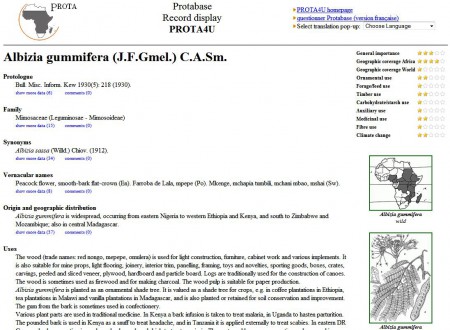
Crucially, this page, which opens in Google Earth, includes more hyperlinks, to four different species tables. Say you are interested in tree species found in this sort of vegetation that can support honey production. You click on the hyperlink labelled “Mapping unit 19a_uses.xls.” That in turn opens an Excel spreadsheet with a list of about 50 tree species and lots of different types of uses. You sort the species on “Bee fodder” and you get a shortlist of about 17 species, from Albizia gummifera to Syzygium guineense. Clicking yet again, this time on the species name, takes you to the PROTA page on the tree, with lots more information. Now, what would be really cool in due course would be a cross-link to ICRAF’s Tree Seed Suppliers Directory, so that you could work out where to get seed of your useful tree.
As I say, nifty. Lots of clicking, and opening of webpages, and of spreadsheets, and of more webpages, but you do end up with the information you want. If your query is place-based rather than species-based, that is. I don’t think the tool will let you start with a useful tree and work out where you can grow it, rather than start with a place and work out what can grow there. But let me play around with it a bit more. Maybe I’m wrong.