Ooooh, nice article from our friends at IRRI on mapping rice genebank accessions, something close to our hearts here at the Agricultural Biodiversity Weblog, as regular readers will testify.
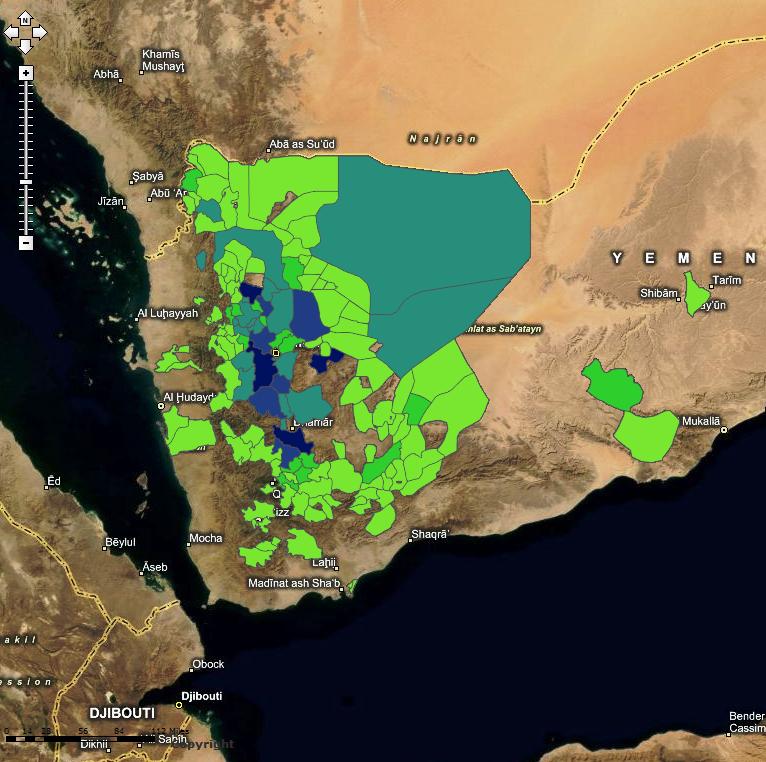
I guess the main point made by the money map, reproduced below, is that while IRRI may be managing on behalf of us all (under Article 15 of the International Treaty on Plant Genetic Resources for Food and Agriculture, no less) the largest and most diverse collection of rice germplasm in the world, it doesn’t have everything.
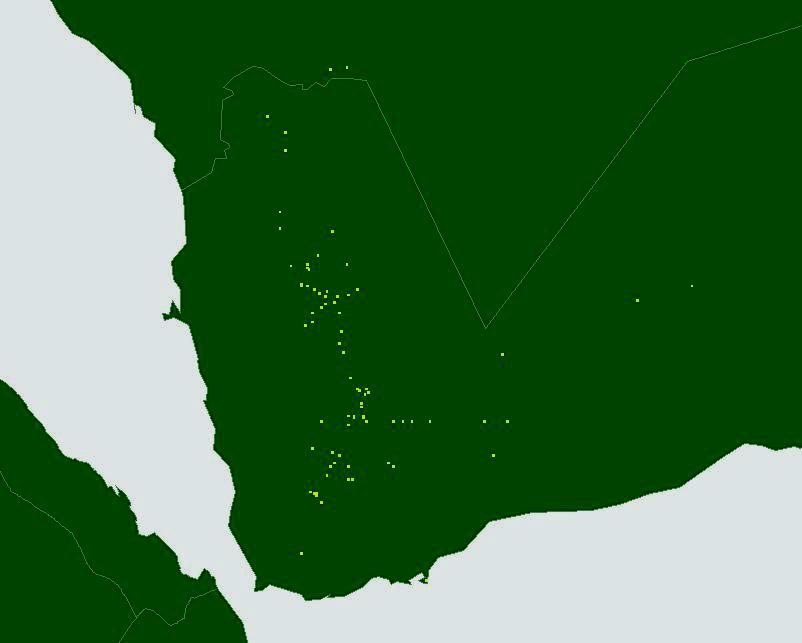
Problem is, not all of those other genebanks which nicely complement the IRRI collection make their material quite so obviously, freely and officially available to others. Plus, of course, we need the data from CIAT, EURISCO and all those other national genebanks. Genesys will help with that, hopefully, eventually. In the meantime, for comparison, this is what it now sees 1:
My eye was inevitably drawn to the outliers on that IRRI map. What is that northernmost collection, maybe in Kazakhstan? And alas the southernmost collection seems to have been cut off.
While new market opportunities and taro’s versatility are responsible for its growing popularity in markets, diseases and climate change also pose ever greater threats to its production and distribution. The current outbreak and spread of the devastating taro leaf blight in West Africa clearly highlights this vulnerability. By taking a global approach to the crop, the authors highlight ways to address new outbreaks of pathogens such as taro leaf blight.
Now, you may think … [that] … camel wool is quite famous for making rather nice garments. However, normally such wool is sourced from two-humped camels who live in the cold and high-altitude deserts of Mongolia and China. Our wool is from one-humped dromedary camels 2 whose hair is quite short and rough and was until now believed to be much too scratchy to process into any thing else than a rope or a rug.
Actually I did think that. You live and learn. But really, would it kill the Rolex Award people to enable an RSS feed from the blogs of their laureates?
I’ve been mulling over how best to respond to Anastasia’s frustration with my disparaging remarks. We clearly agree that people need good nutrition to achieve their potential. We agree that “the cost of vitamin distribution is very high because you have to keep doing it,” to which I would add that handing the private sector a license to print money in the US and Europe probably didn’t help. We disagree, fundamentally, on two issues.
First, I do not believe that “once [farmers] have the trait in their possession they can keep breeding with it, farming it, and eating the food produced for however long they like”. At a technical level, I can see how farmers might be encouraged to maintain selection for a nice obvious trait like the orange colour associated with vitamin A precursors, and even breed it from the one or two varieties they might be given into the ones they might otherwise prefer to grow. I don’t see how they are going to do that for high zinc or high iron or high lysine types. And they are going to need a very wide range of staple varieties if those genetically uniform varieties are going to thrive under a wide diversity of growing regimes while not succumbing to a pest or disease epidemic. So that’s one set of concerns.
The other is that although people (and not just Anastasia) may be saying that supplementation and fortification and biofortification each have a part to play in tackling specific sorts of malnutrition — oh yes, and dietary diversity too — that isn’t how they behave when push comes to shove. Anastasia herself disses “vitamin distribution” and “kitchen gardens”. She cares about them but won’t switch focus, and that’s fine. I’m not going to switch my focus either, no matter how frustrating it may be. Everyone — me included — seems to treat funding for the fight against malnutrition as a zero-sum game. Biofortification, in my view, is blocking investment in dietary diversity. I disparage the simplistic sales pitch that allows it to do so with donors who aren’t equipped to understand the problems it raises.
Anastasia says:
Provide the micro nutrients needed and then people gain the ability to set up their own gardens.
To which I say, provide not gardens, but sustainable dietary diversity, and people won’t need the micronutrients in biofortified staples. Indeed I go further: let the various “solutions” to malnutrition come together in an overarching programme of research in which people with a stake in the outcome, but no interest in the individual approaches, apportion funding support. That way maybe I can stop bleating and get back to cultivating my garden while Anastasia can get back to engineering better nutrition into staples.
Which brings me, finally, to my real point and the stimulus to write this post. 3 Cornell University recently made available a video of a meeting held on 23 November to launch The African Food System and Its Interaction with Human Health and Nutrition, a book edited by Per Pinstrup-Andersen. The video is no great shakes to look at, but the content is wonderful and music to my ears, and possibly Anastasia’s too. Do give it a listen.
There were many, many sound-bites in there deserving of wider notice. I particularly liked Anna Herforth’s definition of good nutrition as being based on “consistent access to a diverse diet”. 4 And I look forward to Rebecca Nelson making good on her pledge, as a grant-maker, to get other grant-makers interested in dietary diversity. I’ll have to try and get hold of a copy of the book. I’d also like very respectfully to suggest that someone at Cornell or elsewhere gets hold of Ted and does a number with the contributors and their work to put these ideas before a much wider audience.
Anastasia isn’t the only one round here who is frustrated, believe me.