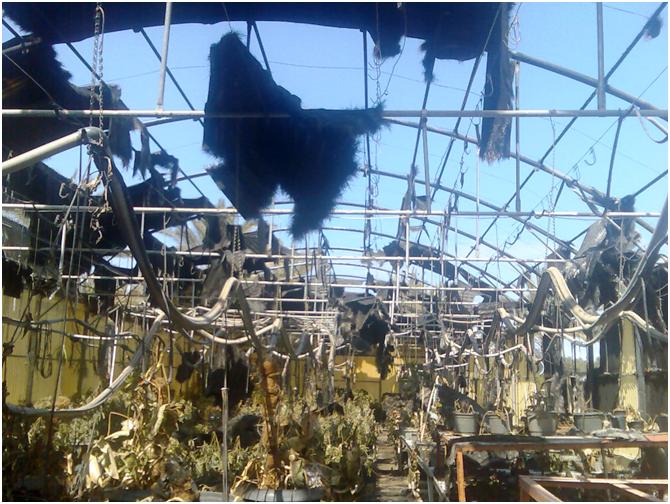
More bad news for the Egyptian Deserts Genebank. El-Sayed Mohamed El-Azazi tells us of a fire on Thursday 10 March, mainly affecting the glasshouses, by the look of it. The cause is unknown, but El-Sayed does say there is no security at all on the premises still. Coincidentally, there was a piece on El Masry Al Youm (Egypt Today, I believe) on the quite separate National Gene Bank of Egypt the very next day, painting a somewhat surreal, under the circumstances, picture of tranquility and business-as-usual.
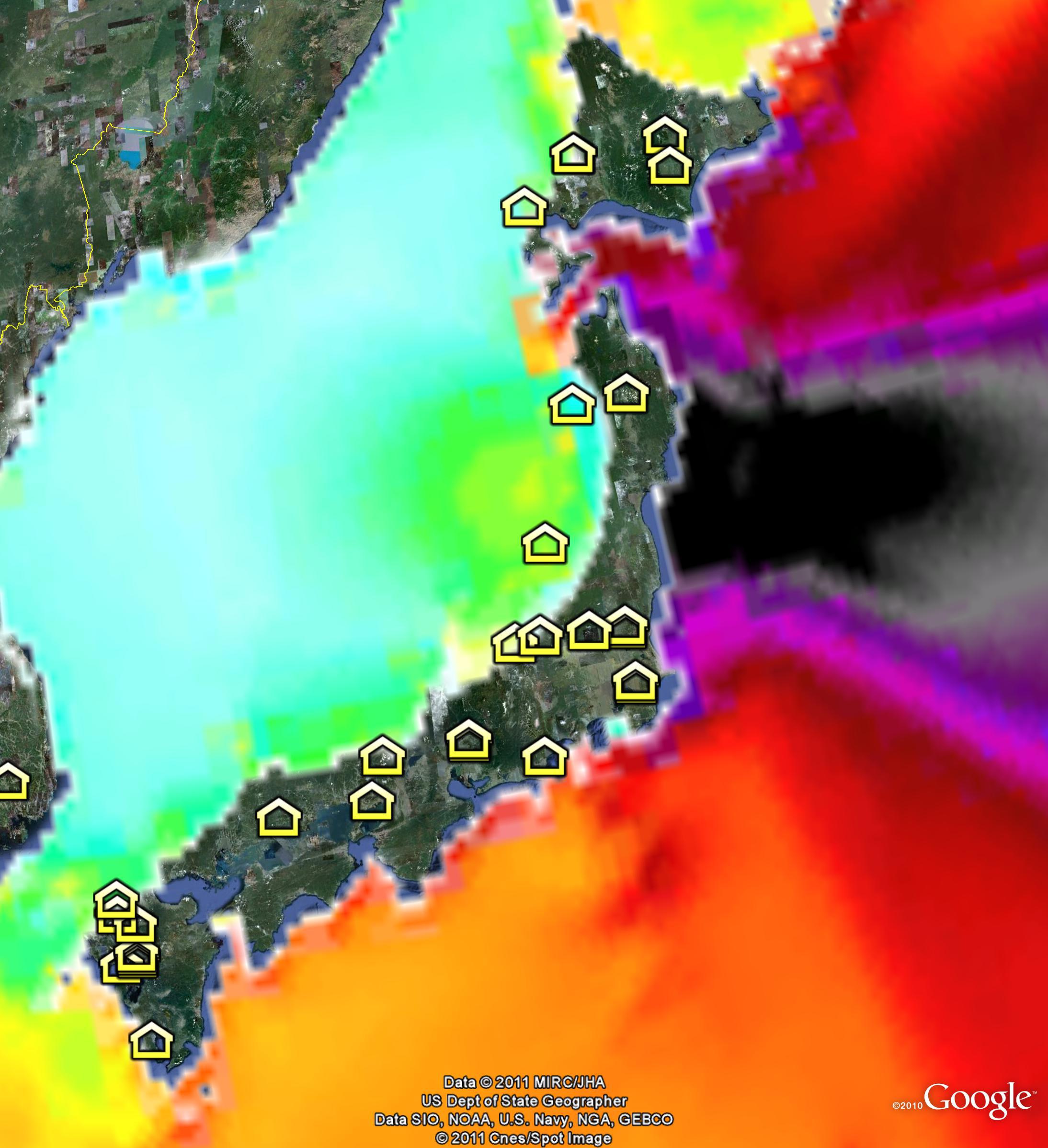
As for the situation in Japan, still no news of any damage to genebanks there. The recently published Google Earth plugin modeling the height of the tsunami is incredibly scary. Black is >250cm, even orange is 50cm.
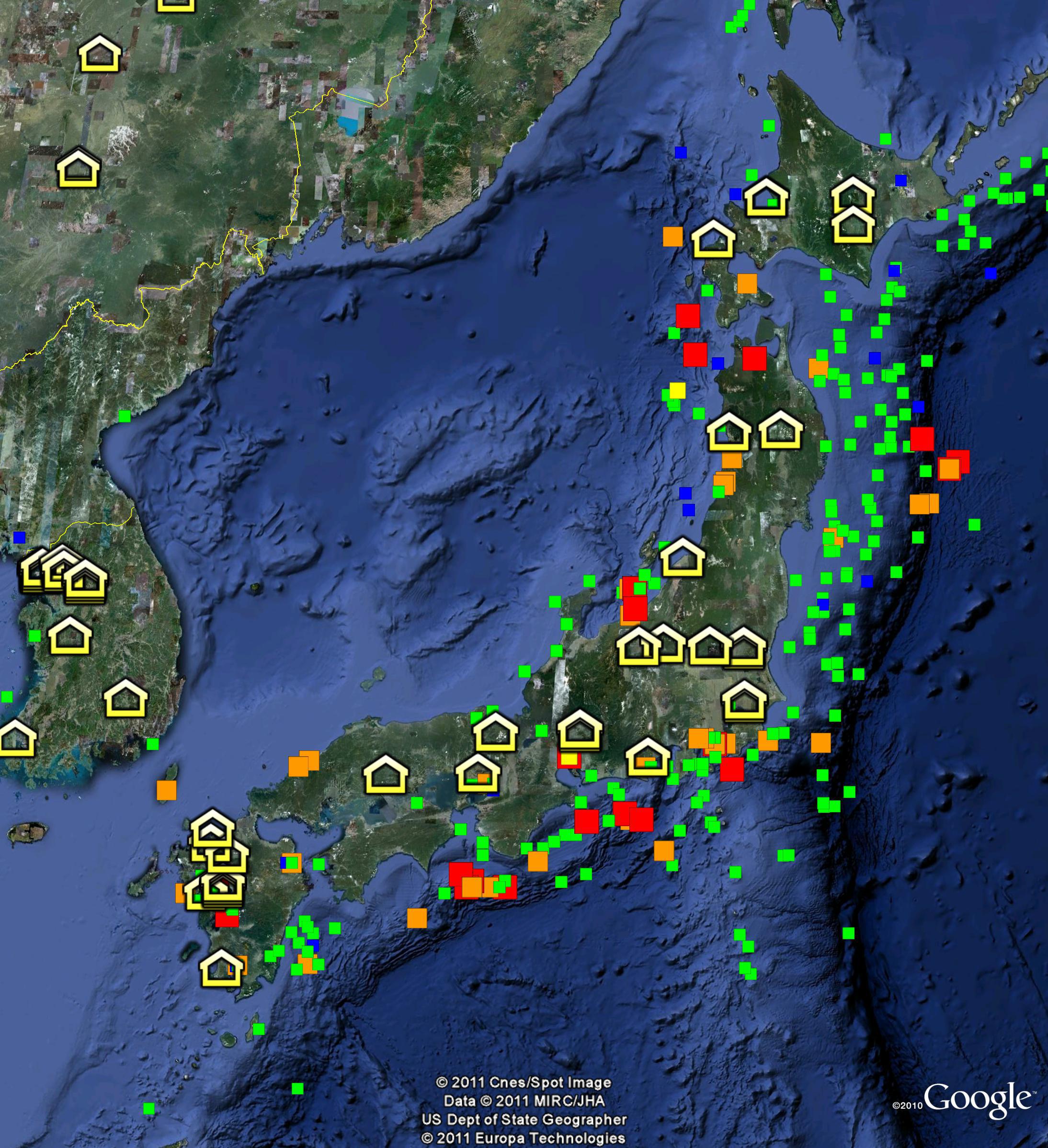
And, of course, it turns out you can indeed map tsunami risk, or at least where tsunamis have caused most damage in the past. Just download the Natural Hazards KMZ file from NOAA. This is what it has to say about Japan. The little yellow houses are genebanks. The squares are tsunamis since 1900, colour-coded for the number of casualties they caused.
A post on DAD-Net alerts us to a successful attempt to halt the decline in camel numbers in Rajasthan (not that the problem is completely resolved, as another post points out).
A five year effort by an Indian non-government organisation to halt the decline of the camel population in Western Rajasthan (India) has borne fruit: in the district of Jaisalmer, where the project is located, camel numbers increased by 26.5% between 2006 and 2011. In all other districts of Rajasthan, the camel population continued its quick decline, according to the latest government data. Camel breeders attributed the increase in their herds to a variety of interventions by the project: Quick response to disease outbreaks and easy availability of genuine medicines to control diseases, such as mange — a highly contagious skin ailment that can lead to death if neglected. Other measures were the prosecution of camel thefts by a task force and prevention of accidents between camels and cars by the setting up of road signs. An important aspect was a change in perception about the economic potential of camels, as the project that is implemented by Lokhit Pashu-Palak Sansthan and supported by the Ford Foundation placed emphasis on developing a range of new products from the camel. These include camel milk and ice cream, as well as luxury items made from camel wool, such as shawls, bags, caps and rugs. These products are in various stages of reaching the market. A third product is “Biocultural paper” which is actually paper made from camel dung that contains the seeds and fibres of up to 36 plants that camels graze on. A factory for this handmade paper will be inaugurated in Sadri (Rajasthan) on 16th March in the presence of various dignitaries and media persons.
Ilse Koehler-Rollefson of the League for Pastoral Peoples and Endogenous Livestock Development, and the director of LPP’s Indian organization Lokhit Pashu-Palak Sansthan, Hanwant Singh Rathore, describe some of these efforts to market camel products in this video.
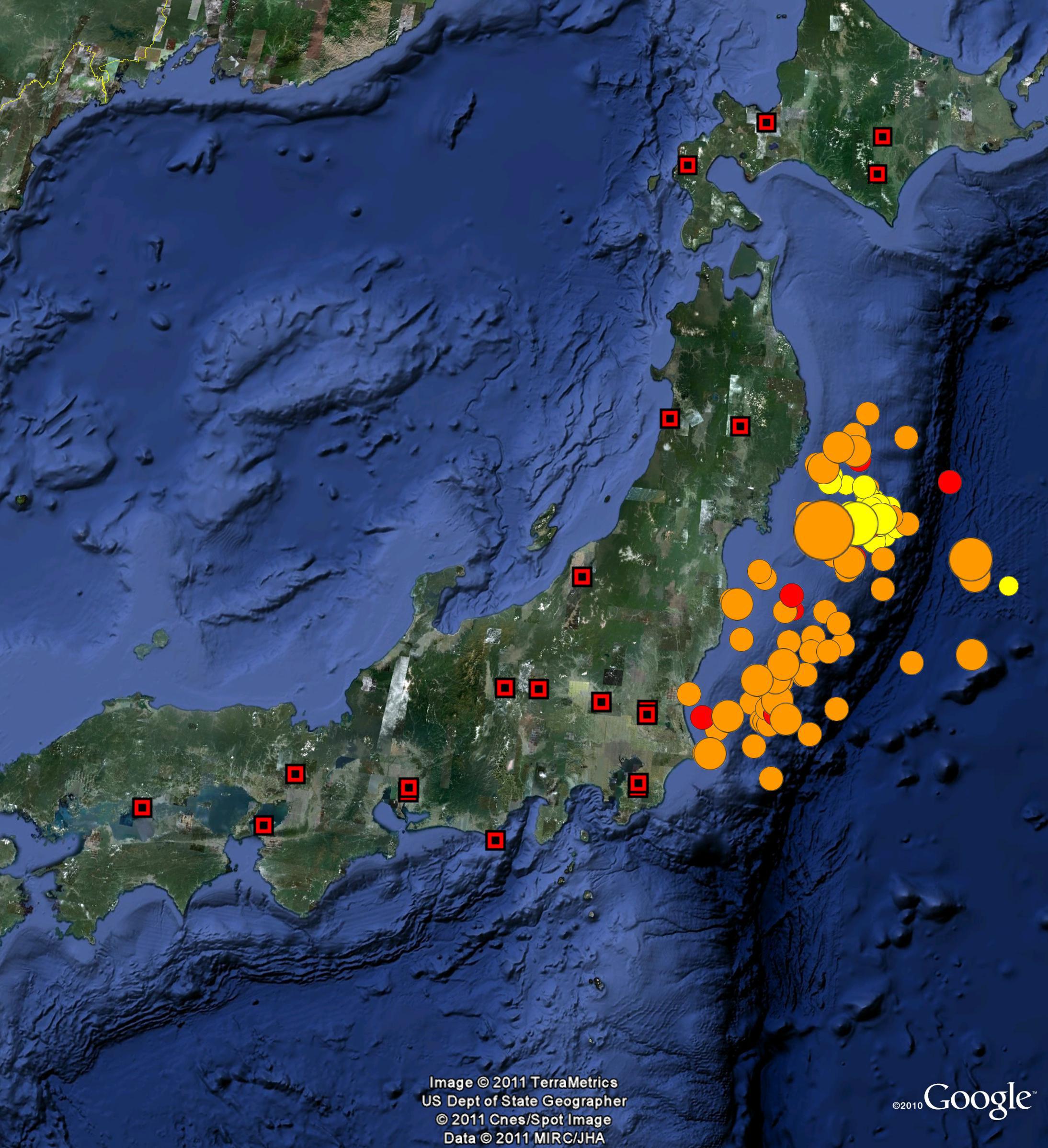
As we watch the devastation wrought by the earthquake in Japan, and mourn the loss of life, we should also reflect on the possible danger to genebanks. The US Geological Survey have a real-time earthquake Google Earth plug-in, and you can download a lot of genebank locations from WIEWS. Mash the two together and zoom in on Japan and you get this.
Fortunately, we’re not getting any indications of damage to Japanese genebanks (the red squares), so far. Something similar could probably be done with threat from tsunamis.