An intriguing photo by a Flickr contact set off a spate of googling which quickly led to the discovery that there was a “Savile Row Field Day” in October last year, part of a Campaign for Wool. The prime locality in central London was given over to a flock of Exmoor Horn and Bowmont sheep. It’s not exactly groundbreaking (as it were), as far as marketing ploys go, but I wish I’d been there.
http://www.youtube.com/watch?v=r0LtQBwXW1sWhat to call a monoculture if it isn’t a monoculture?
If someone is serious about a critique of modern agriculture, “monoculture” is not the best term to use – particularly if you want to communicate with farmers. The real issue is the difference between “diverse rotations” and “non-diverse rotations.”
Yup, that’s going to work.
Steve Savage offers his interpretation of the word, and how not to use it if you “are being critical of mainstream farming”. As I noted on his blog, I’m not about to do a point-by-point rebuttal. Life’s too short. And language is alive. But if that photograph of “a 700+ year-old farming system in China” is a monoculture, I’m a cantankerous nutcase with a blog to prove it.
Central Asian melons
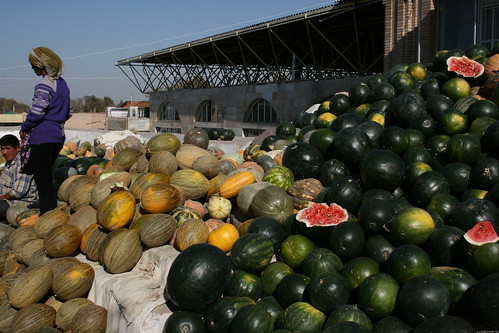
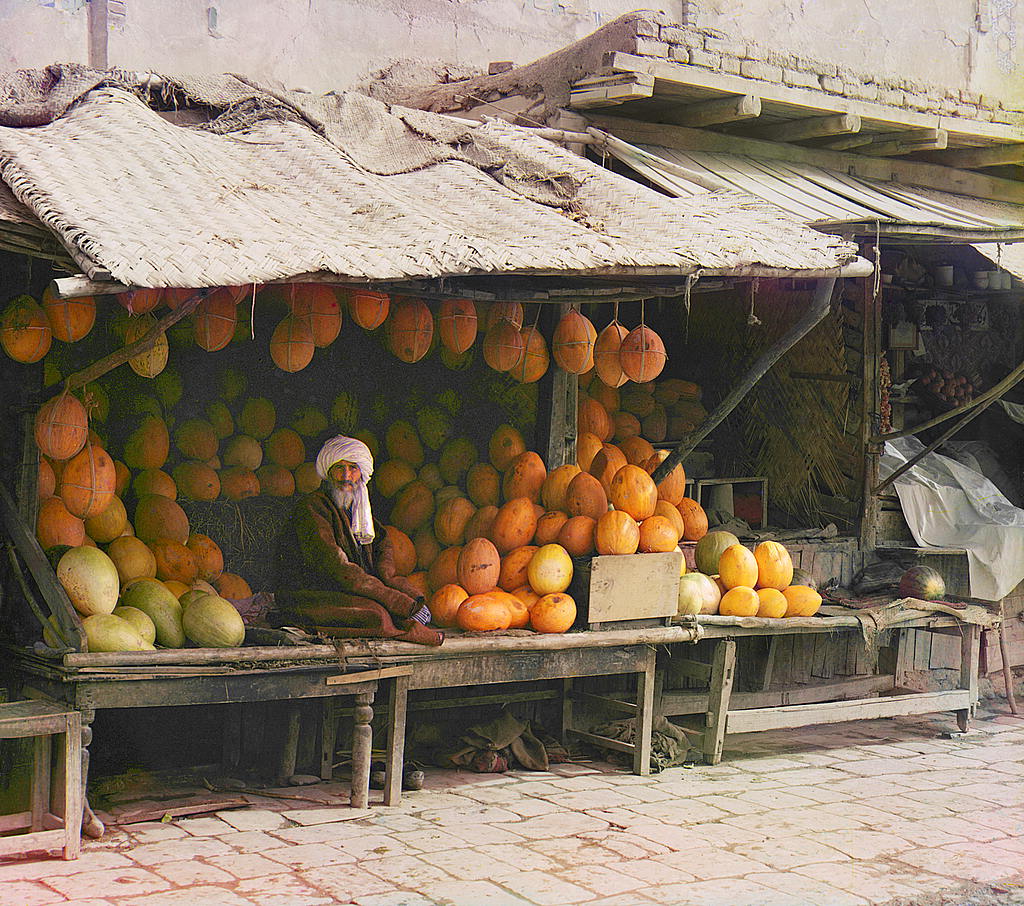
Jeremy had one look at the map in the previous post and asked me whether it was possible that watermelon cultivation had collapsed in the Central Asia republics. Well, it has probably declined substantially, but clearly not entirely, as the photograph above suggests. You can read at length about the melons of Uzbekistan. And you can see below how things used to be, at least for other kinds of melons. Yes, old pictures of agrobiodiversity markets again.

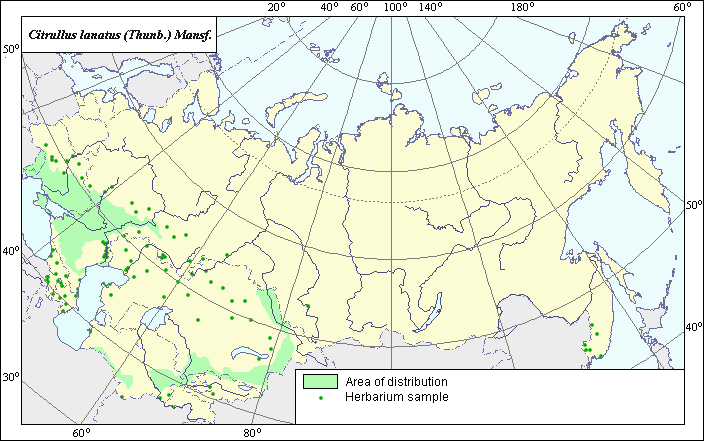
Maps of Russian agrobiodiversity online, again
We blogged about AgroAtlas some years back, but a big article in USDA’s newsletter gives us a welcome opportunity of pointing out again how cool it is. The much-awaited GIS layers are in a funny format, though, which I’d be interested to know how to convert to something that can be viewed in Google Earth.
Historical agrobiodiversity photographs online
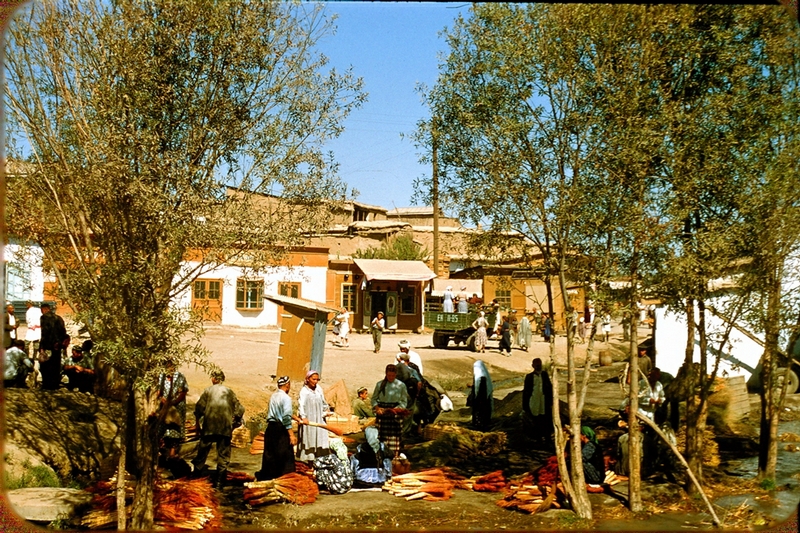 I’m not sure why I like old photographs of markets so much, but one reason may be because at the back of my mind is the thought that maybe photos such as the one from Uzbekistan in the 1950s at left and similar ones from 1920s Egypt could be used to gauge genetic erosion. Too bad the metadata for the stock imagery at National Geographic (where the Egypt photographs came from) doesn’t include date. Anyway, speaking of agrobiodiversity photographs from Egypt, the wonderful Saudi Aramco World also has some in its latest issue.