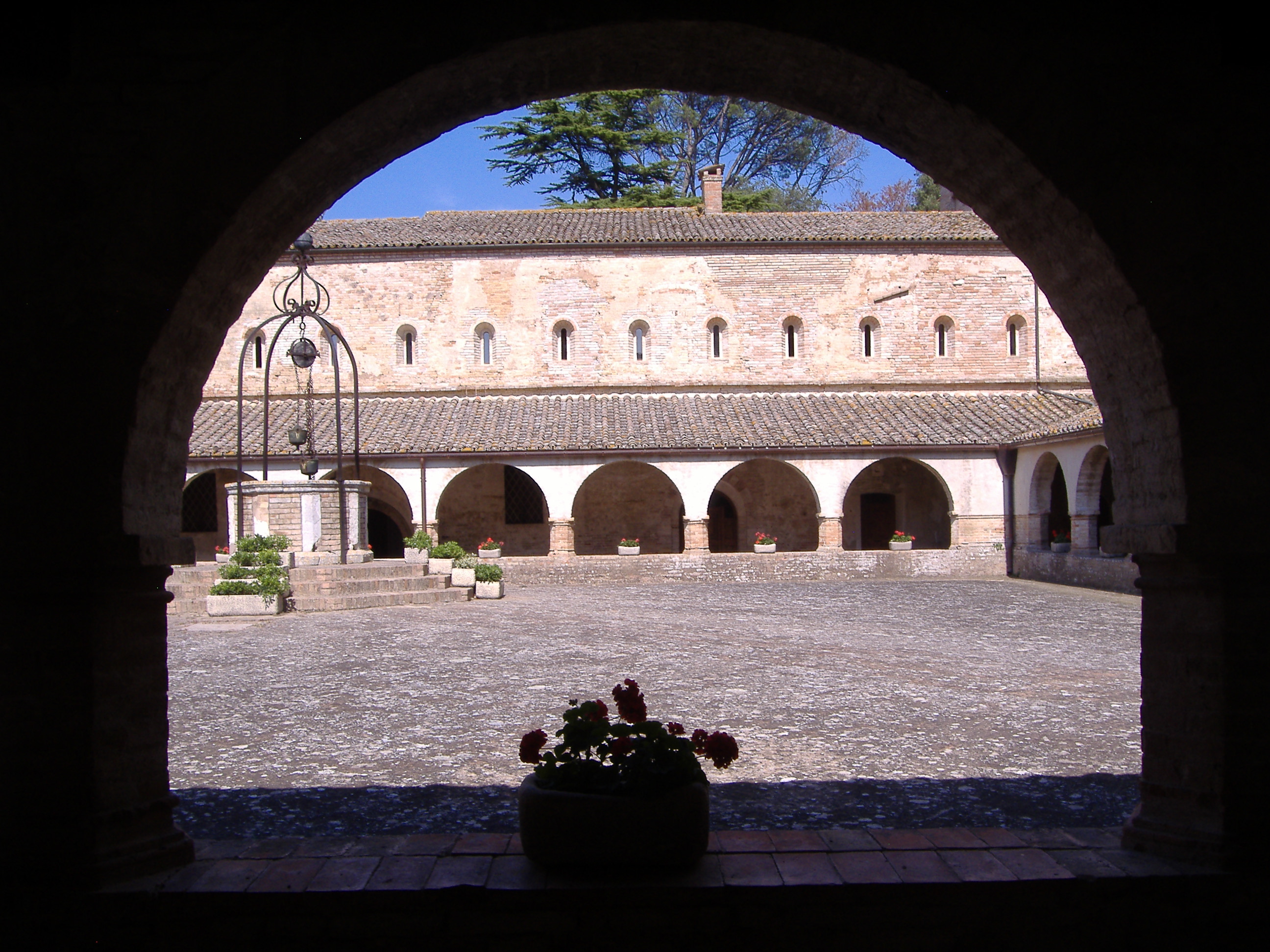
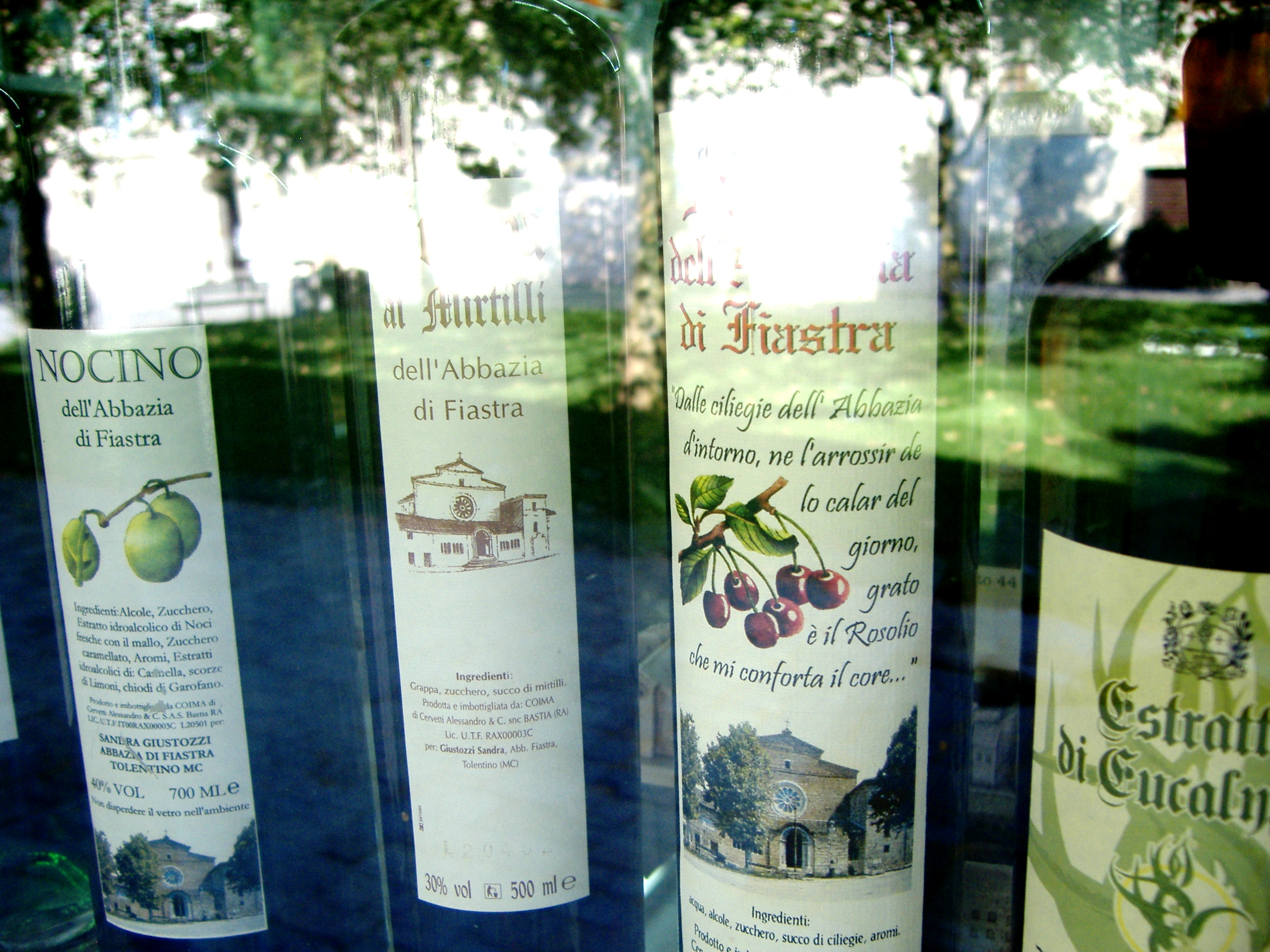
So I guess you’ll have gathered the family and I were on holiday in the Marche region last week. One of the cooler places we visited was the Abbadia di Fiastra (that’s its cloister above). This is a romanesque abbey nestled in the middle of an ancient wood, which is now a protected area. Cistercian monks built the place in the 12th Century, reclaimed some of the land for agriculture by changing the course of the river Entogge, and also made use of the nearby forest, of course. You can still buy natural products made on the abbey’s land in the little shop in the visitors’ centre.
There’s an interesting Museum of Peasant Culture at the abbey. Actually it mainly consists of old farm machinery and utensils. This was one of the more interesting exhibit, a seminatrice, or seed sower.
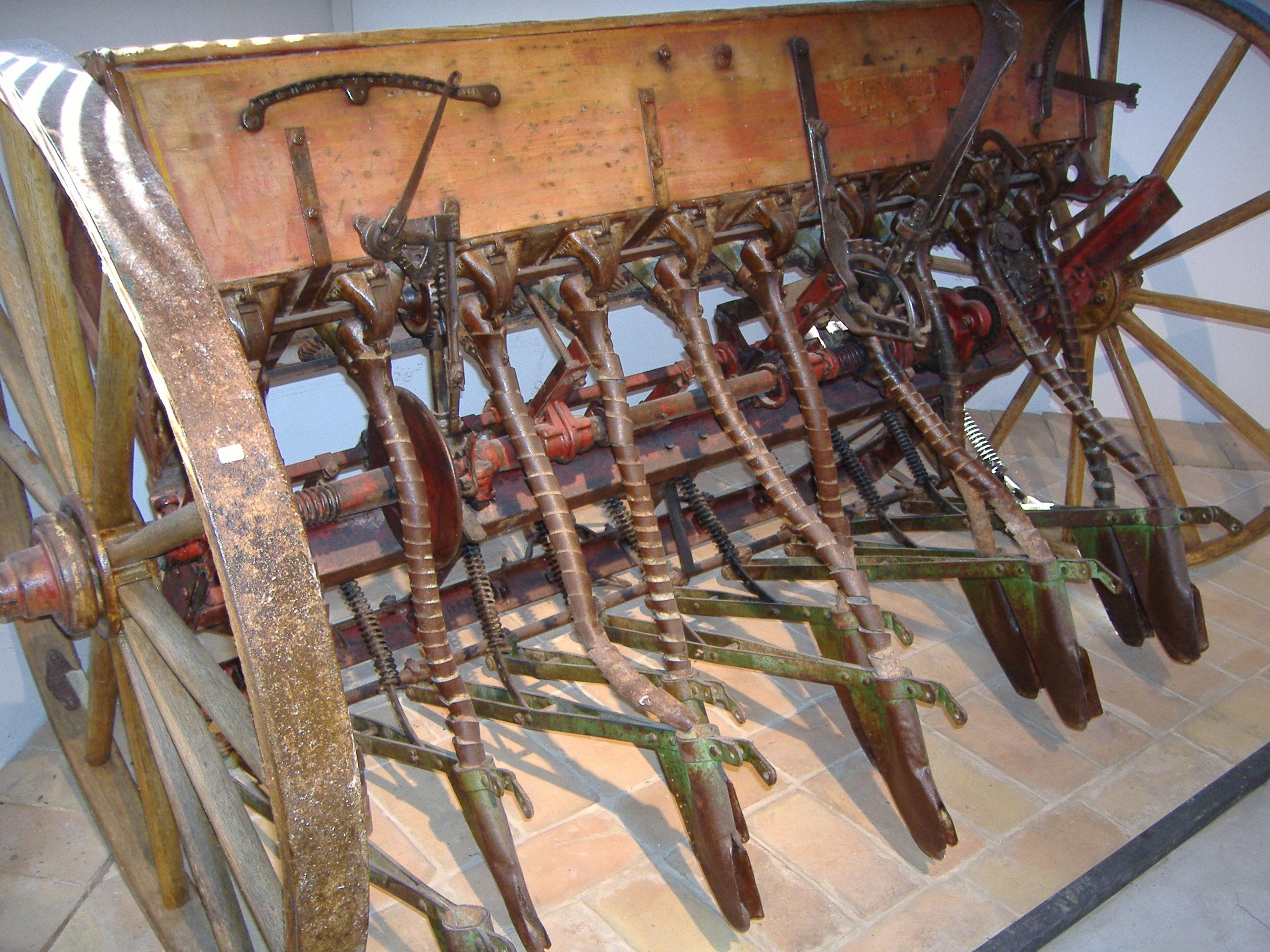
I talked to my friend the farmer about it. He remembers when tractors first came into the region, in the sixties. He remembers sowing and harvesting using machines such as this, pulled by horses or cows. He had heard of the museum, but didn’t think much of the idea.
European rural culture is to some extent the product of religious orders who, after the Roman empire and its long-hauling trade system had vanished, and moreover forced by the Rule of St. Benedict to establish self-provisioning communities, developed a diverse agriculture based on local adaptation. Also, they would share their innovations with other monasteries and farmers. A nice model for rural development, I think.
So, hooray for the Cistercians!
…and hooray for their sharing their beer with the rest of us.
Monasteries are, beyond any doubt,an inestimable repository of traditional knowledge. besides, unlike most of the traditional knowledge which was/is maintained and passed on to the next generation by word of mouth, it is registered, written and conserved in libraries. However, with the growing business opportunities, that knowledge will, hardly, be public and widely available. Monasteries nowadays, are making good use of that old recipes, inherited from generations and generations of predecessor monks, selling to the visitors, traditional medicines, liquors, soaps, etc. In a way, it’s a pity that that knowledge is kept secret, but on the other hand, it is thanks to some of the monasteries that have produced and kept that knowledge that the present generations are able to enjoy that products. Let’s just hope that, kept secret or made public, it just doesn’t disappear
hello i have one of them seed sowers do you know if they hold any value if reconditioned at all anyone ?