- Madagascar: Vintage photos, not-so-vintage photos.
- More photos, this time of state sandwiches. Yes, sandwiches.
- “The solutions to the problem of feeding people and protecting the planet are endlessly and irredeemably gray.” Pretty much the same argument I made recently, not quite so rudely.
- Training course on communicating the awesomeness of neglected species. How difficult can it be though, right?
- Keeping cats happy has a cost.
- Nifty vintage photos of California palms. The trees, people, the trees.
- Cowboys ain’t what they used to be. But only just.
- Gleaning deconstructed.
- IRRI opens exhibit on heirloom seeds, no doubt through gritted teeth.
- Ten potato genomes in the offing. Wait, doesn’t rice have like 3,000? Get it together, potato people.
- Renaissance watermelons looked really crappy. Probably tasted of something, though.
Tweeting up a storm in Minneapolis and Pullman
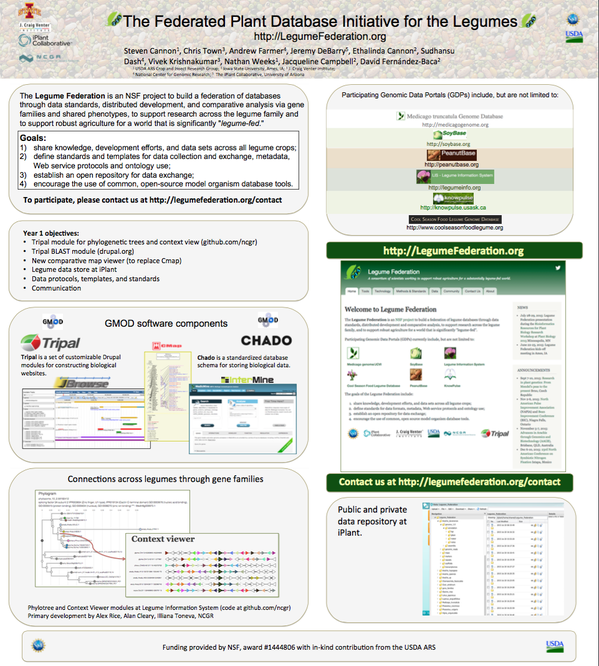
What did we do before Twitter? Had a life, probably. But also, it was undeniably more difficult to keep up to date with stuff. Absent heroic tweeps in Minneapolis, I would not have been able to follow Plant Biology 2015 quite so assiduously, and thus find out about, among many other things, the Legume Federation. Or indeed see their poster.
Likewise the annual meeting of the National Association of Plant Breeders would have slipped me by. And I would have missed this photo of two plant breeding legends.
#NAPB2015. Two giants of wheat breeding whose shoulders we all stand on. Bob Allen and Cal Qualset–great people!! pic.twitter.com/po6PPvmW5b
— UNL Small Grains Breeding- Frels Lab (@Huskerwheat) July 28, 2015
Orcadian bere in Canada shock
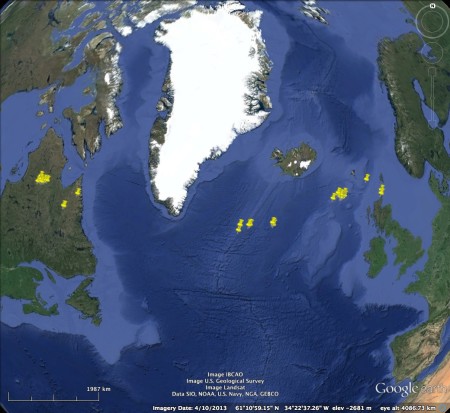
Beremeal is an earthy, nutty and nutrient-rich flour made from bere, an ancient six-row barley. It was traditionally used to make bannocks, soft rolls that are a speciality of Scotland’s north-eastern ilses, and now the only remaining mill to process this grain is in Orkney. The bere barley shaped the diets of Orcadians for generations, but came into sharp decline in the 1950s with the birth of white supermarket loaves. It was also less productive as modern barleys and required a lengthy milling process. By the early 1990s, the last remaining mill closed and bere almost entirely disappeared until a campaign was launched to bring bere back. Now, 200 tonnes are being milled today as people start to redisocover this ancient grain.
Hear all about it on the BBC’s Food Programme. Then head over to Genesys and reassure yourself that should these efforts fail, there are quite a few samples of “bere” in genebanks. Though those responsible for that of Science and Advice for Scottish Agriculture may want to check some of the longitudes in their database.
“Tomatillos silvestres, tomatillos silvestres!”
A short Smithsonian.com piece by Barry Estabrook does a really outstanding job of describing — no, explaining — the conservation and use of crop wild relatives to a lay audience. It’s all there. The value to crop breeders of genes from wild relatives. The history of germplasm exploration, and how it has resulted in the establishment of large collections. The need for, and urgency of, further collecting. The use of information from genebanks to guide future exploration. The challenges that such work faces, including on the policy side. And the euphoria that it can generate when you do overcome those challenges. All in a couple of pages, using a single wild species as an example. And if, once you finish reading the story, you want to know more about what Estabrook was chasing in Peru, it’s (probably) this.
Nibbles: Native American foods, Responsible soy maps, Ocean blue, Social academics, Kenyan vendors, Coffee pix, Local food takedown, Ancient horses, Kava bar, Plantae, Root fungi
- Traditional foods fight Native American obesity.
- Round Table on Responsible Soy makes some nice maps.
- The Decade for African Seas and Oceans is off to a blue start.
- Face it, academics, social media are good for you.
- You think Pres. Obama checked out some Nairobi street food?
- Pics of coffee value chain. Wow, that makes it sound really boring.
- Calling bullshit on farm to fork.
- A day in the life of an archeologist of Iron Age horses.
- Kava reaches NYC hipsters.
- Plantae is coming!
- Rice plants colonized by mychorriza express different genes and have more lateral roots.