Banter about cucurbits

Mary Beard, classics professor at Cambridge and effective general-purpose public intellectual, knows how to get your attention:

Sikyonians … were a sort of Greek footwear, but also a famous variety of cucumber and so a comic term for a phallus, and the ‘scarlets’ are a suspicious match for the scarlet dildo…

That’s from a review, enticingly entitled Banter about Dildoes, 1 of a book on Roman shopping with a much more boring title. 2 Well, I defer to Prof. Beard on Greek footwear and Roman sex toys, but I’m not so sure about that cucumber.

To see why, let’s turn to a 2007 Annals of Botany paper The Cucurbits of Mediterranean Antiquity: Identification of Taxa from Ancient Images and Descriptions, by Jules Janick et al.:

Many of the Renaissance botanists identified the cultivated sikyos of the Greeks as cucumber. Observers of more recent times, including de Candolle (1886), Sturtevant (Hedrick, 1919) and Hyams (1971), have concurred. However, as de Candolle (1886) admitted, the origin of cucumbers is the foothills of the Himalayas. Although Roberts (2001) identified two ancient mosaic images as depicting cucumber (see Figs 3E and ​and 4B) the former is clearly Cucumis melo, as evidenced by the longitudinal split in the fruit, and the latter is Lagenaria siceraria, as evidenced by the obviously swollen peduncular ends of the fruits. Archaeobotanical records include findings of several seeds purportedly of cucumber, but it is extremely difficult, even for experts, to differentiate between the seeds of C. sativus and C. melo (Bates and Robinson, 1995). Possibly, an identification of the species of these seeds could be accomplished by analysis of ancient DNA (Gyulai et al., 2006). In this survey of Mediterranean iconography and verbal sources of Roman times, we have found no hard evidence of the presence of cucumbers. There is some linguistic evidence that they became known in the region during the early Middle Ages (Amar, 2000) but the earliest European image known to us of what can be unquestionably identified as cucumber is from approx. 1335, post-dating the Mongol invasions. Renaissance depictions of cucumbers, although very common, show much less variation than do those of melons, which is suggestive of their being more recently introduced or of their lesser culinary appreciation or economic importance.

I think it is worth reproducing those mosaic images. Hopefully Annals of Botany won’t mind. Here’s 3E, the slitty Cucumis melo.

cucurbit

And here’s 4B, the knobby Lagenaria.

cucumber1

So, one can understand the mistake, but, pace Prof. Beard, that “famous variety of cucumber” was probably a famous variety of something else, either a muskmelon 3 or a bottle gourd. Though, as you can see from the illustrations, 4 that wouldn’t affect its comic potential. On the contrary…

PS Incidentally, since we’re talking funny-shaped cucurbits in history

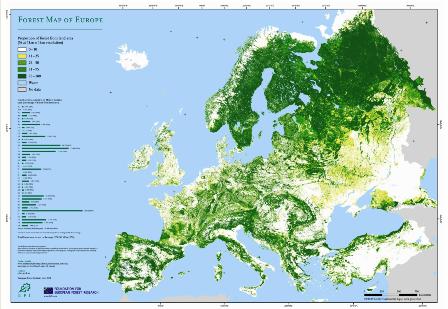
Nibbles: Mashua info, Veggies programme, Rice research, Genomes!, Indian malnutrition, Forest map, British agrobiodiversity hero, GMO “debate”, Lactose tolerance, Beer

Implementation of AnGR plan of action initiated

FAO has just announced that 13 projects, involving 30 countries, have been selected for funding as contributions to the implementation of 2007’s Global Plan of Action for Animal Genetic Resources. That’s thanks to the Governments of Germany, Norway and Switzerland, who put more than US$1 million in voluntary contributions into the appropriate FAO Trust Account, as per the Funding Strategy of the GPA. What are these projects? Well, it’s not all that easy to say. These are the directions FAO gives us:

Details of the projects are available here (scroll down to the map).

mapThe map in question is nice enough, and clicking on the country gives you lots of information on each project, but what I really wanted was just a list, giving titles and countries. And I couldn’t find that anywhere, though maybe I just didn’t look hard enough. With just that map, interactive and all, you get a good overall idea of geographic coverage, but it’s very difficult to figure out the range of livestock species involved in the projects, or how many are single-country as opposed to multi-country initiatives, for example. A pity.

Ah, but fear not, we’ve got you covered. Here’s the list you know you wanted but FAO wouldn’t let you have, going roughly from east to west, painstakingly extracted from that ever-so-pretty map.

  • Regional Project: Cook Islands, Fiji and Niue
    Title: South West Pacific Animal Genetic Resources Project — Conservation of indigenous pig and chicken breeds in Fiji, Niue and Cook Islands
  • Country: India
    Title: Documenting and supporting community-based conservation of four local breeds
  • Regional Project: Serbia, Bosnia and Herzegovina, Croatia, Montenegro, The Former Yugoslav Republic of Macedonia,
    Title: BushaLive (cattle)
  • Regional Project: Kenya, Ethiopia, Uganda
    Title: Promotion of indigenous chicken for improved livelihood and income generation
  • Country: Mozambique
    Title: Conservation of native cattle breeds of Mozambique, for their present and future use
  • Country: Nigeria
    Title: Conserving the Muturu Breed of Cattle in South Rain Forest Zone of Nigeria
  • Country: Togo
    Title: Phenotypic and molecular characterization of local chicken in Togo
  • Regional Project: Gambia, Guinea, Mali, Senegal
    Title: Assessment of the impact of transhumance on the sustainable management of animal genetic resources
  • Regional Project: Algeria, Morocco
    Title: Preservation of Beni Guil sheep breed by semen exchanges between countries
  • Regional Project: Argentina, Brasil, Costa Rica
    Title: Enhancement of Farmers Communities through Goats Utilization and Genetic Improvement
  • Regional Project: Bolivia, Peru
    Title: Capacity strengthening for the implementing breeding strategies for llamas in Bolivia and Peru
  • Country: Uruguay
    Title: Caracterizacion productiva y conservacion en ovinos criollos de Uruguay
  • Country: Chile
    Title: Estrategias de conservacion in situ para bovinos y caprinos

Funny this coming hot on the heels of the launch of FAO’s monumental new data portal.

Horizon scan spots coconuts

All natural vs all "natural". We know which we prefer
All natural vs all “natural”. We know which we prefer

A horizon scan of global conservation issues for 2013” by Prof. William Sutherland et al., just out in Trends in Ecology and Evolution, identifies 15 topics that “increasingly may affect conservation of biological diversity.” It’s a pretty eclectic bunch, ranging from synthetic genetics to hydropower in the Amazon. But no, “synthetic genetics” doesn’t refer to things like remaking wheat, it’s to do with “synthetic forms of nucleic acid that could function in living organisms.” In fact, there’s not much agriculture in there at all, in the sense that none of the topics identified are the sort of things that affect agricultural biodiversity, as opposed to the “natural” kind. That’s par for the course as these exercises go, of course. Agriculture (in a broad sense) does make an appearance in a couple of cases, however. So, for example, the alarm is raised over the increased use of plant-based sources in aquaculture feed.

New developments include selection and genetic modification to alter the composition of both vegetable feed sources and aquacultured organisms, changes to the processing of aquaculture feed, and new sources of aquaculture feed. New sources may include terrestrial animal by-products, waste matter from biofuels and brewing, and derivatives of bacteria, yeast, and microalgae. These changing demands bring aquaculture into more direct competition with arable and livestock farming for land and resources. Their direct and indirect effects have yet to be analysed on a global scale.

But the most intriguing of the topics discussed, from an agricultural perspective, is the “[r]apid rise in global demand for coconut water.” With many thanks to Trends and ScienceDirect, I’ll take the liberty of reproducing the relevant section in full:

There has been a rapid increase in demand for coconut water in the USA, Europe, and other large markets (http://arnoldonethicalmarketing.brandrepublic.com/2012/06/11/coconut-water-the-next-big-trend-and-billion-dollar-market-in-soft-drinks/). This is partly in response to claims that it has high potassium content but low levels of fat, carbohydrate, and sodium (http://www.motherjones.com/blue-marble/2010/07/coconut-water-sports-drinks). In 2010, commercially packaged coconut water was mostly sold in Asia, with a few brands available in specialised food outlets in the UK and USA. By 2012, over 20 coconut water brands had emerged in the UK and the product was stocked in mainstream supermarkets. In the USA, major beverage producers, such as PepsiCo and Coca-Cola, either purchased or bought shares in smaller companies based in coconut-producing countries. Exports from coconut-growing areas across the world have increased by hundreds of per cent since 2010, with the Philippines reporting a 300% increase in exports in the first quarter of 2012 (http://www.pca.da.gov.ph/pr063012a.php). The area of cultivated coconut Cocos nucifera may increase to meet this growing demand, driving land-use change and potentially affecting ecosystems in some areas. A recent study on an uninhabited Pacific island found much lower seabird abundance in areas with coconut palm, relative to areas dominated by native tree species, and consequently lower nutrient additions to local soils. However, to examine the effects of the potential land-use change, the environmental impacts of coconut cultivation would need to be compared to those of other crops, as well as native vegetation, in appropriate localities.

I had no idea about this extraordinary change in demand for coconut water. Be that as it may, surely the possible effects are not just on seabird and native trees species diversity, but also on diversity within the coconut crop itself, in places like the Philippines in which coconut cultivation might expand or switch to higher-yielding hybrids. It is unfortunately all too typical that when agriculture does come up, it is solely as the cause of problems for other biodiversity, rather than as the home of biodiversity in its way just as threatened and important as any in tropical rainforests and coral reefs.

Nibbles: Maya nut, Afroculinaria, Biofortification, CGIAR genebanks, FAO data, Rice drought, Bioregions, Sustainable intensification, Caviar, Beer