- Indirect Effect of a Transgenic Wheat on Aphids through Enhanced Powdery Mildew Resistance. Plants resistant to fungus have more aphids. Oh dear.
- A case study of seed exchange networks and gene flow for barley (Hordeum vulgare subsp. vulgare) in Morocco. There is more movement of material among villages than interviews suggest.
- Evaluation of plant-derived products against pests and diseases of medicinal plants: A review. Extracts from some medicinal plants used to protect other medicinal plants.
- Identifying key knowledge needs for evidence-based conservation of wild insect pollinators: a collaborative cross-sectoral exercise. Top one: How important is the diversity of pollinator species to the resilience and reliability of the pollination service? Seems a pretty good start.
Nibbles: Crop mapping, GBIF brochure, Cassava books, Agroforestry and yield, Seed Savers
- Wanna help rogue cartographers map food?
- GBIF sorts out biodiversity informatics in 20 steps.
- CIAT compares cassava to Jesus.
- Long-term ICRAF study says legume tree intercrop stabilizes maize yields.
- “Every seed has a story to tell.”
The hues of the opal, the light of the diamond, are not to be seen if the eye is too near
There’s quite a lot of metaphor coming out of ICRISAT lately, for some reason. First we had Genes of Gold, referring to the use that the centre has made of the biodiversity within its crops in developing new, improved varieties. Then today we have a video on the Jewels of ICRISAT, which includes a couple of the aforementioned new varieties, plus the genebank itself.
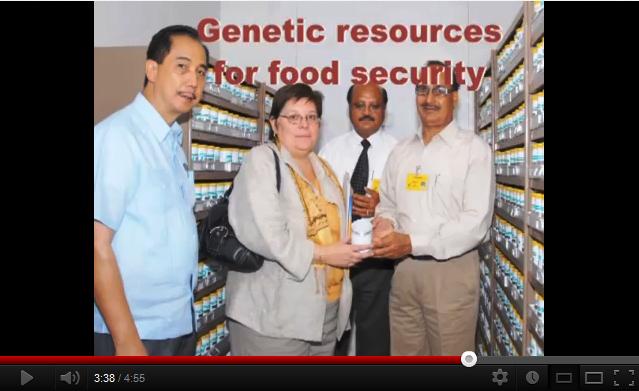 The genebanks of the CGIAR, of which ICRISAT is one, have of course on occasion been described as the crown jewels of the system. They cost $21 million a year or thereabouts. Which seems cheap for crown jewels. Especially compared to the sort of price tag people are putting on saving the whole of biodiversity, rather than just that part of it which feeds us all.
Featured: EU regulations
Richard Hardwick points us to the full text (PDF, 23 pages) of that “[w]eird statement on genetic resources from EU Commission” we mentioned in a recent Nibble.
I think its from the people who promised “to explore the scope for developing a strategy for the conservation of genetic diversity.”
Right. So who’s going to read it for us?
Nibbles: 300, Linux seeds, Reef protection, Cold turkeys, Forest atlas, Perennials, Potato King, Apple art
- If you liked our piece of a couple years back on a remarkable Indian mango tree, you’ll love Bhuwon’s latest, fuller write-up.
- Open-source seeds? Isn’t that what the ITPGRFA was supposed to be ensuring?
- How fisherfolk in Indonesia protect the reef.
- Going wild turkey.
- Mapping Cameroon’s forests. Interactively, of course.
- A perennial roundup.
- Old Fritz and the potato. Maybe genebanks should take a leaf (or tuber) out of his book?
- “What constituted beauty, she wondered, in the scientist’s eye?”