Variety Savers of Europe try to unite

The European Network of Breed and Seed Savers is a website for listing all keepers of indigenous livestock breeds and culivators of indigenous cultivated plants found in Europe. Variety-Savers should be used to network, to share information, to list events and to sell products and services relating to conservation of European agrobiodiversity.
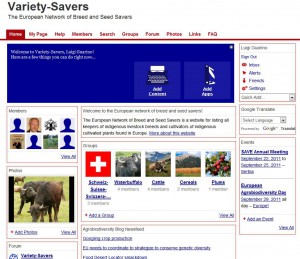
Just off the ground, and only 14 members so far, but this looks like an interesting initiative. Especially if it manages to bring formal-sector genebanks closer together with on-farm conservation practitioners and amateur heirloom enthusiasts. You do have to register, but it’s fairly painless, and the website provides some fancy social networking tools. Very best wishes!
Googling crop production

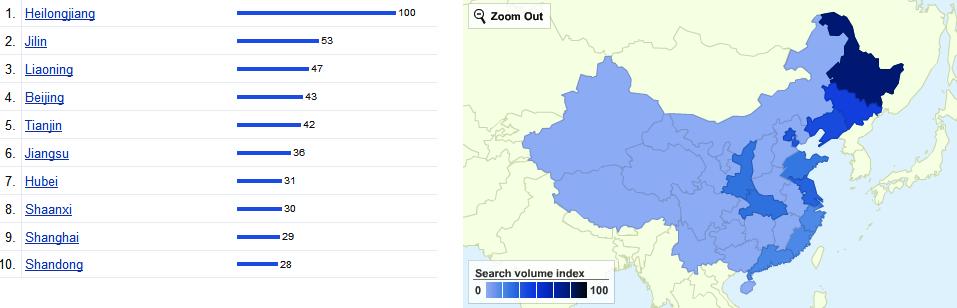
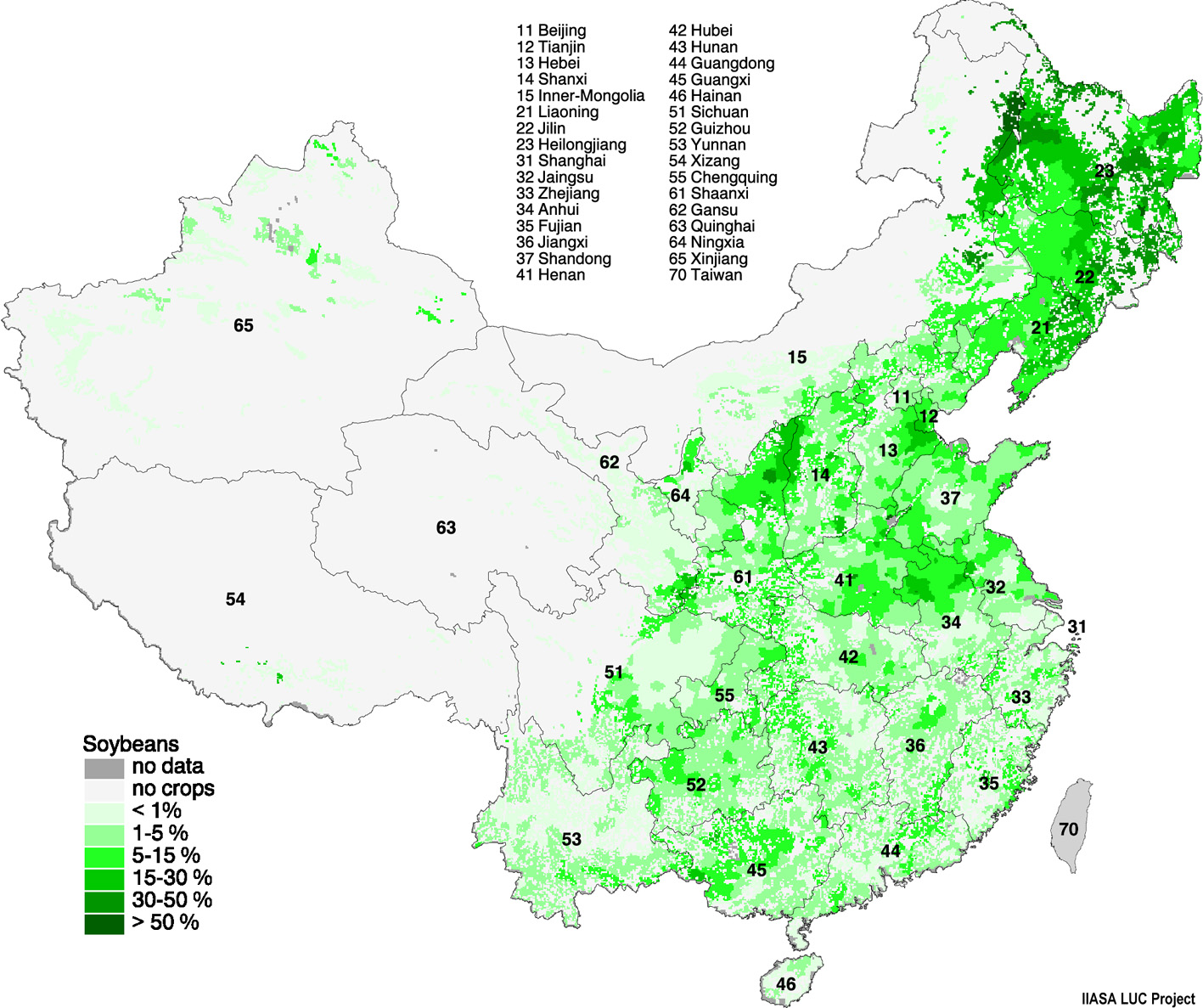
Speaking of Google, can it be used to map crop production, the way it can be used to map outbreaks of flu or dengue? Well, according to Google Insight for Search, this is the pattern of searching for the word “soybean” you get for China.

And this is one of the nicer maps of soybean production in China I was able to find online:

Not bad, but not great. Pretty much the same for Brazil. I guess it was worth a try, but if you want production maps for crop X, your best bet is still to just search Google Images for, well “X production map.” Or maybe ask the CGIAR or FAO GIS tribe. No, wait

Important Plant Areas documented

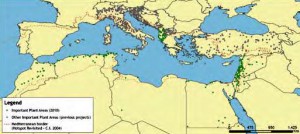
More than 200 areas across North Africa and the Middle East have been identified as wild plant hotspots, a report has revealed. The research lists 207 places which are internationally important for the plants they contain, including 33 in Syria, 20 in Lebanon, 20 in Egypt, 21 in Algeria, 13 in Tunisia and five in Libya.

The report in question is “Important Plant Areas of the south and east Mediterranean region,” 1 just out thanks to IUCN, Plantlife International and WWF, and downloadable for free. The maps are nice, of course, and I hope they’ll be available in digital form in due course, if they are not already. 2 And it is also great to see a list of species with restricted ranges; it includes quite a few crop wild relatives, in particular Allium and Vicia spp.

Ethiopian Agriculture Portal misplaces crop diversity

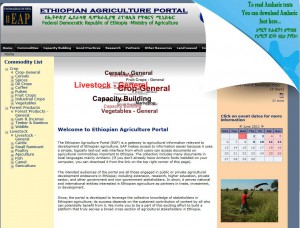
The Ethiopian Agriculture Portal (EAP) is a gateway to agricultural information relevant to development of Ethiopian agriculture. EAP makes access to information easier because it uses a simple, logically laid-out web interface from which users can access documents on agricultural commodities important to Ethiopia. The collection includes many documents in local languages mainly Amharic…

The intended audiences of the portal are all those engaged in public or private agricultural development endeavors in Ethiopia; including extension, research, higher education, private sector, and other government and non-government stakeholders. In short, it serves national and international entities interested in Ethiopian agriculture as partners in trade, investment, or development.

A very worthy effort, and not badly done. But one is sorry not to see any mention of the Institute of Biodiversity Conservation in Addis Ababa, with it’s storied genebank housing a unique collection of local crop germplasm. And although it is welcome to see, under “Other Resources”, reference to the Domestic Animal Diversity Information System and the Domestic Animal Genetic Resources Information System, one longs for similar exposure for international databases on plant genetic resources, in particular those of the CGIAR Centres, whose data is of course also now available through Genesys.