Our more skeptical readers will probably dispute it, but that’s a shot of this esteemed organ being publicized at the European Plant Genetic Resources Conference 2011, organized by Eucarpia, taking place in Wageningen as I write. 1 Apparently, the massed ranks of genebankers present were encouraged to blog away, echoing our recent exhortation to that effect. Welcome, everyone!
Mapping aid
Thanks to CIAT’s Meike for news that
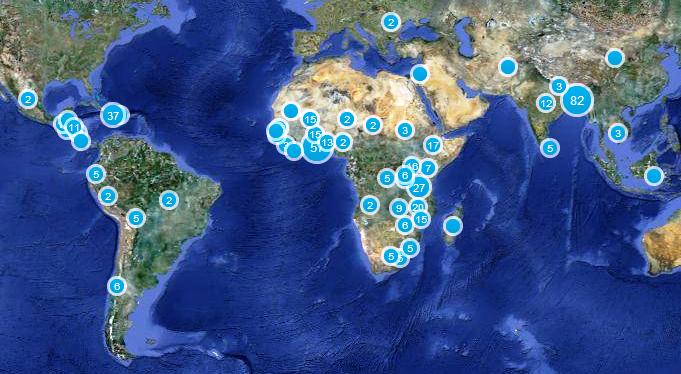
InterAction has just launched an interactive US Food Security Aid Map that provides detailed project-level information on food security and agriculture work being done by their member NGOs. The site can be browsed by location, sector, organization or project.
Here’s the map of agriculture projects: 2
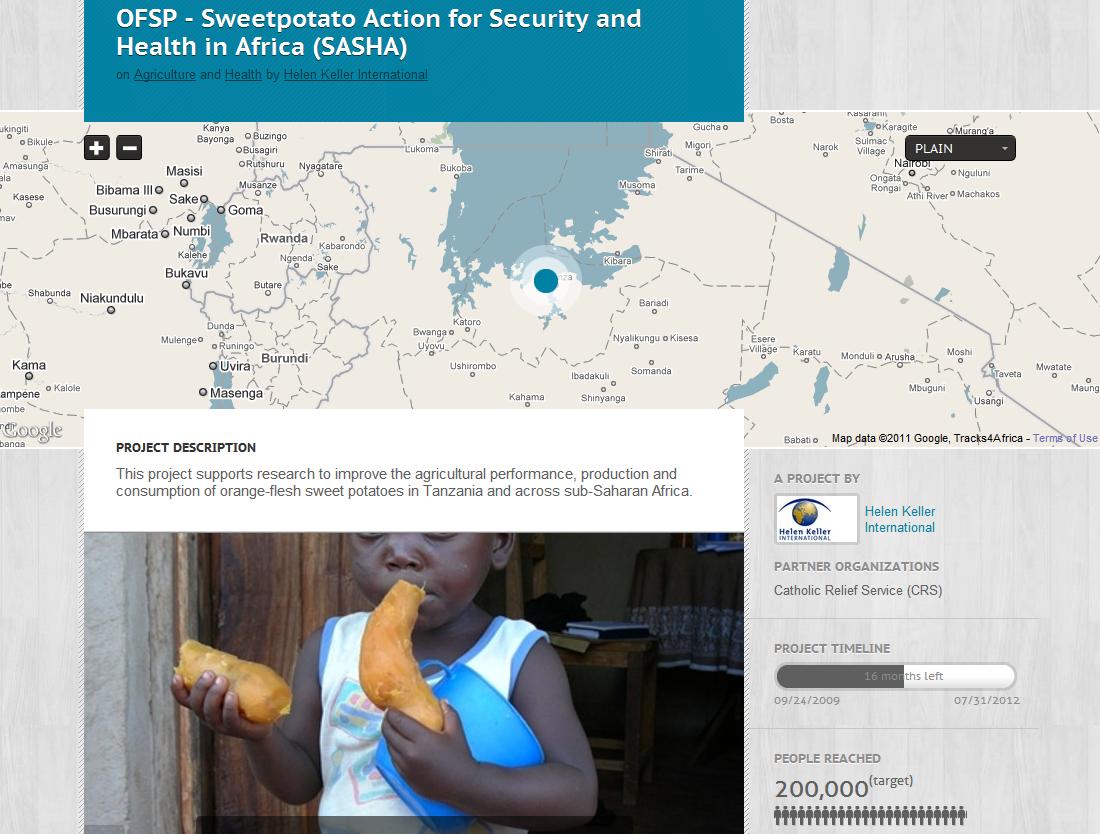
As coincidence would have it, one of the projects is the orange-fleshed sweet potato work we mentioned in a recent post.
Searching on “agrobiodiversity” yielded nothing, but there were a few hits with “diversification.” Well worth exploring in a bit more detail. If only to identify places where some pre-emptive germplasm collecting might be in order.
More on the orange sweet potato story
The author of the orange-fleshed sweet potato paper I talked about a couple of days ago has kindly informed me that the answer to the question I posed is that the impact of the dissemination of these new varieties in Uganda has indeed been measured, but just hasn’t been published yet. There was apparently a big multidisciplinary study in 2007-2009 both in Uganda and Mozambique, and the results are due to come out in the near future. Good to hear, and many thanks, Robert. In the meantime, we have the following snippet from an IFPRI publication to whet our collective, er, appetite.
Nibbles: Lupine, Methane, Food crisis, Nutritionists, Carrots, Poi, Barhal, Mung bean, Invasives, European bison, Mango
- Saving the scrub lupine. Well, it’s a crop wild relative of sorts.
- Dietary approaches to reduction of belching. No, not less beer and peanuts in front of the TV.
- “Governments and institutions should strongly promote new agricultural technologies suitable for smallholders through increased investment in crop breeding and livestock research.” That would be IFPRI on the actions needed to prevent recurring food crises. Hope that includes supporting the genebanks.
- “Can’t nutritionists make up their minds? They keep changing things!” Nuff said.
- Carrots are exotic? In Canada? Yes indeedy.
- Rachel dissects the cost of proper poi in Hawaii.
- Behold Barhal, relative of breadfruit.
- High yielding mung-bean repatriated to Somalia. Genebanks protect and serve?
- Do your bit for conservation, eat an invasive. Or, perhaps, a bison?
- Bad news for Indian mangoes. What I want to know is whether there are any varieties that are doing really well.
- Mediterranean forests going up in smoke. Bad for the crop wild relatives in them too, no doubt
To Serve and Conserve
That’s the title of the European Plant Genetic Resources Conference 2011, organized by Eucarpia, and on right now in Wageningen. Are you there? Can you tell us about it? We would particularly like to know the answer to the question “Whither genebanks?” asked by our old mate Geoff Hawtin. Oh, and here’s a note for the organizers: our blogging and twittering services come quite cheap.