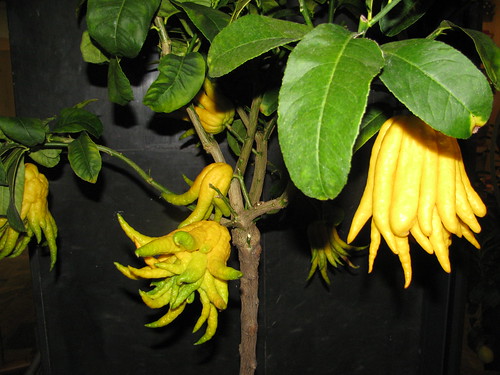
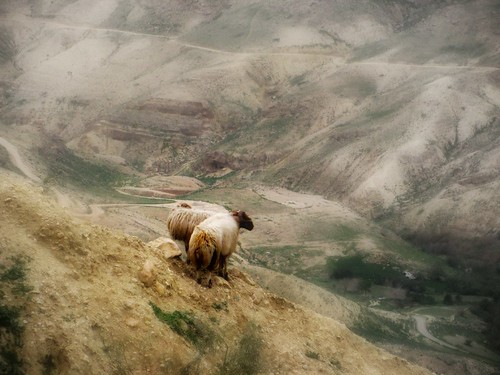
It’s a hard winter for British homegardeners…
The Crown Jewels of USDA
Nice video on how USDA conserves plant and animal genetic resources at Ft Collins in Colorado. Great job by Dave Ellis and co.
Watch the full episode. See more America’s Heartland.
Christmas agrobiodiversity
Agricultural biodiversity on display for Christmas in a Parisian street market.
Genebanks and climate change adaptation
Gary Nabhan has had a letter published in the Christmas edition of The Economist.
SIR – Your otherwise excellent leader on adapting to climate change was marred by the assertion that people should abandon their “prejudice” against genetic engineering in order to secure food supplies (“How to live with climate change”, November 27th). Although it is true that drought-resistant seeds will be needed—as will low-chill fruit trees and root crops—they are not likely to come from genetic engineering. This is because it can cost up to $5m and take up to 15 years of R&D for each new patented biotech cultivar. It is unlikely that genetically engineered organisms can be deployed quickly enough to respond to climate change.
It would be far more cost-effective to support local farmers in their breeding and evaluation of selected varieties already in community seed banks. The diversity of heirloom seeds offers rural communities far more pragmatic options than the Gates Foundation and Monsanto can generate with all their wealth.
Gary Paul Nabhan
Professor, University of Arizona, TucsonCarol Thompson
Professor, Northern Arizona University, Flagstaff
I won’t comment on the GMO angle, except to say that Gary’s point is debatable. What I wanted to point out is that it’s not just “community seed banks” that house the seeds of adaptation to climate change. 1 National and, in particular, international genebanks will also be important. That’s because the climates experienced by rural communities in the future will increasingly come to resemble those experienced in the past by communities further and further away. Adaptation will lie in other people’s seeds.
Nibbles: Yemen, Seed moisture, Irish fruits, Indian genetic erosion, Goji, Sustainable Ag, Green Revolution,
- Probably way more than you want to know about food security in Yemen, but stunning nonetheless.
- NordGen tells us how to measure seed moisture content. In Russian.
- The Irish have benefited from at least one bank. Alas, that bank is Pavlovsk.
- Indian farmers turning their back on traditional crops because of climate change. Hope NBPGR is on the case.
- Goji berries only as good as other fruit and veg, with “significant placebo effect”.
- [W]e are in the midst of shaping a new perspective on sustainable agriculture, it says here. Right.
- All you ever wanted to know about Green Revolution 2.0, thanks to Anastasia.
- Speaking of which .. sustainable ag under discussion.