Many of our most important foods come from bat-dependent plants. These include bananas, plantain, breadfruit, peaches, mangos, dates, figs, cashews and many more.
Bananas? Bananas? Yes, bananas. Well, kinda.
Agricultural Biodiversity Weblog
Agrobiodiversity is crops, livestock, foodways, microbes, pollinators, wild relatives …
Many of our most important foods come from bat-dependent plants. These include bananas, plantain, breadfruit, peaches, mangos, dates, figs, cashews and many more.
Bananas? Bananas? Yes, bananas. Well, kinda.
Olivier de Schutter, the UN special rapporteur on the right to food, is asking
donors to move away from the model of subsisidised fertilisers and seeds – which he calls “private goods”, to supporting “public goods” such as better infrastructure, strengthening local markets, ensuring access to credit and building storage capabilities.
Alas, I don’t think “storage capabilities” refers to genebanks here. No word on whether Prof. de Schutter would in fact include international crop germplasm collections in that list, but the World Bank certainly does.…
Survival International has a new website on Uncontacted Tribes:
More than 100 tribes around the world reject contact with outsiders. This is their story.
Somewhat weirdly, the website includes a map, although it is pointed out that it “won’t help anyone make ‘first contact.’ But it will help to stop oil companies and loggers from invading the lands of uncontacted tribes.”
Be that as it may, I could not resist mashing it up in Google Earth 1 with the data in Genesys on the world’s holdings of agrobiodiversity. This is the result for an area comprising the Brazilian state of Rondonia and some surrounding regions.
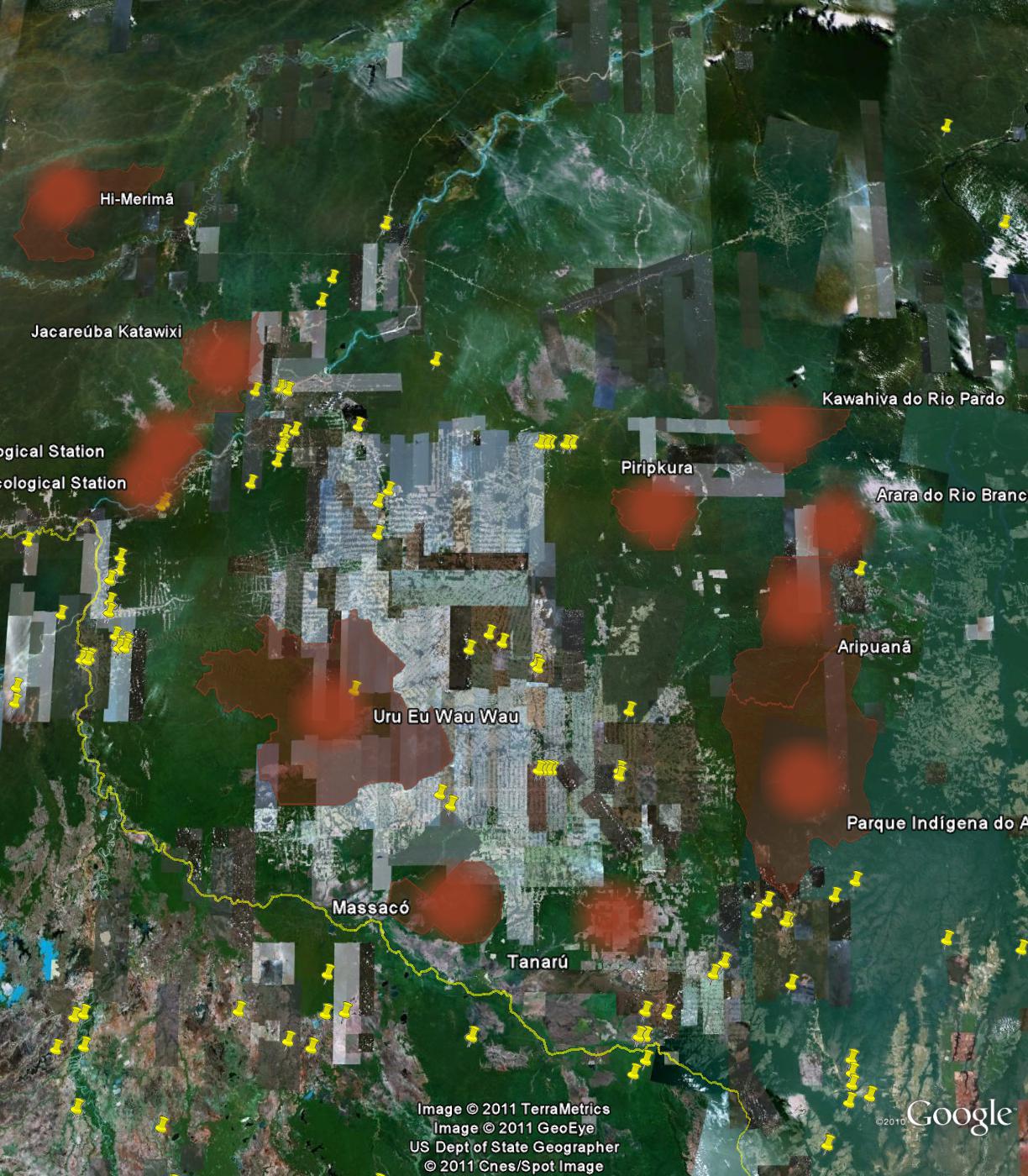
Not surprisingly, there’s not much in the way of germplasm accessions from the general areas occupied by uncontacted tribes. Oil and logging companies may not be the only things that these tribes should be worried about.