- BBC photos of natural resources management in Madagascar.
- Zambian brewer uses local sorghum.
- Olivier De Schutter says ecological agriculture can feed the world.
- The future of coffee according to Conservation International.
- BBC says African livestock an “untapped genetic resource.” So it must be true.
- Take two cockroaches and call me in the morning.
The ups and downs of trees
I’m really not sure how good an idea it is, but this “Great Green Wall of Africa” that people are talking about will certainly be a sight to see. And a bit of a food resource too if the indicative list of the species that will be used is anything to go by. While I was wondering whether to write about this, four other tree-related stories popped up in my feed reader, which convinced me. So apparently “between 1980 and 1997 England saw a 64% drop in trees,” which sounds pretty incredible, but is probably nothing compared to what is going on in southern Congo. On the plus side, Argentina seem to be building its own green wall down south. Although there’s nothing in the press piece about what species will be used. And finally, in Liberia, old rubber trees are being uprooted and recycled, hopefully as a prelude to replanting something.
LATER: And another, from Tasmania.
Nibbles: Rhoades, Trigonella, Plant nutrition, Annals of Botany roundup, Vitamin A, Insect Week, yeast, Biocultural diversity online
- Remembering Robert Rhoades.
- Fenugreek 101.
- Plant nutrition experts on why plant nutrition is important for development.
- Nigel Chaffey rounds up botanical news. Best of its kind.
- Lois Englberger and others comment on that provocative vitamin A paper.
- Hey, did you know it was Insect Week?
- Olivia Judson on yeast.
- Welcome to Terralingua’s Portal on Biocultural Diversity Conservation!
Sheep at Floatingsheep and among the Navajo
Floatingsheep.org is a great website “dedicated to mapping and analyzing user generated Google Map placemarks.” Always fun, it occasionally even tackles agrobiodiversity issues. I’m still waiting for the guys to look at the distribution of the crops of the world, but for now I’ll have to settle for livestock. Here’s a quick look. There are closeups of different regions on the original post.
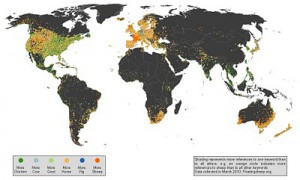
Those sheep hotspots in Arizona and New Mexico are no doubt due to the revival of the Navajo’s churro, the subject of an NPR story yesterday. And of one of our longer posts some months back. Yep, nothing much gets past us.
Root crops not so bad after all?
A Solomon Islands nutritionist is telling people to eat more local roots crops. Presumably that includes “stringy sweet potatoes.” Thanks, Lois.