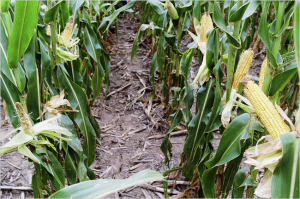
- Food security, or food capacity?
- “Brazil announces plan to become world’s granary.” We don’t make this stuff up, you know.
- Might Kenya turn against Tana delta biofuel boondoggle?
Nibbles: Fungi, Cacao, Animal husbandry, China, Africa, Maize, Genebank
- Diverse strains + diverse substrates = diverse shiitake.
- Chocolate is from Mars. Jeremy comments: “A disease called witches”??? BBC Science reporting strikes again. Get the USDA’s version.
- Eldis on a roll this morning: Livestock and climate change in Africa, sustainability of Chinese agriculture, beyond magic bullets in African agriculture.
- EurekAlert! tries to catch up: Mexican landraces.
- Quality assured potato genebank.
Nibbles: Homegardens, Rice, Fish, Climate change, Value chains, Fuel costs, Urban drift
- Uganda: “Many youth are no longer idle. They grow vegetables and sell them.”
- Iran: “Rice is becoming a luxury for many of the poor, just like meat and chicken.”
- California: “In nearly every scenario we explored, biodiversity suffers...”
- Australia: “the Australian Fish Names Standard AS SSA 5300 which prescribes standard fish names approved for use in Australia.”
- Pretty much anywhere: “linking small-scale producers to modern markets.”
- Dept. of Silver Linings: “Fuel Costs May Force Some Kids To Walk.” Via.
- Tibet: “I’ve lived here long enough.” Via.
Beer news
In Uganda, the Finance Ministry recently cut the tax on beers made from local ingredients. Nile Breweries responded by dropping the price of its Eagle and Eagle Extra beers, made from local sorghum.
Mr Onapito-Ekomoloit said the company was taking the move in the “interest of strengthening Uganda’s agricultural base through sorghum farmer development.â€
Win-win-win. I’ll drink to that.
Meanwhile, on another continent, a newly-brewed sorghum beer suffers “a pervasive taste of iron. Not like sucking on a rusty nail but its definitely there”.
Give ’em a phone
Why don’t coffee growers get more for their beans when world prices are higher? First off, I had to admit, I didn’t know that they didn’t. But apparently even against a background of rapidly rising prices, growers do not get much more. A new study of coffee growers in Uganda explains that rising prices brings out so-called “ddebe boys”, part-time coffee traders who “insert themselves between farmers and larger permanent traders and mills”. The ddebe is a 20 kg tin that they use to purchase coffee from farmers who are ignorant of the true market prices. The obvious solution is to give farmers access to current market information.
Marcel Fafchamps and Ruth Vargas Hill, who conducted this study say they don’t know whether this would solve the problem, but that it deserves to be looked at. I agree. There are already NGOs working with Ugandan farmers via mobile phones, and we know that phones make markets more efficient, so I hope someone gets going on this soon. As for the ddebe boys, I expect they too will find a way to make a living. Maybe by sending SMS spam?