Giving wheat breeders something to really cheer about

Nice to see a story about germplasm evaluation by a genebank make it into the mainstream media in India.

In what is claimed to be the first global mega study, Indian agricultural scientists screened about 20,000 accessions of wheat germplasm conserved in the country’s gene bank to identify genes that can confer resistance against all types of fungal diseases affecting cereal grain grown worldwide.

But why now? The paper to which the story refers came out in December last year, and we included it in a Brainfoond in January. And, more importantly, why are the data not available on NBPGR’s Data Portal?
Brainfood: Antioxidant adzuki, Sorghum gaps, Natural rubber diversity, Non-flying geese

Brainfood: Hot seeds, Diet diversity double, Finger millet GxE, Botanical gardens, CWR prebreeding double, Pathogen spread, Dog genomics, Cryo calculations, Biodiversity & productivity double, Movies & conservation

Agricultural biodiversity wades into the mainstream at long last

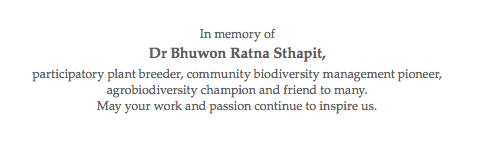
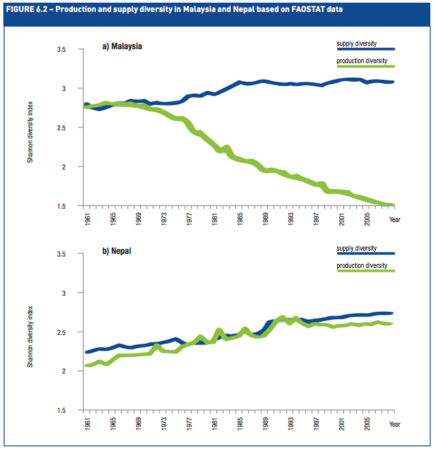
I really haven’t done sufficient justice to the new book from Bioversity, Mainstreaming Agrobiodiversity in Sustainable Food Systems: Scientific Foundations for an Agrobiodiversity Index, whose moving dedication I reproduce above. It’s a great review of the diverse reasons why agricultural diversity is important to us. But also of the complexities involved in translating diversity in farmers’ fields, let alone in genebanks, into development outcomes like better nutrition, as clearly shown by the diagram below.