- R package for roaming around the web and collating taxonomic information.
- Cool tool for climate matching and tree restoration seed targeting in New South Wales. Probably needs more than a Nibble.
- Results of webinar on ‘Implementation of Access to Plant Genetic Resources and Benefit Sharing (ABS)’ in India. With video goodness.
- The whole Colombian seed conservation network on one annoying website.
- Those really old dates bear fruit at last. Do you remember the paper on the genetic diversity aspects?
- Growing a rye landrace on a Swedish island for organically certified seed. And more.
Biodiversity loss in experiments and in real life
A large body of research shows that biodiversity loss can reduce ecosystem functioning.
You don’t say. Several years ago we half-heartedly attempted to summarize the literature here a couple of times. We’ve sort of given up on that of late: there’s just too much of it. But there is a fundamental problem with this literature…
…much of the evidence for this relationship is drawn from biodiversity–ecosystem functioning experiments in which biodiversity loss is simulated by randomly assembling communities of varying species diversity, and ecosystem functions are measured.
Fear not, though, help is at hand. The two quotes above are from the abstract of a paper bearing the following title.
The results of biodiversity–ecosystem functioning experiments are realistic.
Phew.
Nibbles: Robin Graham RIP, Fred Bliss award, Seed production, Chile spuds, Indian goats, Ancient bread, Horner Bier, Cheap food, Vigna, Singing dog, Fungal diversity
- Remembering Robin Graham, prophet of biofortification.
- Honouring plant breeder supreme Fred Blisss.
- Need to produce seed of all those new varieties that breeders come up with.
- And save the stuff they will replace: The Economist does the potatoes of Chiloé.
- Hey, it’s not just about the crops: conserving goats on farm in India.
- The experimental archaeology of bread thrives under corona. And if you were intrigued by the potato detoxification reference, find the details on Bill Schindler’s website. And not only bread and potatoes, also beer…
- Like Mozart’s oat beer? Which was apparently killed off by lager back in Austria but is now available in Denver.
- Food shouldn’t be cheap, it should be affordable, and not only for those who consume it. Ancient Egyptian bread will be exempted.
- No way Kenyan coffee can be described as cheap. h/t Jeremy’s newsletter: have you subscribed yet?
- I don’t know how cheap mungbean is in Myanmar, but it seems to be very valuable.
- The PNG singing dog is not extinct in the wild after all? Priceless.
- Combination of key and photo guide to the identification of European fungi. Worth its weight in truffles. Source.
Brainfood: Torres bananas, European Neolithic, Pleistocene dogs, Thai Neolithic, Amaranth domestication, Gluten trends, Perennial cereal, Resistant potatoes, Aridamerica, Ex situ mammals, AI, Zoonoses, Trade & diversity
- Multidisciplinary evidence for early banana (Musa cvs.) cultivation on Mabuyag Island, Torres Strait. Early as in 2000 years ago, which isn’t all that early compared to PNG. But opens possibility of mainland Aborigines being agriculturalists too, at least in the wet tropical NE.
- Climate shaped how Neolithic farmers and European hunter-gatherers interacted after a major slowdown from 6,100 BCE to 4,500 BCE. There was the most interaction between the two groups where Middle Eastern crops came to the limit of their climatic adaptation.
- The first evidence for Late Pleistocene dogs in Italy. Those hunter gatherers had dogs.
- Three thousand years of farming strategies in central Thailand. Millet first, then rice, but initially still rainfed. No word on whether anyone had dogs.
- Parallel Seed Color Adaptation during Multiple Domestication Attempts of an Ancient New World Grain. 3 grain amaranth domesticated species from one wild ancestor, with selection for white seeds in common.
- Wheat (Triticum aestivum L.) Breeding from 1891 to 2010 Contributed to Increasing Yield and Glutenin Contents but Decreasing Protein and Gliadin Contents. No evidence of increasing immunostimulatory potential in German wheat varieties.
- ‘MN‐Clearwater’, the first food‐grade intermediate wheatgrass (Kernza perennial grain) cultivar. Perennial is good, sure, but is it low in gluten?
- Screening of wild potatoes identifies new sources of late blight resistance. All plants in about 10% of 384 wild potato accessions were resistant.
- An Aridamerican model for agriculture in a hotter, water scarce world. 17 genera have highest potential to be used in polyculture to improve agricultural resilience, human health, and community prosperity in the face of climate change.
- Ex situ management as insurance against extinction of mammalian megafauna in an uncertain world. Fancy maths can tell you were genebanks could do the most good.
- Machine learning: A powerful tool for gene function prediction in plants. Very fancy maths can help you predict phenotype from genotype, and much more besides.
- Zoonotic host diversity increases in human-dominated ecosystems. Oh we are in so much trouble.
- Global changes in crop diversity: Trade rather than production enriches supply. Well, actually, a bit of both.
From chimp droppings to llama poo, and back again
Alex Chepstow-Lusty, our friend and occasional guest blogger, is celebrating 30 years of working on Andean land-use and African forest histories, and has written the following post to mark the anniversary. It also happens to be 60 years since Jane Goodall began her pioneering studies on chimpanzees at Gombe in Tanzania, which led directly three decades later to Alex’s scatological obsession. It’s longish, and he went a bit crazy with the links, but it’s a fun read. Here’s to the next 30 years, Alex! And watch what you step in.
Once upon a time in 1993, I was with my wife-to-be following (or trying to follow) chimpanzees next to Jane Goodall’s famous group close to Lake Tanganyika, mostly avoiding what might be raining down through the trees, but also fascinated by what was rapidly descending and when possible, eating some of the same fruits.
We were both greatly inspired by one of the directors of research at Gombe, Anthony Collins, who (and still there more than 30 years later) suggested that the chimpanzees might be influencing the composition of forest development to satisfy their own nutritional needs by what fruits they poo out and where. Even a kind of ‘proto-gardening’. They certainly have mental maps and fine-tuned seasonal clocks for knowing where and when to find specific trees in fruit.
And then unexpectedly, a letter arrived with news from the palaeoecologist Keith Bennett, that we had succeeded in getting a 6-month grant, which was for something quite different. And leaving my wife-to-be with the chimps, and getting back to Cambridge, we were soon on our way to Cuzco, the heartland of the Incas, to take a core of mud from what had been a little “lake”; – in order to reconstruct using pollen analysis the first continuous history of vegetation change and human impact in this area.
Both experiences I did not realise then would weave together and change my life. At this stage, I had neither considered the true value of chimp poo, nor that in the mostly treeless high Andes, dried llama droppings were what fed your fire to keep you warm, provided cooking fuel or the best fertilizer available for growing potatoes. Both precious renewable resources to be treasured and their owners cared for.
Being somewhat addicted to small things down the microscope was not new to me, but switching to studying pollen opened up a gateway to connecting with the plants directly in the environment around me, so long as the pollen (and other biological things) were preserved in suitable places like the bottom of lakes or in peat bogs, where low amounts of oxygen are found.
The site of the 4000-year record we obtained (12 km north of Ollantaytambo, where nearly everyone passes through on their way to Machu Picchu) was more of a deep infilled circular pond surrounded by good grazing – and turned out to be very special. This was probably also helped by the fact that the little pond of Marcacocha was set in a magical landscape of ancient terraces, ruins and next to an Inca ‘motorway’ that had connected the mountains to the rainforests used for transporting goods by long caravans of llamas, while the descendants of the Incas were still there working the land. Even down the microscope over the years that followed, I could imagine myself back at Marcacocha, or looking from above in “Lord of the Rings” aerial film-style, and even in different time periods. OK, I was hooked.
Moving forward a few years, I found myself giving lectures to undergraduates at Cambridge, inspired by Jared Diamond’s "Guns, Germs and Steel", but trying to cover human impact globally over the last 10,000 years. A tall order, and often using pollen records where available, while choreographing my moves between the slide projector and changing smudgy overhead transparencies. And suddenly I was not only “returning” to the tropical forests of Africa, but their history.
Like most people, one looks for a simpler way of explaining things in a complicated world and that had been my approach, especially in somewhere as complex as the rainforests of Central and West Africa. Closer to home, in the British Isles, as a comparison, the first noticeable human impact on our own great Atlantic “rainforests” approximately 5000 years ago, is often identified in lake sediment records with the decline of elm pollen and appearance of ribwort plantain (found on most lawns around the world today) and rarer cereal pollen.
That is what one might identify, but the causes may not be that simple or necessarily due to vast hordes of Neolithic settlers impacting the forests at the same time. In the mix, apart from people cutting down leafy elm branches as fodder for their livestock – and potentially facilitating the spread of the fungal disease carried by beetles (the transmission of which is not unlike what is currently happening in vast areas of Norwegian spruce), something so widespread and across much of Europe cannot necessarily be disentangled from climate change. And meanwhile, small numbers of people I thought then could probably cause a disproportionate amount of damage, especially if helped opportunistically by the climate.
Ok, that was a bit of a digression, so back to Africa where in the first few scientific papers of vegetation history records I stumbled across, it seemed clear that the presence of pollen from the oil palm (yes the same species often planted on a massive industrial scale today resulting in its own seemingly single-handed destruction of the tropics yet providing ingredients present in most processed foods and shampoos, whether you are aware of it or not) was clearly linked to the clearance and disturbance of forests by humans. Both the bright orange flesh and the kernels are highly nutritious and calorific, and as today are key to the rural economy in many parts of Africa, as well as being important in the diet of chimpanzees and other animals – as it can produce fruit throughout the year. So, case solved. That was easy to teach the students and I was convinced myself having repeated the same story a number of times.
Shortly after, following on the heels of my wife’s career as a science writer (at an international organization to do with bananas as a staple food in the tropics), curiously the same fruit used to help in the habituation of chimpanzees at Gombe and elsewhere, we moved in 2000 with a young daughter to Montpellier in southern France. By coincidence and luck I was taken in by a very welcoming pollen laboratory, which had a long-term focus on African forest history. Working with the charismatic late Dominic Jolly, the “retired” ever-enthusiastic Jean Maley and their talented students, often Africans, my simplified view of oil palm pollen equalling human impact was totally overturned, as the vegetation history records were being amassed across such a vast area of Africa, notably indicating the near decimation of rainforests 2500 years ago. But how could so few people cause so much destruction almost synchronously across a huge expanse and not leave any significant archaeological record until quite a bit later?
In short, they didn’t as there were hardly any people there then, but climate was responsible. At approximately 2500 years ago, the length of the dry season increased and the rainforests became highly fragmented, accompanied by the colonization of savanna vegetation, all clearly shown by the numerous pollen records. In the centuries that followed the fragmentation, the forests regenerated including with pioneering light-demanding species such as the oil palm, whose fruits can be dispersed by animals such as chimpanzees in their poo, and which are able to swallow the large seeds.
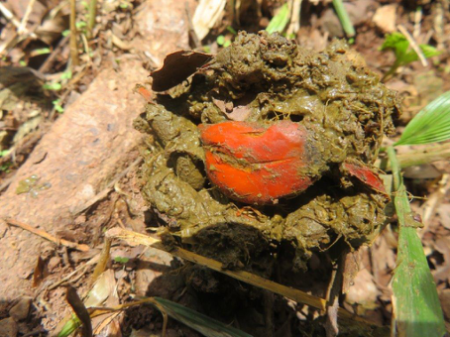
In fact, there is a large body of evidence, including historical literature by European botanists visiting Africa over the last few centuries, that this process of oil palms regenerating spontaneously is still continuing in some areas, and that they were not planted, as Jean Maley has argued for over the years. This does not mean that the resources provided by oil palms were not essential and exploited during the Bantu migrations when different groups of people, both settlers/hunter-gatherers moved through the gaps in the forests en route to eastern and southern Africa. But it is all part of a natural process as emphasized in our recently published paper. After the colonization by oil palms and other rapidly growing pioneers, the slower growing primary forest returned, in spite of human populations increasing post–2500 years ago. And indeed the forests that we recognise from Central and West Africa date back probably at most to 2000 years ago.
So where do the llama droppings come into all this fairy tale?
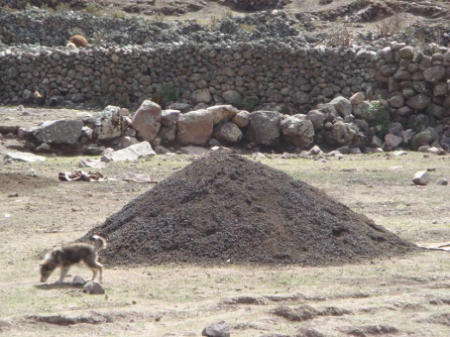
While in Montpellier, after having spent so many years in Cambridge in a laboratory extracting pollen from my mud using quartz- and potentially (my) bone-dissolving hydrofluoric acid, I decided to see what else I might find in my Peruvian lake sediments that did not require any more sleepless nights brought on by paranoia-induced itching after a day concealed in heavy PPE in the fume cupboard. And simply just teasing apart little volumetric cubes of sediment from Marcacocha under a simple stereo microscope in a small transparent dish that can be done anywhere.
And abracadabra, that is when the roughly half millimetre long, well-preserved oribatid mites (relatives of spiders) started popping out. Quite literally.
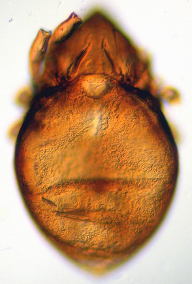
Working with my colleagues Mick Frogley (University of Sussex) and Anne Baker (Natural History Museum), we could show that the fluctuating abundances through time of a particular aquatic species of these detritus-cum-livestock dung loving arthropods could be used, for example, to show the rise and fall of the Inca Empire, i.e. representing a brief period of intense trading activity when llama caravans pastured by the lake, and defecated communally as llamas do, and thus easily collected. Then and now, llama "beans" as both fertilizer and fuel remain a major resource of the Andean rural economy. But that is a story elsewhere, and in more detail for the future. And so back to Africa.
Although we would like the paper presented here to be the last word about the collapse and recovery of the African tropical forests 2500 years ago due to natural processes, and part of a global climatic phenomenon (and seen very clearly in Peru too) that would be unrealistic and negatively impact the ever-increasing number of necessary journals and career trajectories within the well-funded multi-disciplinary groups seeking more of a human explanation. Not because it is right, but because something else needs to be said in order to be published in prestigious journals. In the meantime, the indefatigable lead author, Pierre Giresse (University of Perpignan) and the aforementioned Jean Maley (University of Montpellier), both ‘retired’, remain very active researchers, having discovered the secret ingredients for a long life and keeping themselves mentally stimulated: the Mediterranean diet and the ongoing challenge by those seeking human forces over natural processes to explain African rainforest history. As a result, hopefully one day they shall become healthy centenarians.
When we submitted the idea of this paper over a year ago to Global Planetary Change, we did not see at the time how relevant it would be when it came out during the current pandemic, with the comparison of African forests from 2500 years ago through to the present day. Now both climate change and human impact are heavily impacting those same forests, while the bushmeat market is contributing to removing keystone species, such as chimpanzees as fruit dispersers and thus threatening the maintenance and regeneration of forests.
The transmission of diseases to humans has also been linked to the bushmeat trade. And transmission is not necessarily one way. Three years after we left the chimps at Mitumba in Gombe National Park, almost a third to possibly a half died within a few days of a respiratory outbreak in June 1996, likely transmitted by humans, particularly of the most habituated chimps, i.e. the ones we had got to know best; and in some ways not such a dissimilar outcome as the exposure of the Incas and other indigenous people to new diseases brought by the Europeans on the other side of the world almost five centuries earlier.
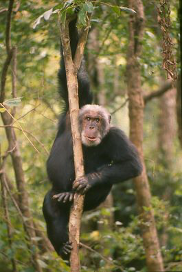
Although my wife never did end up doing a PhD on ‘proto gardening’ by chimpanzees, ironically she moved from initially following chimps to currently being involved with an organization focused on conserving the crop diversity of the world, and which is in part responsible for the seed vault in the high Arctic on Svalbard. I can only be grateful as getting grants for studying chimp shit may have only been slightly easier than llama or rocking horse, and her career indirectly has made some of these findings possible. And somehow 30 years have passed since we saw chimpanzees at Gombe for the first time.
It is by complete coincidence that this year Jane Goodall and her Institute will be commemorating 60 years since she began her pioneering studies on wild chimpanzees at Gombe which led to so many different discoveries, while inspiring similar investigations elsewhere, and continues to do so, but also a massive effort for improving the conditions of chimpanzees in captivity and highlighting the need to protect those remaining in the wild, as well as creating a youth-led movement that combines broader environmental awareness with compassion for animals and people alike.
And like Jane Goodall´s findings, many of the most important discoveries are not part of some well-financed plan and often occur completely by accident through hard work and meticulous observation – or only suddenly become significant when we are all affected – and the natural inhabitants of those ecosystems around us almost seem to be getting their own back.
Perhaps there is a lot more resilience in these tropical forest ecosystems than we can predict and we can lose the dispersers like chimpanzees or fruit bats and end up with different ecosystems and survive, but is it worth the risk- even just in terms of the new diseases being transmitted?
But what a sad replacement these emptier reconstructed environments might be, while losing our closest relatives in the process, at least in the real wild. Maybe we need to consider more the true value of chimp poo, and even llama droppings, and those that produce them, and probably a lot else. And then they might all live happily ever after. As well as us.