- CBC documentary on collectors of fruit diversity. Anyone seen it?
- Matthew Dillon of Seed Matters on organic seeds.
- IFAD bigwig deconstructs Conway’s One Billion Hungry. Great summary of 400+ pages. Diversified farming systems are in there, kinda sorta.
- Jamaican bill calls on someone or other to “maximize internal intra and inter-species variation to boost benefits.” They need to fix the title too. It has something to do with the ITPGRFA.
- How to evaluate fisheries and aquaculture projects. Nothing in there about the importance of genetic diversity in these systems, or indeed their possible effects on the biodiversity around them.
- Sculptures of horses with tack from middle of Saudi Arabian desert may push date of domestication way back.
- Maize a staple, not a ceremonial condiment, in early Peruvian coastal civilizations. And also in Timor Leste for that matter. One does worry about those local landraces, though.
- Latest examples of impact of investments in agricultural R&D from EIARD. Includes African indigenous veggies!
- AVRDC sends vegetable seed kits to Mali. Including indigenous species, but apparently only improved varieties.
- Anthropologist goes to Amazon, learns not to look down his nose at ranchers.
- Millennium Seed Bank helping to restore Falkland habitats. That sort of thing can be a business, you know?
- Manual for the conservation and improvement of Chiloe’s native potatoes. Should have something similar for maize in Timor, eh? And African indigenous veggies too?
- You remember yesterday’s Nibble about SRI? Here’s more oil on the fire.
Nibbles: UK horticulture funding, AVRDC, Biofortification, SRI debate, Stressed bees, Nutrient decline, Beneficial viruses, DNA for dummies, Chaffey, Cow genebank, Organic network
- For UK horticulturalists in need of cash. Wonder if that includes the rosemary collection.
- I’m pretty sure it doesn’t include AVRDC.
- Who would no doubt agree with Mark Lynas that “No-one disputes that a balanced and nutritionally-adequate diet is the best long-term solution to vitamin A deficiency and malnutrition in general.” And be as puzzled as the rest of us for the relative lack of funding for research on such a diet.
- A discussion of why mainstream agricultural science hasn’t got the message across about SRI, courtesy of Facebook. Yeah well, the whole concept of basing interventions on, you know, evidence, is not exactly mainstream. Just ask the balanced and nutritionally-adequate diet guys.
- Bees are stressed out, the poor things.
- Creative Commons graphs on changes in vegetable nutrient content.
- Not all plant viruses are bad.
- Pat Heslop-Harrison talks DNA, with his usual extraordinary fluency, from 11 mins in.
- Plant Cuttings! Everything from the botany of food to transcription factors for C4 photosynthesis.
- Cow genebank proposed.
- IFOAM gets a TIPI. Vandana Shiva no doubt ecstatic.
Which heath pea would that be?
Over at another place, I’ve been looking into the botanical confusion surrounding that essential of Roman cooking, mentuccia, which is not pennyroyal. And lest people are tempted to say, as they have before, “Get a life,” here’s another splendid example of the perils of common names. And these are in the same language.
Luigi noticed this strange website which is both touting the benefits of and seeking supplies of a plant it calls the heath pea. Why? Well, there are records of Scottish highlanders suppressing their appetites during hard times 1 by eating the heath pea’s tubers. The heath pea site helpfully provides loads of pictures and other information to help people identify the correct species. But here’s the thing. There are at least two plants that occasionally go by the name heath pea: Vicia ervillea and Lathyrus linifolius. Both are also sometimes called bitter vetch. And I certainly wouldn’t have known the difference had it not been for a blog post by one ferrebeekeeper, ‘fessing up to having got the two mightily confused.
Vicia ervillia is one of the founder crops, first domesticated in the Middle East all those years ago, and still cultivated there. But Lathyrus linifolia is the one the Scots should be looking for.
Doubly confusing, it seems that the Vicia causes lathyrism and the Lathyrus doesn’t. As it happens, we have an expert on Lathyrus and Vicia among our regular readers, and I don’t doubt that he’ll be along in just a second to sort things out properly.
Brainfood: Vinecology, African veggies, Land abandonment, Wheat special collection, Altitude and diversity, Persistence and diversity, Intensification, Rainfall and fruit, Mosaic tree
- Vinecology: pairing wine with nature. You can have wine, and drink it too.
- The role of wild vegetable species in household food security in maize based subsistence cropping systems. Is very significant, in South Africa.
- Does land abandonment decrease species richness and abundance of plants and animals in Mediterranean pastures, arable lands and permanent croplands? Well, we wont know until these guys do their review, as described here. What a weird paper.
- Development of a core collection of Triticum and Aegilops species for improvement of wheat for activity against chronic diseases. Used GRIN to select material from areas varying in cancer prevalence.
- Patterns of Genetic Variation across Altitude in Three Plant Species of Semi-Dry Grasslands. Populations on the edge altitudinally are not on the edge genetically.
- Is community persistence related to diversity? A test with prairie species in a long-term experiment. Yes. If by persistence you mean that the community resists invasion better after you stop weeding it.
- Agricultural intensification in Brazil and its effects on land use patterns: An analysis of the 1975-2006 period. Intensification leads to decreased expansion only where land is scarce, i.e. NOT at the frontier.
- Long-term Changes in Fruit Phenology in a West African Lowland Tropical Rain Forest are Not Explained by Rainfall. I don’t get it. Maybe someone can explain it to me.
- Differences in gene expression within a striking phenotypic mosaic Eucalyptus tree that varies in susceptibility to herbivory. One tree, 2 chemotypes, many genes differentially expressed, 10 SNPs that could affect secondary metabolism.
Caledonian Tomato!??!?
Today’s agricultural biodiversity mystery:
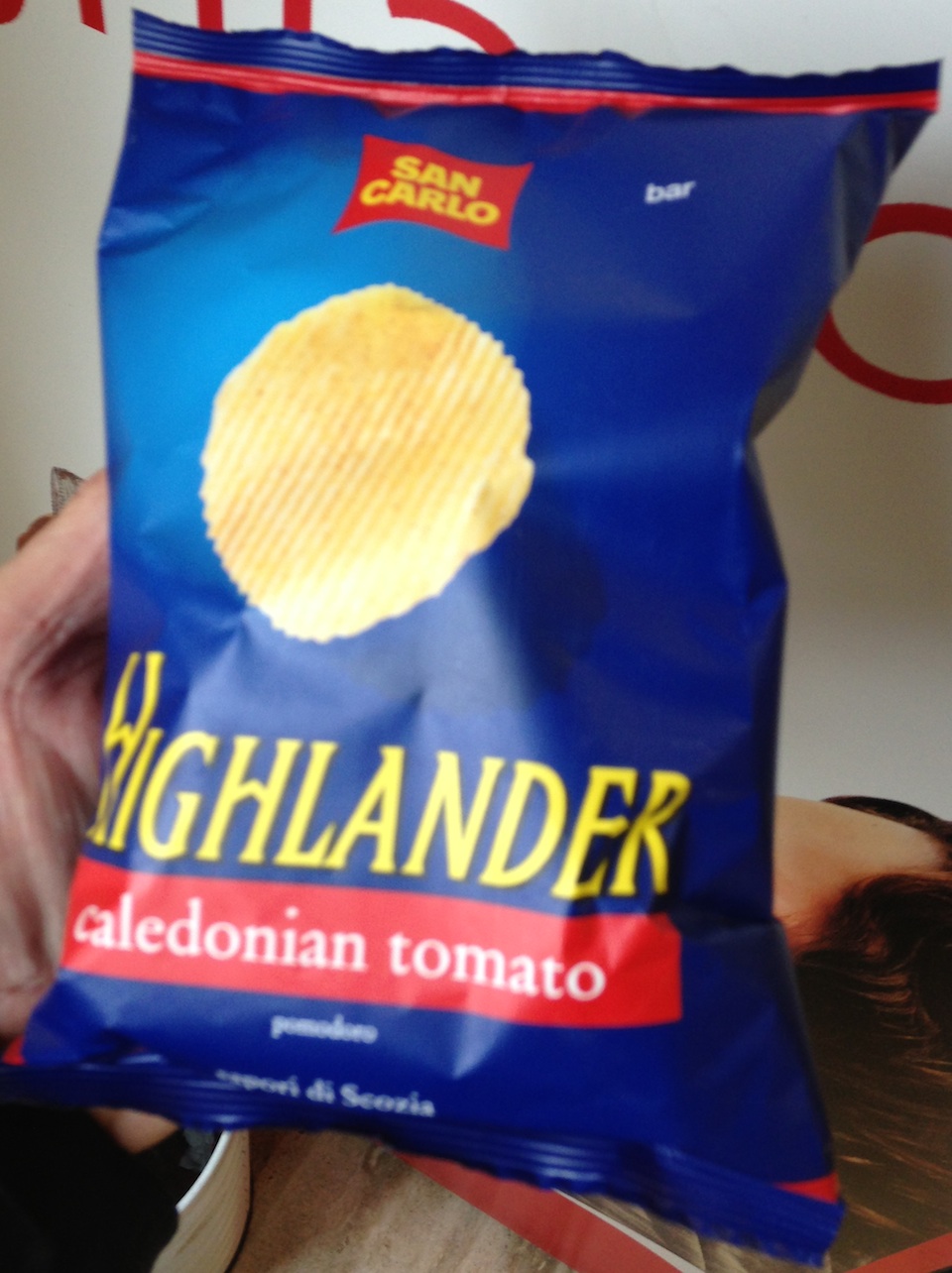
OK, so I know the quality’s not up to snuff, but I just grabbed this image in my local bar. And I have questions. What on earth is a caledonian tomato? Helpfully, the Italian below offers pomodoro and sapori di Scozia. But could some Italian, preferably, explain to me why Caledonia and the taste of Scotland might have great marketing appeal.