- Guess what. Cranberry pests prefer certain varieties.
- If you can’t measure it, you can’t improve it. Estimating yield of food crops grown by smallholder farmers from IFPRI.
- CIAT first CG centre to publish peer-reviewed video, on resistance selection. In other news, there are peer-reviewed videos?
- CFTF draws our attention to Jackfruit – Forgotten Kalpavriksha, “a common trope”.
- $3.4 million worth of good news for food security and diversity in the Andes. “Small Andean tuber crops” involved.
- Minor millets star in new film shared by Bioversity.
- Want the Philippines to be self-sufficient in rice? Eat rootcrops. IRRI unavailable for comment.
- Way more than any sensible person will ever want to know about duck and goose semen.
Picking a good agrobiodiversity beach
My apologies to Robert Hijmans, the developer of DIVA-GIS. I had forgotten how awsomely awesome his software. It was really only the work of half an hour to export a shapefile of the distribution of wild and weedy accessions from Genesys, open it in DIVA-GIS, produce a gridfile of taxon richness, export it as a KMZ, and open it in Google Earth, together with The Guardian’s European bathing places dataset, which I had prepared earlier.
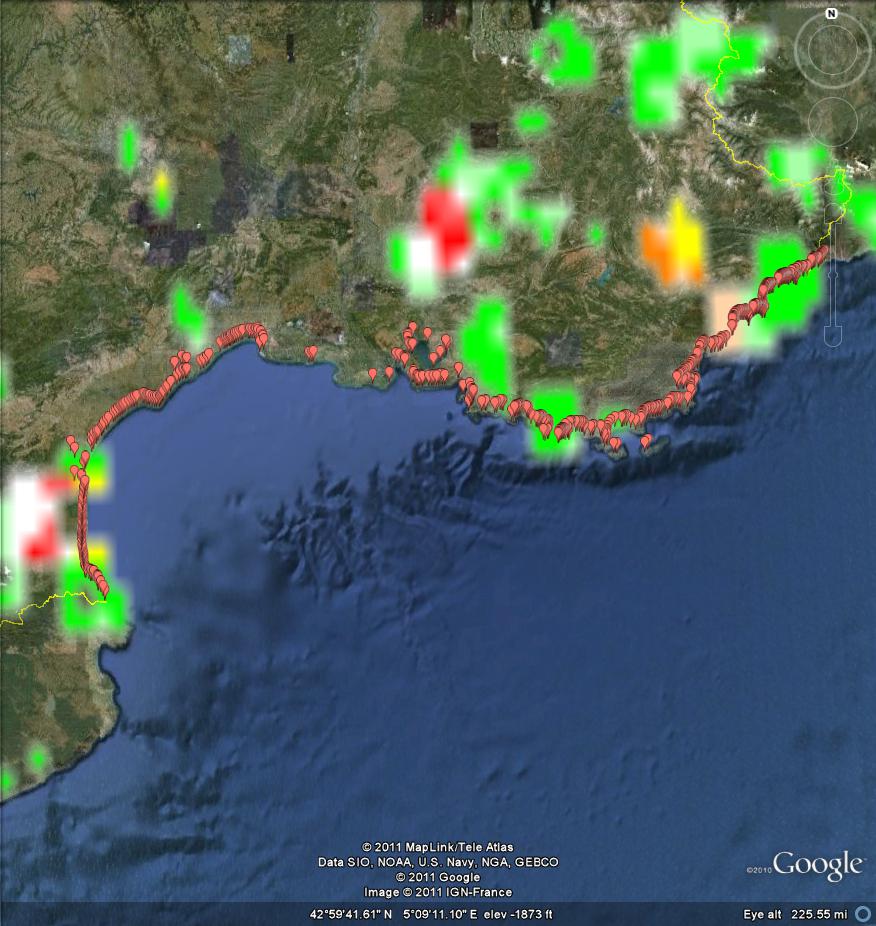
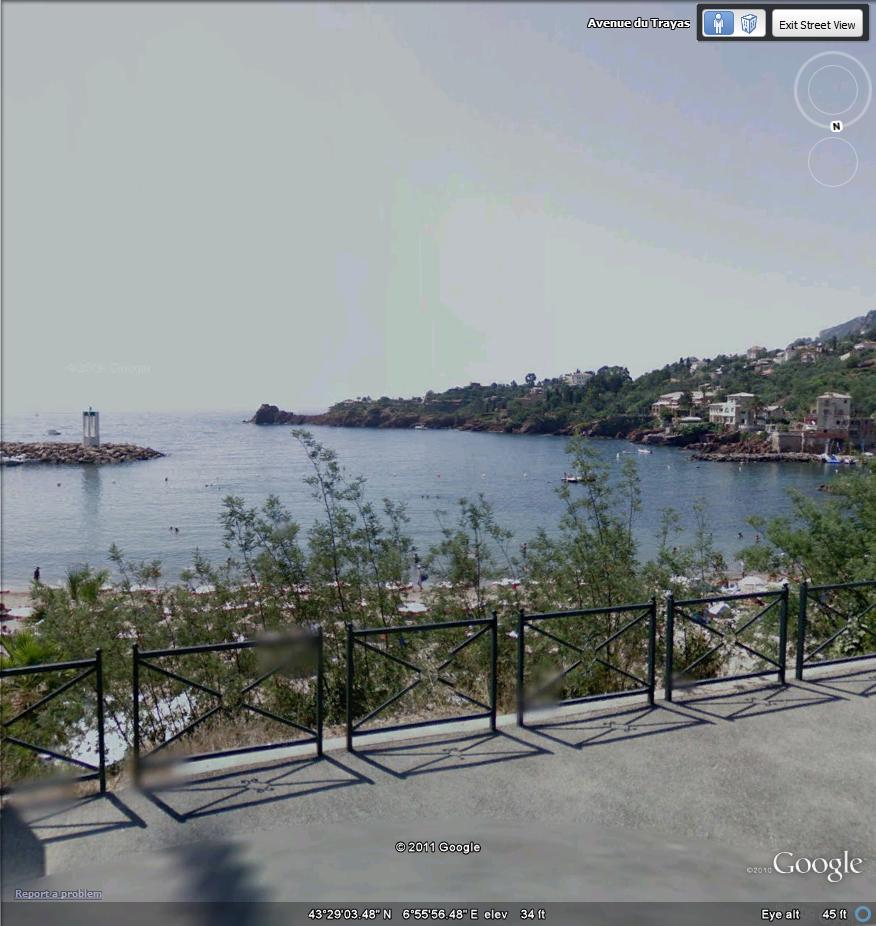
A beach called La Figueirette at Theoule-sur-Mer is right in the middle of that (relative) hotspot of species richness not far from the Italian border shown in light orange on the map above. And the beach doesn’t look too bad either, at least on StreetView.
Now, to check out the lakes…
Vote early, vote often…
 Many thanks to the World Vegetable Center for running a poll on Jacob’s seeds-with-yoghurt idea. Head on over to their Facebook page and vote!
Alternatively, because we are such Social Media Mavens that we serve even people who aren’t on Facebook, head on over to our own sidebar, over there on the right, and vote here instead. Or as well. Do people who vote here vote differently from people who vote at the other place?
You’ll note that we’ve modified the question ever so slightly, as we’re not sure how many subsistence farmers in, say, Mali, eat store-bought yoghurt. Even with free seeds.
Nibbles: Median strips, Vitamin A, Mapping in Kenya, Chaffey, Small farms, Rennell Island coconuts, Sweet potato breeding, Acacia nomenclature, Crop models, Pulque, Fruits
- Planting roadsides with natives, including crop wild relatives. And here comes the database.
- Orange Maize: The Movies.
- VirtualKenya really here. Mother-in-law beside herself.
- Plant Cuttings is out. And all of a sudden I’m in a much better place.
- Small is beautiful, farm edition. And as chance would have it, coffee farm edition. And urban edition.
- Dispute at iconic coconut plantation resolved. Apparently there are some really unique varieties there.
- I say boniato. For the first and last time.
- Acacia on the brink. Easy, tiger. The name, not the genus.
- We’re going to need a better model.
- Pulque comes back. Never knew it had gone away.
- Domesticating fruit trees in Kenya. Something for VirtualKenya?
Nibbles: Cryo, Tree diversity, Agroforestry, Seed industry, Trigonella, Ancient MesoAmerica, Niche models
- CIP’s high-tech genebank.
- “The project’s eventual aim is to plant several thousand trees at sites across Perthshire to act as a ‘living gene bank.'” What, because normally genebanks are dead?
- Millennium Seed Bank joins ICRAF’s BusyTrees thing. Which you can follow in about a million different social networking ways.
- Conservation Magazine does a number on crop improvement. Wait, what? Conservation Magazine? Yep, and with teaching resources.
- Fenugreek, barkeep, and make it a double.
- Ancient chocolate and corn routes.
- What species distribution models do you like?