Speaking of the CGIAR’s change process and its mageprogrammes, they’re now soliciting comments on the one on Agriculture for Improved Nutrition and Health, having previously done so for the one focused on “improving the productivity of livestock and farmed fish by and for the poor.” Not a bad idea, of course. Are we going to get an opportunity to do so for the “nixed” megaprogramme on agricultural biodiversity too? And why are we hearing about these consultations via FARA rather than more directly from the CGIAR? What CGIAR RSS feed am I missing?
Oyster day
“Are oysters the sort of elitist, anachronistic foodstuff that should be consigned to history?” That’s the provocative question posed by an article in The Guardian’s food section today, by way of introducing tomorrow’s Whitstable Oyster Festival (July 24-30). And serendipity decreed that the answer would come on the very same day from Banjul in the Gambia, where a group of “women rely on oysters for their livelihoods and contribute to food security in a country that is heavily dependent on seafood for protein.” The workers at Ameripure Oysters and in the fisheries of Kent can probably relate to that, and they were also in the news today. Anachronistic indeed.
Nibbles: Wetlands, Cucurbit phylogeny, Herbology, Malnutrition, Fungi, India, Livestock, Ug99, Madagascar, Beer
- Conserving dambos for livelihoods in southern Africa. How many CWRs are found in such wetland habitats around the world, I wonder.
- Cucumis not out of Africa.
- Exploring “the connection between traditional knowledge of herbs, edible and medicinal plants and media networked culture.” And why not.
- PBS video on malnutrition.
- Fungal exhibition at RBG Edinburgh.
- Indian Council on Agricultural Research framing guidelines for private-public partnerships in seed sector. That’ll stop the GM seed pirates.
- Conserve African humpless cattle! They’re needed for breeding.
- UG99 — and crop wild relatives — in the news. The proper news. The one people pay attention to.
- Vanilla lovers better start stocking up.
- Kenyan farmers earning money selling sorghum to brewers. What’s not to like.
Nibbles: Breeding, Art, Bison, Pumpkin seeds, Sweet potato, Bambara groundnut, Carnival
- Cary Fowler on the need to breed.
- MRIs of fruits and vegetables. Well, why not?
- The genetic consequences of bovine inter-specific sex explained. SFW.
- How Mrs Joséphine Enoce Bouanga makes milk from squash seeds in Pointe-Noire.
- Gates Foundation orange sweet potato project in Mozambique. Still waiting to hear what they’re going to do with all those useless landraces they’ll be replacing.
- Nourishing the Future does Lost Crops of Africa 101. Beginners, start there, but don’t expect to be taken anywhere interesting.
- Blog carnival Scientia Pro Publica #35 is up, but what’s with the verse alphabetical order? Harummph.
The horse in Mongolian culture
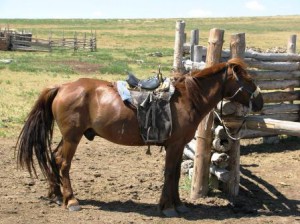 They may be trying to develop and diversify their agriculture now (well, since the 1950s), but Mongolians are traditionally very much a nomadic herding culture, with the horse at its centre. 1 One expression of that is how early kids learn to ride.
Most young Mongolians — boys in particular — learn to ride from a very young age. They will then help their fathers with the herding of goats, sheep and horses. Some children have a chance to ride at festivals called Naadam — the biggest of which is held on 11th-13th July in Ulaanbaatar — though there are naadams held throughout the year all over the countryside. Young jockeys between the age of 5 and 12 (girls and boys) race horses over distances ranging from 15km to 30km. There are 6 categories for the races depending on the horses’ age, including a category for 1 year old horses (daag) and one for stallions (azarag).
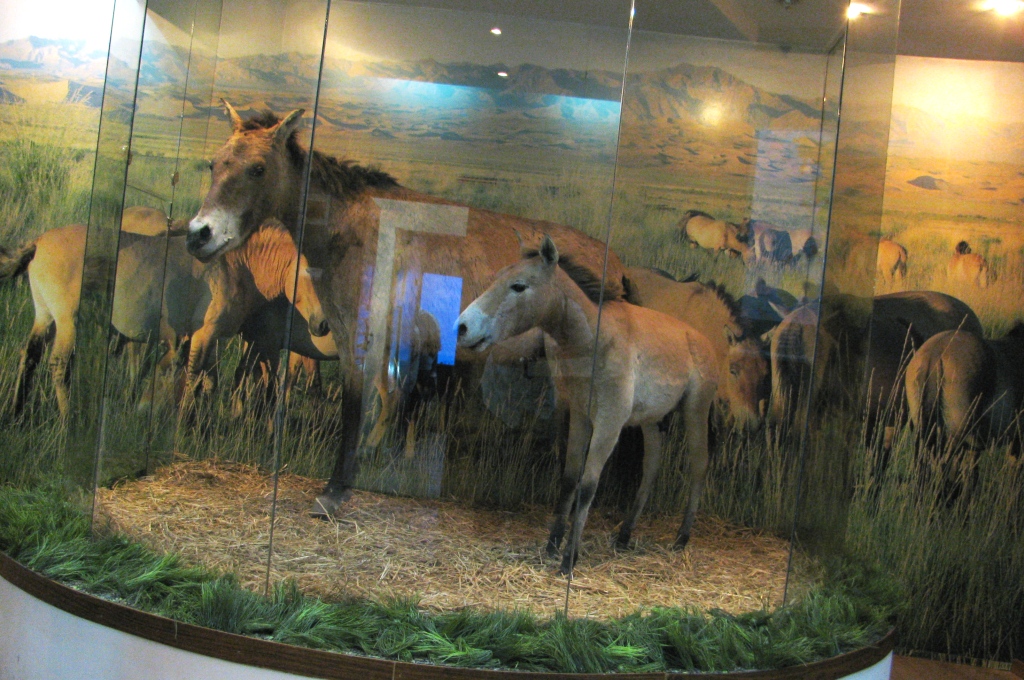
Alas, this museum display is as close as I got to seeing the famous Mongolian Wild Horse or Przewalski’s Horse (Equus ferus przewalskii), locally known as takhi.
It’s possibly the “closest living wild relative of the domesticated horse, Equus caballus.” Certainly it is genetically very close to the local domesticated breed based on molecular markers, though that could be because of interbreeding. Last seen in the wild in 1969, its restoration in China and Mongolia from captive stock, for example to the Hustain Nuruu National Conservation Park, is one of the great conservation success stories.