- Ok here goes, there’s a week’s work of Nibbles we’ve got to catch up on.
- World running out of chocolate! Tell that to Cologne.
- Yeah well I prefer tea to cocoa.
- Greenpeace: “Smart breeding” will save us, not GMOs. Breeders: All breeding is smart.
- Guess the world’s biggest cash crop. Yeah, that one.
- Alas, it’s not included in the recent strategy for conserving medicinal plants. Not that it would need conserving.
- The domestication of the world’s biggest crop, period. Deconstructed. And if you want to drill down.
- And of the world’s biggest fruit.
- And of the world’s biggest pet.
- And of the world’s most difficult to eat vegetable.
- Root “vegetables” made simple. Because winter.
- And why you must eat your veggies, including the difficult ones.
- Videos on Kew’s monocot database and on the renovation of another famous herbarium.
- The real Johnny Appleseed.
- But you too can save seeds, just like Johnny.
- But don’t forget to safety duplicate, like CIP has done, at Embrapa.
- And this shows you what those seeds can look like.
- You don’t necessarily need seeds to save plants, though.
- Mapping fallen fruit. Because we can.
- Road trip!
- Boat trip!
- Selected Techniques in the Art of Agriculture. From French to Turkish to Arabic. One of many nifty agriculture-related resources in the World Digital Library.
- Oh yeah, the IUCN World Parks Congress has been on and its all over the intertubes. Including with neat visualizations, natch.
- How many of the species in the COMPADRE database of plant demography information are in protected areas? How many are crop wild relatives? I need an intern.
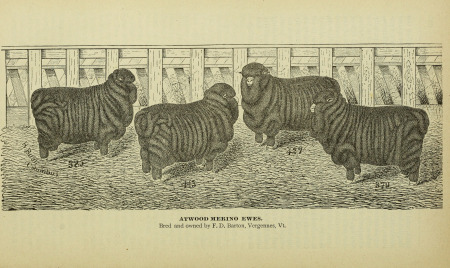
Lots of old book illustrations now online
A Yahoo research fellow at Georgetown University, Kalev Leetaru, extracted over 14 million images from 2 million Internet Archive public domain eBooks that span over 500 years of content. Because we have OCR’d the books, we have now been able to attach about 500 words before and after each image. This means you can now see, click and read about each image in the collection. Think full-text search of images!
Very cool. Interested in sheep breeds, say? Go crazy.
Nibbles: Prof Brian Cox is cool, GRAIN vs Gates, Fragaria law suit, Central Asian fruits, Ecoagriculture, Forage breeding risk, WPC 2014, Nutrition trifecta, MSB funding, European seedsters support IT
- Final Human Universe episode features Svalbard Global seed Vault.
- GRAIN objects to where Gates Foundation spends its money. Nobody much cares.
- Latest on that UC Davis strawberry breeding programme debacle.
- Yes, bears do shit (apple seeds) in the woods. And some context.
- A conference for the hippy in all of us.
- The dark side of pasture breeding. Super-weed, I am your father!
- World Parks Congress on soon too.
- No access to healthy food? Use your mobile! Watch a video! Grow traditional crops!
- Toyota funds the Millennium Seed Bank.
- ESA supports the ITPGRFA. Speak Up For Seed!
Nibbles: Easy Eleusine, Ethical down, Bison pix, Svalbard pix, Salinity costs, Nutrition conference, Veggies for nutrition
- Finger millet is the future in Zimbabwe.
- Conventional down has a problem. I do prefer unconventional down myself.
- They had National Bison Day and nobody told us.
- Epic’s Excellent Svalbard Adventure.
- Start planning for next year’s cucurbit conference.
- Soil salinity sucks.
- On the other hand, this nutrition conference is in only a couple of weeks. And there will be radio.
- Not that these Indonesian ladies will need that.
Nibbles: Biological collections, ICT & food security, Pisco battles, Rabbit stew, Afghan silk, ILRI @40, Silicon Valley & livestock, Trade & deforestation, Nexus shmexus, Landscape analyzed, Native potatoes, Botanical herb garden, Plant crime, Cornbread & other indigenous foods, Climate smart ag, Caterpillar fungus, Reindeer poop virus, Rice breeder vid
- Biological collections under pressure.
- And mobile phones probably wont help. Much.
- Chilean pisco? Really?
- The end of cooking?
- Sericulture on the Silk Road.
- ILRI is 40, did we say? Not sure what they do on sericulture. No doubt somebody there will tell us. They’re social networking machines over there.
- Watch out, ILRI, Silicon Valley is coming for ya.
- One of the reasons why we need livestock research: deforestation.
- I like any article with the word nexus in the title.
- The landscape approach meta-analyzed to within an inch of its life. Bottom line: it’s the women, stupid!
- The power of the people’s potatoes.
- A secret herb garden revealed. I hope they install CCTV.
- Kana’tarokhónwe. Yep, clickbait, but worth it, trust me. And then scale the thing up.
- How to do climate-smart agriculture in Latin America and the Caribbean, country by country.
- Oh no, yet another article on that Himalayan Viagra caterpillar fungus thingy.
- Boffins resurrect 700-year-old fungus from reindeer crap.
- Indian rice breeders talk about their cool new basmati.