- The importance of multi-purpose crops in Africa.
- The importance of multi-purpose goats, everywhere.
- Target reader reviews The Complete Idiot’s Guide to Heirloom Vegetables.
- Tamarind charcoal loses out to tamarind drink, Malawian villagers rejoice.
- Has intellectual piracy been with us since humans first became engaged in agricultural production? AoB blog asks the tough ones.
- Land-use intensity and Ecological Engineering – Assessment Tools for risks and Opportunities in irrigated rice based production systems launched. Glad they have an acronym.
- Microbe diversity matters too.
- OK, so nobody nominated us, but the semi-finalists at the 3QD science writing competition have been announced.
Andean products on display
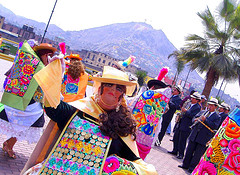 The Fifth Potato Festival is underway in the Surco district of Lima, Peru. It sounds like fun, but all the information about it online at the moment is in Spanish only. If you don’t read the language, and can’t be bothered fighting with the results of Google Translate, you can read a short piece on last year’s event in English. It’s actually about much more than just the potato. There are stands on a whole range of new Andean products:
…black quinoa, royal quinoa, red quinoa, quinoa sajama, maca, instant amaranth, instant cañihua, wheat, red corn, corn chullpi, bean mashco, barley mashco, black potato, white potato flour, etc.
Wallow Fire (may) threaten (some) wild beans. Maybe.
There’s a really bad fire spreading in Arizona. 1
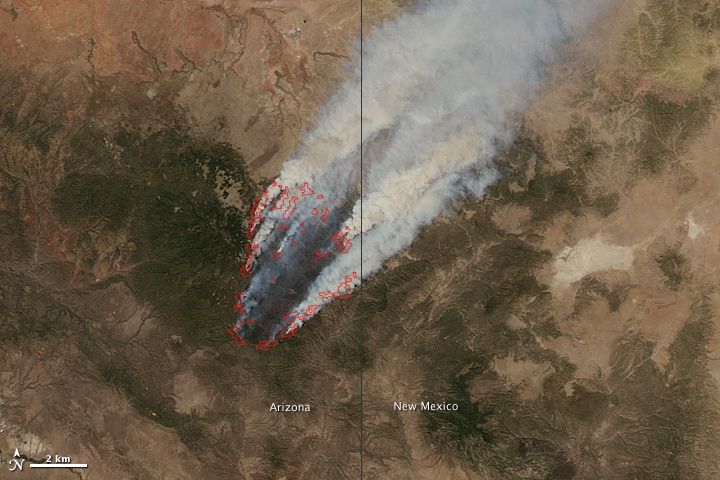
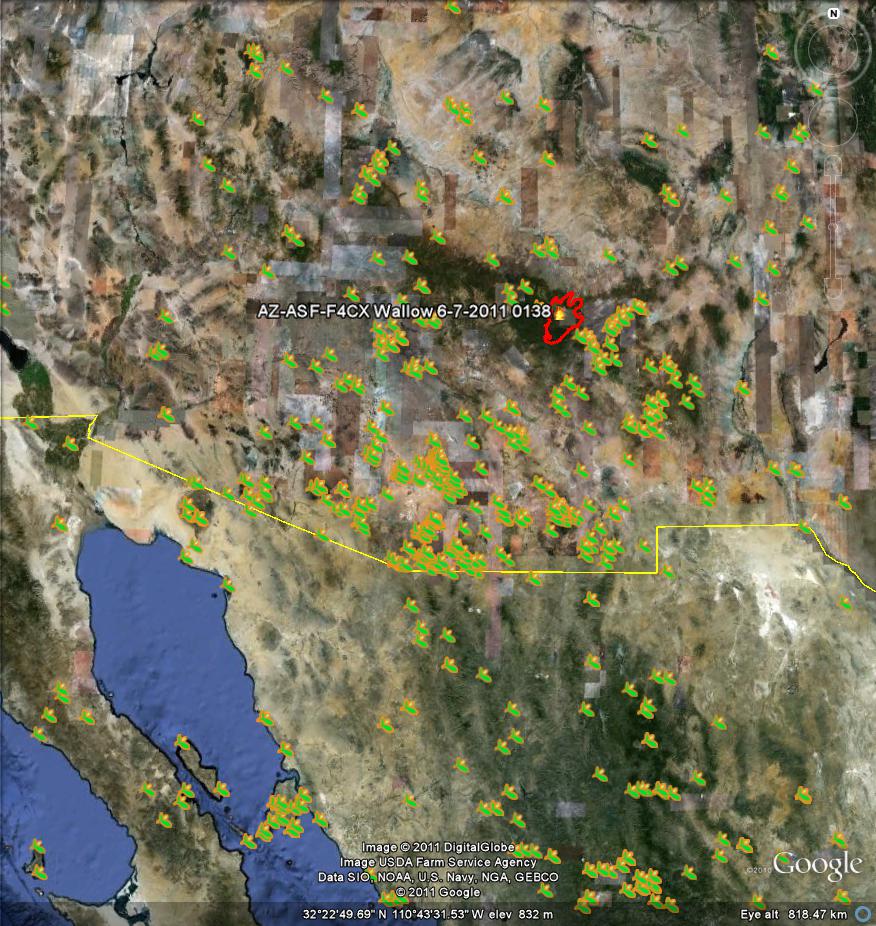
You can donwload all kinds of stuff about it, and even post your experiences of it on Facebook. But can you find out whether any crop wild relatives are threatened by it? Well, sure: all you have to do is go off to GBIF, and choose a likely genus (Phaseolus, say), and download the records, and mash them up in Google Earth with the latest fire perimeter data or whatever. 2 Like I’ve done here:
Coming in closer, and using the NASA GeoTIFF instead of the normal Google Earth imagery, you can put yourself in the position of being able to make some reasonably intelligent guesses about what might be happening to some of these populations, and the genepool as a whole in the area:
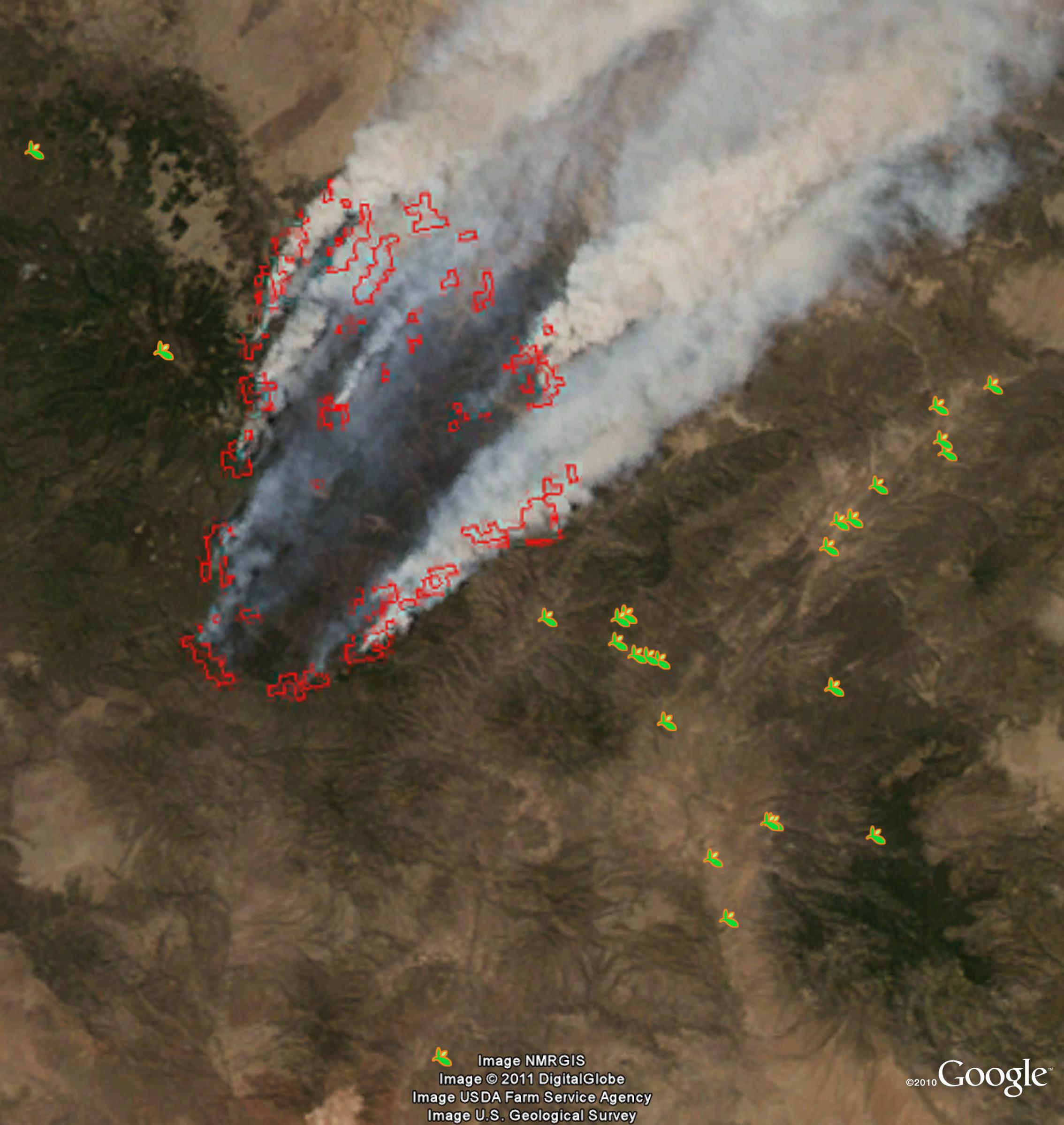
But what I really meant is that there ought to be a way to do this automagically, or something. Anyway, it is sobering to reflect that while all hell is breaking loose in Arizona, not that far away to the northeast, in the peaceful surroundings of the Denver Botanical Garden, Anasazi beans are enjoying their day in the sun, utterly oblivious of the mortal threat faced by some of their wild cousins. It’s a cruel world. And there’s a point in all this about the need for complementary conservation strategies that’s just waiting to be made. Isn’t there?
Nibbles: Food security, Food carts, Cotton, Ritual, C4 C3 CC, American Indian diets, Community genebanks in India, Fowler, Dark earth soil, Domestication
- German donor examines food and security, notes “the fast loss of biodiversity”.
- Food carts are successful oases in at least one food “desert”.
- Yesterday’s Botany Photo of the Day was American cotton.
- Good news, everyone: “Hardcore farmers prefer lowkey rituals.” Obviously the memo didn’t reach the children of the corn.
- Photosynthesis and climate change: it’s complicated.
- Native Americans try to reclaim control of their foodways. And their waists.
- “…every district should have a community-controlled seed centre with a gene bank for traditional seeds.” Of course it should. “The local available seed diversity needs to be protected and conserved at any cost.” Of course it must.
- “Right now, all over the world, projects are underway to store seeds…“
- Dark earths not just in Amazon, Africa too.
- Presentation on IFAD project on cultivating wild aromatic etc. species for money in Morocco.
Nibbles: Royal genebank, Fish collection, Plant health, USDA wheat breeding project, Afghanistan, Breadfruit Art, Pests and Diseases, Idaho, Plant breeding, Gates, Panax quinquefolius, Natives
- Thai king has crop genebank on palace grounds.
- Fish in jars.
- Planning Plant Clinics.
- Plant Breeding for Drought Stress: The Project.
- Wait, the Nebraska National Guard has an agribusiness development team? Maybe they should talk to the people responsible for the previous bullet point?
- Kids! (And adults!) An Art Contest to celebrate ‘Ulu. Breadfruit, that is.
- Use of Agrobiodiversity for Pest and Disease Management. A slide show from Carlo Fadda at Bioversity.
- 3rd Annual Biodiversity Working for Farmers Tour in Idaho. 23rd June, you have been warned.
- Huge New York Times story on plant breeding and climate change.
- Bill Gates hails creativity for small farmers challenge.
- American ginseng: use it or lose it.
- Do you live in Ann Arbour? Do you want native plants for your garden? Yeah but how about American ginseng?