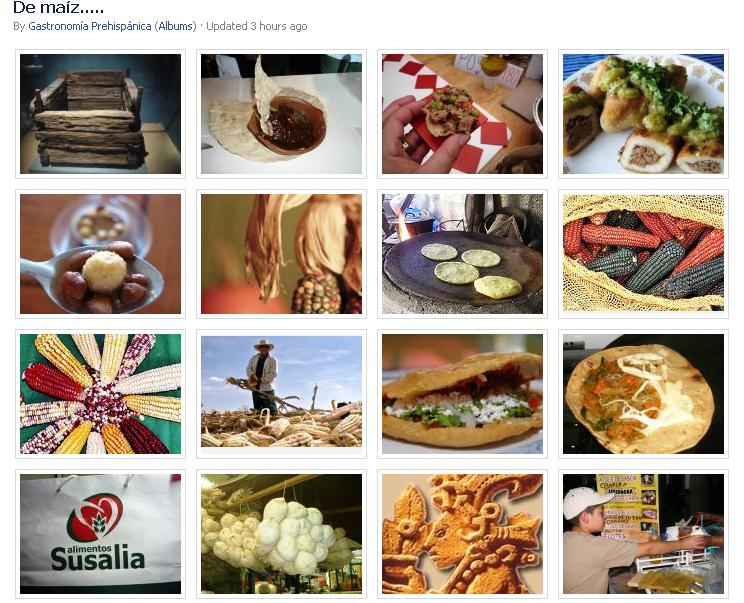
Gastronomía Hispanica has a great set of photos on its Facebook page on the “miracle of maize.” 1 Here’s a totally inadequate teaser. Go and friend them.
Agricultural Biodiversity Weblog
Crops, livestock, microbes, pollinators, wild relatives, agroecosystems, foodways …
Gastronomía Hispanica has a great set of photos on its Facebook page on the “miracle of maize.” 1 Here’s a totally inadequate teaser. Go and friend them.
A rainbow appeared in the sky, its end grounded firmly in the wharekai (food tent) set up and run by the wonderful people here. Small specks of the late afternoon sun drifted around us, light golden rain, as the skippers sat in counsel. “Basically,” Magnus was saying, “we go north for a while and then turn right.” Highly technical stuff only grasped fully by the trained mind. “Umm…yeah, okay.” We all agreed.
“Here” is Kaua’i, oldest of the Hawaiian islands, and the skippers and their crews of Pacific islanders are “sailing across the Pacific to renew our ties to the sea and its life-sustaining strength.” But they also needed something a little more solid in the way of sustenance, of course, hence the wharekai. And here’s what that looks like.
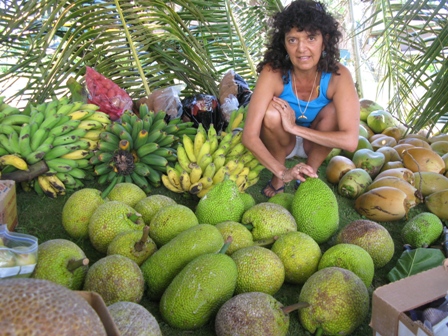
The photo comes from Angela Tillson of the Breadfruit Institute. I’ll let her tell the story.
Yes, the Breadfruit Institute donated about 20 breadfruit of different varieties for their voyage back to S.F. When they landed on Kauai, they were asking for breadfruit to eat and take with them. They were very happy since there were really no Hawaiian breadfruit fruiting this time of the year here. I took it down to their base camp on Hanalei Bay and as a Thank you for it, they let me go for a sail on the Samoan Canoe with the rest of the Hawaiian Helpers. What an honor and dream come true that was for me…!
You have no idea what a “HIGH” & “Bliss” state I’ve been since Sunday, with that mind blowing experience of leisurely talking to different
key crew members of the Vakas about their experiences, reasons, and
visions for this world crossing educational voyaging… And than finding out we could go sailing for Helping out with Breadfruit… We all 50 locals had a Blast time on such a perfect day… We were all in Heaven on Earth just like in ancient times, with only the basics… Seeing adults & kids faces light up in awe once boarding the canoes, watching everything the sailing crew did and listening to the incredible stories. WOW…