- The National Fungus of Japan explains itself.
- The aurochs recreated in fact and fiction. And more.
- Yes, that’s what we need to make good on all those GM drought-resistance promises: a new model system. And now for something a little more serious.
- Some protected areas don’t work terribly well. Here comes the science.
- Darwinian Agriculture explained by the man himself.
- Ancient diets deduced from teeth crap and crap crap.
British pride in its opium processors
Paul Madden, the UK’s High Commissioner in Canberra, Australia, is just back from Tasmania full of enthusiasm for …
UK pharma giant GSK. 1 They process poppies grown by some 400 farms around the island, which go on to become the basis for many important global medicines. It is a very R&D oriented business, as new plant varieties are constantly being developed to produce increasingly sophisticated alkaloids.
If you’ve spent any time on this blog, you’ll know what comes next, and I hate to disappoint.
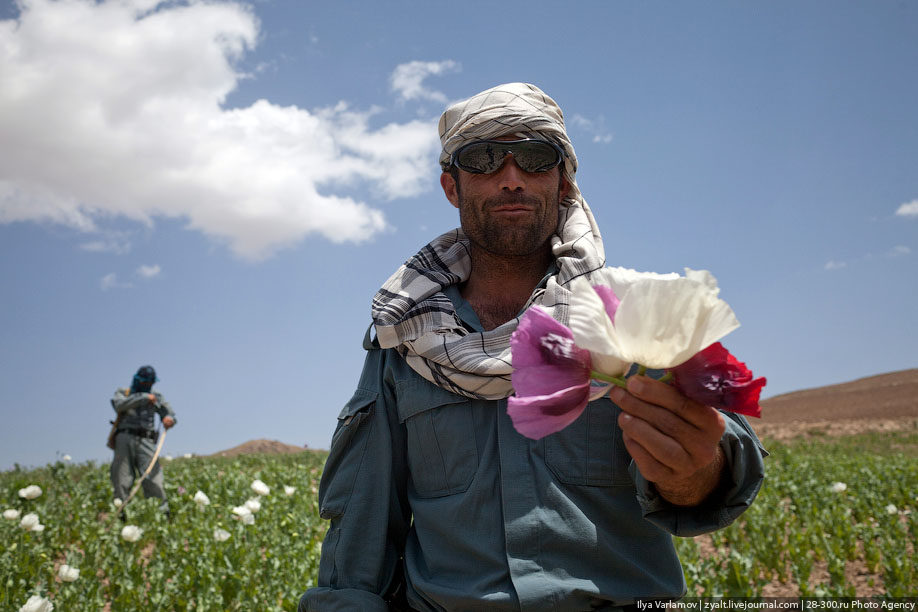
Why on earth is Tasmania encouraged to produce “half the world’s legitimate opiates,” while the same liberty and investment are not afforded the poor farmers of Afghanistan? Britain has interests there too, I believe. Less than a year ago the cumulative cost of those interests was estimated at GBP18 billion. How much would have been needed to create a properly constituted market that would adequately reward Afghan farmers for their resilience, agricultural know-how, and contributions to on-farm conservation? How much might such an effort have saved in not having to combat the people who are supporting Afghan farmers?
It isn’t just the drugs. Madden notes that
Nothing is wasted: the poppy seeds which are a by-product are sold into the catering industry. When you tuck into a lemon and poppy seed muffin anywhere in the world, the chances are the seeds came from GSK in Tasmania.
Funnily enough, that doesn’t impress me either. Were there no sour notes in the High Commissioner’s trip?
My only disappointment was to learn that these poppies are all white, rather than the red ones we associate with Poppy Day in the UK.
How very parochial, and biologically unbriefed.
The red poppies — Papaver rhoeas as opposed to P. somniferum — don’t produce opium or morphine, although they make plenty of thebaine. And believe it or not, thebaine is often the basis for those “increasingly sophisticated alkaloids,” and Tasmanian researchers are working hard to block synthesis at that point, so the poppies would be “useless for the illicit drug trade“.
One final point; they don’t have to be all white, unless you want them to be.
Nibbles: Impact evaluation reviews, Coffee podcast, Pretty on sustainable intensification, Patient capital, Searching for species names, Searching in general, Palestinian agriculture, Korean Neolithic, Mesquite in Africa, CIMMYT-China, Banana trade, UK plant science, Breadfruit, Weed, Beans in Mexico, Macadamia, Organic Cali
- How to do impact evaluation. Required reading.
- Podcast on the history of coffee from Linn. Soc. Required listening.
- How to intensify agriculture sustainably. Meah.
- It may well involve patient capital though.
- This thing will look for all the species names in a piece of text or website. Bound to come in useful one of these days.
- How to use Google properly. And a vaguely agricultural quiz to see if you’ve been listening in class.
- Protecting ancient irrigation system on the West Bank.
- And finding the oldest agricultural site in East Asia.
- The good and bad side of Prosopis in Africa.
- CIMMYT in China.
- The banana as a weapon.
- Touring UK plant science sites.
- Mapping breadfruit to save the world.
- “Over 78 million Europeans (15–64 years) have tried cannabis…” Purely medicinal purposes, man.
- “We wanted to see how farmers are reacting to this global climate change…” Bean farmers, not cannabis farmers.
- If you’re at the Noosa Botanic Gardens, Cooroy, you can see rare macadamias. Yeah but can you smoke ’em?
- Organic seed systems in California. No, not cannabis, settle down.
Nibbles: Fork, Prairies, Cynodon, Clove, Impact, Amazon, Blog, Horse, Thyme, Mauritius, Dyes
- Slate puts a fork in, well, the fork.
- Gotta love the Prairies.
- Mysterious Cattle Deaths Caused by GMO Grass: not GMO, not particularly mysterious.
- Gotta love the Spice Islands.
- How scientists can extract impact from their
navel-gazingresearch. - Gotta love online mapping platforms.
- Another journal starts a blog.
- Horses in agriculture, and history.
- Gotta love za’tar. It’s about thyme.
- Sweeter than sugar. Mauritius goes for fair trade and diversification.
- Dying for batik.
Nibbles: MCPD, Coffee pollination, WACCI & IITA get into bed, Quinoa value addition, Plant chemicals
- Rejoice, the new edition of the FAO/Bioversity Multi-Crop Passport Descriptors (MCPD) are now available on-line!
- Pollinators good for pollination shock. No, kidding apart, this is Pollinator Week and we should take note.
- Another step in building plant breeding capacity in West Africa.
- How to get quinoa cake on the menu of posh Bolivian coffee shops.
- Virtual tour of my old stomping ground at the Cambridge University Botanical Garden includes a chemical trail. Which alas does not in turn include the main chemical we used to consume there.