Nibbes: Opium, Crop Wild Relatives, Coconuts, Multicropping, Plant Health, Genebank portal
- Sustainable alternative to opium. Still waiting for my man.
- “Crop Wild Relative community calls for united global efforts“. Good to know.
- Small-scale coconut growers to benefit from Kasaragod Declaration?
- Australian farmer doubles number of species, doubles yield shock.
- Plant health clinics take expertise where it is needed most. Now for the mobile edition …
- Crowdsourcing improvements to a portal to genetic information. Now there’s an idea.
Nibbles: PNG & CC, Pasture, Nagoya, Sesame, CIMMYT, Oryza, Tradition
- A view from Papua New Guinea on a project to prepare PNG agriculture for climate change.
- How to grow a properly biodiverse pasture. Hint: money isn’t enough.
- Another Nagoya round-up. And another.
- Sesamum monographed.
- Award for CIMMYT genebank.
- African rice domestication deconstructed.
- Traditional practices bad for Nigerian children, good for Chinese fish.
Nibbles: Solanum nigrum, Blue tomato, Chickpea, COP10, Phosphates
- Leafy vegetable cures cancer! Well, nearly.
- Blue tomato seeds available. Well, nearly.
- Everything you ever wanted to know about chickpeas. Well, nearly.
- COP10 all over bar the shouting. Well, nearly.
- Phosphate supplies assured. Well, nearly.
Giant southern curled mustard in the Traditional Croplands
I couldn’t identify one of the plants in the Traditional Croplands exhibit at the National Museum of the American Indian, but a quick post on their Facebook page solved the puzzle. Here’s the plant.
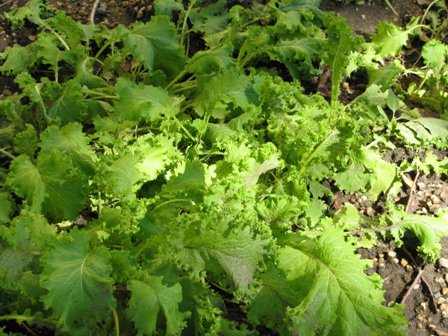
It turns out to be Giant Southern Curled Mustard, which GRIN suggests is Brassica juncea subsp. integrifolia var. crispifolia. This is described as an “old southern favourite,” or words to that effect, by many of the heirloom seed merchants I consulted online. There is also an ethnobotanical record online of the species being used by Native Americans, but only as a medicinal, at least in the book I was able to consult. Perhaps it is a relatively recent adoption.