- More livestock films than you can shake a stick at.
- The Consortium all at sea.
- Road trip! Herbarium specimen collecting in Nepal.
- Call for nutritional composition data on the staples of Papua New Guinea.
- Wanna intensify agriculture in the highlands of East Africa? Here comes the PowerPoint.
- The Tragedy of the Commons averted in Mongolia through collective action.
- A new approach to functional traits? I don’t see the difference myself, but I’ll take their word for it.
Nibbles: Food insecurity, Resilience, AnGR
- Someone else has looked at Food Insecurity in the World 2011 … so we don’t have to.
- That Kenyan meeting on Knowledge exploration agricultural biodiversity, resilience and transformation starts this week.
- 17th meeting of the Assembly of European National Coordinators for Animal Genetic Resources. 17th? Wow.
Can one ever have too many factsheets on the baobab?
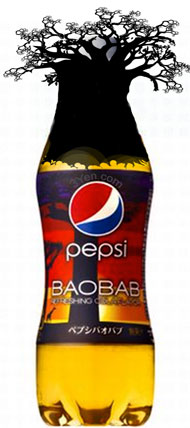
Fresh on the heels of Bioversity’s ‘African Priority Food Tree Species’ factsheet on the baobab, which was itself fresh on the heels of the Agroforestree database factsheet on the baobab, we now have, again from Bioversity, another, ahem, factsheet on the baobab. Well, this is different. I think. It’s part of a series on neglected and underutilized species. Or maybe nutritious and underutilized, as they are also described on the website. Maybe because it’s becoming difficult to call the baobab neglected. In fact, with the recent update of a review of the use of the species, perhaps the time has come for a meta-factsheet on the baobab.
“Let’s go local” Lois Englberger interview

I don’t know whether Lois Englberger actually saw the interview that has just been published in Farming Matters, the renamed LEISA magazine. In a way, it doesn’t matter. The result is both a very personal history of Lois’ involvement with the Island Food Community of Pohnpei and a useful and informative guide not only to what works and what doesn’t but also to the kind of thinking needed. Here’s a tiny extract:
What didn’t work?
Because the FSM is traditionally an oral society we found that written documents, like newsletters, worked for some groups – leaders especially – but not for the community. Furthermore, we found that people were reticent when simply advised to plant more local foods. Cooking classes and recipes thus proved to be a very effective means of motivating people, and inspiring them to want to grow local food. In general, however, perceptions are very difficult to change. Although community members were told on a number of occasions that their unhealthy lifestyles were to blame for their failing health it seemed like the message didn’t really sink in. People close their ears to messages, so we learnt that repetition is important.
You can read the whole thing here and download the entire special issue on Regional Food Systems. And a special tip of the hat to our friends Jess Fanzo and Danny Hunter, who helped compile the special issue, and Teresa Borelli, who wrote up the interview with Lois.
Nibbles: Graphic agriculture, Nutrition, Climate change, Giant pumpkins, Economic development, Roman millet, Fairtrade, Jojoba and guayule
- Agriculture 101: A graphic novel. Am I the only one who thinks novels aren’t necessarily true? First installment.
- Bioversity has a bunch of factsheets on Nutritious Underutilized Species.
- Why is a cacao tree not like an ATM? Because the ATM still pays out when its hot.
- Speaking of which, big long thought piece on Food Security and Climate Change.
- Giant pumpkins; not much diversity here, except in the agronomic approaches.
- Better access to markets may threaten specialist smallholder farmers. The case of Namibia.
- Ancient Roman ate lots of C4 photosynthesiser: millet!
- Wake up and smell the lack of green coffee.
- A couple of wannabe Mexican industrial crops get some exposure.