- Who’d be a coffee farmer in Colombia?
- Farming First eats nutrition.
Latest on the Egyptian Deserts Gene Bank
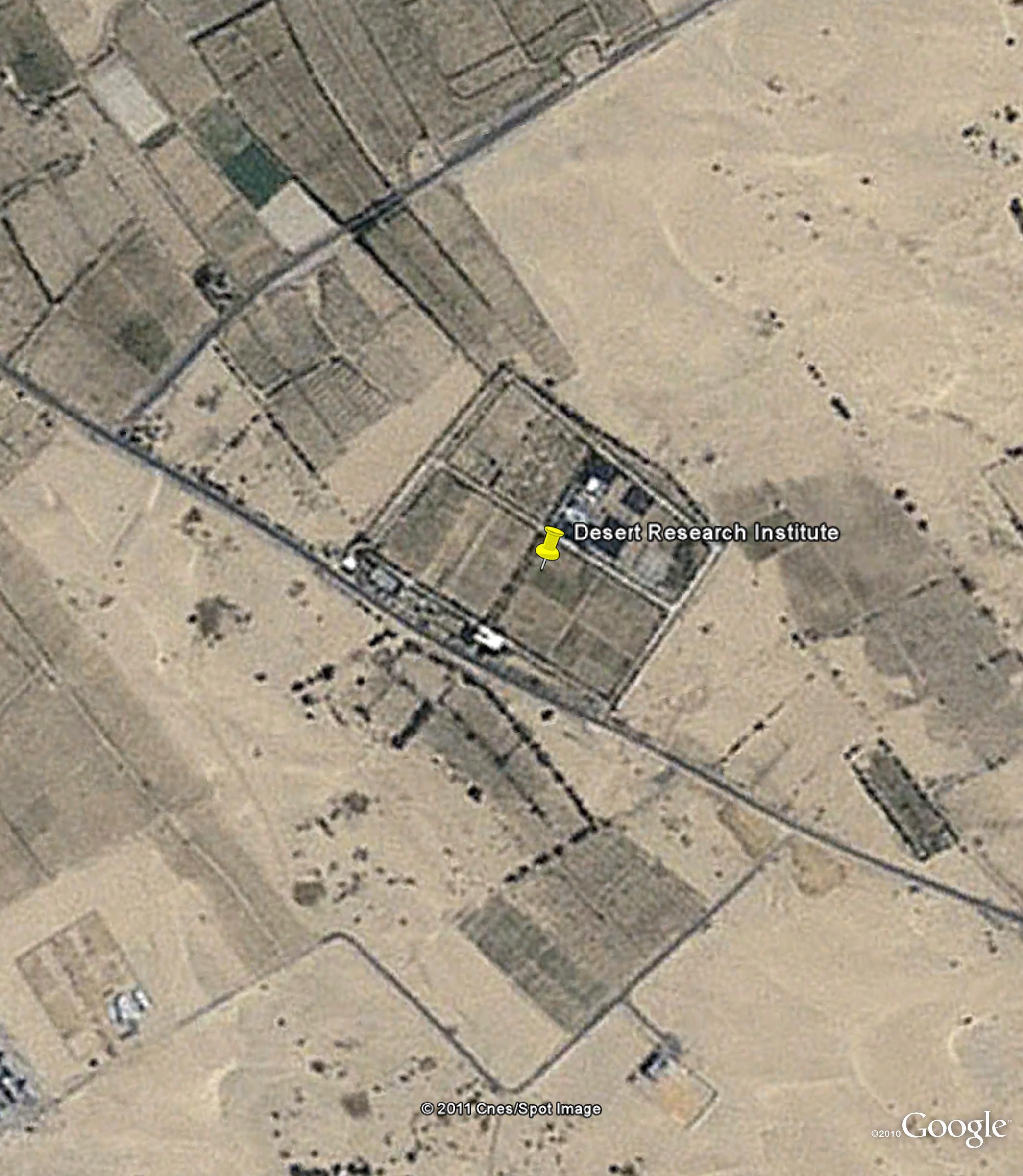 We’ve heard more from El-Sayed Mohamed El-Azazi, who’s doing a PhD at the Desert Research Centre on seed conservation of Acacia spp. (“Ecophysiological studies for some Acacia species grown in Egyptian Deserts and its conservation in gene bank” is the title). You’ll remember that the place was looted a few days ago, and people are justifiably worried about the Egyptian Deserts Gene Bank housed by the institute.
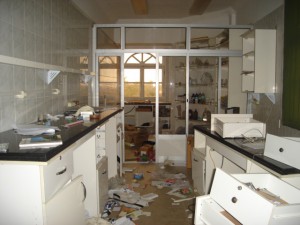 El-Sayed is adamant that the seeds and field genebank are safe. However, it is clear that the laboratories have been thoroughly trashed, and a lot of equipment broken or taken.
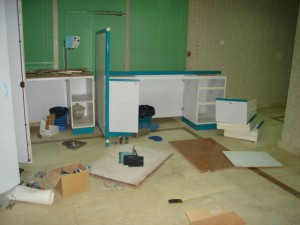 Along with the computers went a lot of data. El-Sayed says he has lost some of his PhD data. And the genebank’s database seems to be gone, although the passport data is still around in hardcopy. There are about 1100 accessions in the genebank, of about 750 wild plant species.
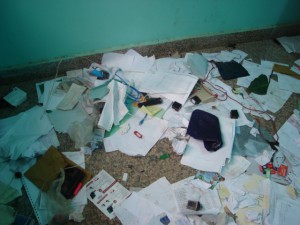 Which brings up a point that’s maybe not often addressed. And that is that the desirability of safety duplication goes as much for the data about germplasm accessions as for the seeds themselves.
A Svalbard for data, anyone?
Nibbles: Fruits x2, Rice, Forests, Dogs
- Feeding the world with breadfruit.
- Feeding the world with ngali nut. Well, the Solomons.
- Feeding the world with sticky rice. Well, Laos.
- Threatened forest hotspots mapped, and discussed. Why is it we haven’t done this for agrobiodiversity?
- Man takes best friend to grave, old and very old.
Nibbles: CBNRM, Extension, Seed systems, Climate change book and conferences, Cassava, Endophytes, Old Irish Goats, Plant Cuttings, Ethnobotany, Weeds
- Designing the next generation of community-based natural resource management projects. No agriculture. Weird. Well, not so much actually.
- Extension systems have a website! Yeah but do they need one?
- Informal seed system working just fine in Indian Himalayas. So maybe the extension system is not needed? But, hey, they have a website, did I mention that?
- Climate Change and Crop Production: The Book. And: The Conference. No but wait, here’s another.
- The unusual crop that is cassava.Yeah, but in The Economist?
- ” …among the largest collections of endophytes…” Not a lot of people know that.
- Old Irish goats (and others, to be fair) meet to talk about, well, Old Irish goats.
- The great Plant Cuttings.
- How to design an ethnobotanical garden. Would coca find a place?
- Musings on the evolution of weeds.
Saying goodbye to a maverick
The distinguished agricultural journalist Tom Hargrove died a few days ago. A contributor to a closed mailing list noted that he had made “a stellar scientific contribution to the CGIAR” in particular, though his renown went far beyond that. Very true. All the more so as he was one of the first to question the wisdom “of growing genetically uniform varieties over millions of hectares…from within the ‘lions den’ where the dogma was gospel.” Perhaps his greatest legacy is that the dogma is not as entrenched as it was.