- A look inside the big USDA genebank at Fort Collins. Whatever next?
- Sweet wheat. Whatever next?
- Farmers must participate in agricultural research in Europe. Whatever next?
- “Come and farm our virgin lands, Ethiopia tells India.” Whatever.
- “You may already know that yampah (Perideridia gairdneri) is a North American umbellifer.” Er, no. Tell me more.
- After cloves, vegetables? Zanzibar’s farmers increase productivity.
- More news for Luigi’s MIL: Future Climate Scenarios for Kenya’s Tea Growing Areas.
- Is this the end of trail mix?
- Body Shop uses wins award for using Cameroonian rainforest honey and wax from CIFOR-supported beekeeping project.
- Fancy a glass of ass’s milk? Totally SFW.
- Everybody is climate-proofing crops.
- The BBC looks at medicinal plants.
Veggie genebank gets its seeds out
The University of California Davis (UC Davis) leads an international effort to help developing countries through improved marketing and production of high-value horticultural crops. Established by the United States Agency for International Development (USAID), the Horticulture Collaborative Research Support Program (HortCRSP) supports projects to improve the livelihoods of the world’s poor and builds on their needs highlighted in the Global Horticulture Assessment.
Oh hum, right? Not so fast. One of the projects being supported is this:
Dr. Ricky Bates, Horticulture Department of Penn State University has received a one-year exploratory grant from HortCRSP to look at methodologies for strengthening informal indigenous seed systems in Northern Thailand and Cambodia.
And it gets better. A genebank is involved. My cup runneth over.
The ECHO seed bank partnership is a very important integral part of this project. Dr. Bates states that, “ECHO has been around for awhile. ECHO is located in Ft. Myers Florida and has been around for at least 20 years. They see themselves more or less as an extension service where they are there to resource and support NGOs and people working all around the world with poor farmers. It is a little like an extension system where they provide information and printed material via online or telephone calls to people who may find themselves perhaps in India with World Vision. ECHO is there as a resource for NGOs that do not have an agricultural background. What grew up with the development of ECHO has been the development of a vey innovative seed bank in Ft. Myers Florida where they sort of specialize in tropical fruits and vegetables. They make these seeds available at low cost or no cost to individuals and NGOs working around the globe in development.
Safeguarding tangible agricultural heritage
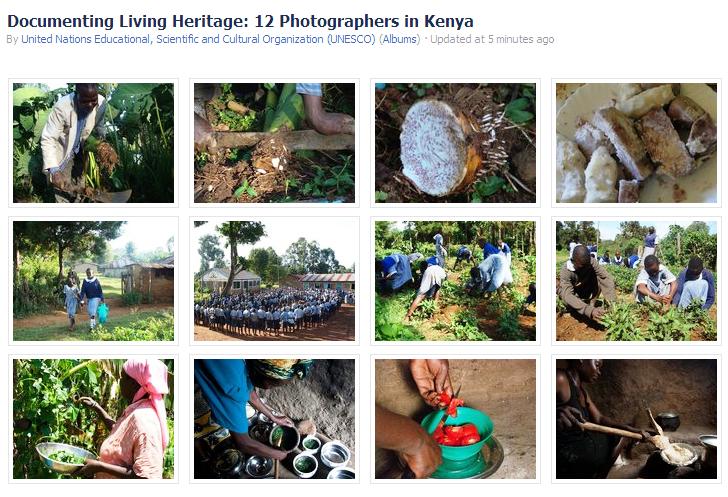 There’s a great set of pictures of Kenyan traditional crops and food preparation on UNESCO’s Facebook page, in their Documenting Living Heritage series. This is part of an exhibition currently on at UNESCO’s HQ in Paris to raise awareness of the 2003 Convention for the Safeguarding of Intangible Cultural Heritage. I doubt there’s a photograph of the Gene Bank of Kenya, but that surely contributes to that goal too.
Nibbles: Maori, Göbekli Tepe, Spinacia, Herbarium
- Ancient Maoris traded kiwi feathers. What’s that you say? Kiwis are not agrobiodiversity? Says who?
- Did organized religion come before agriculture? It’s a toss-up, frankly.
- Looking for wild spinach. Ah, to be in the field again!
- How to use a plant press. With video goodness. Ah, to be in the field again! Ok, settle down now, back to the grind.
Nibbles: CWR, ICRISAT, Fruits, Maize, Symbionts, Tissue culture, Vegetables, Med diet
- ICARDA saves the world.
- No, ICRISAT saves the world.
- You’re both wrong, it’s CIAT.
- No, wait, maybe it’s CIMMYT. Oh I give up.
- Actually it’s fungi.
- Or maybe tissue culture?
- Surely it can’t be five unknown vegetables?
- Could it be that it’s the Mediterranean diet? And that UNESCO will screw it up for all of us?