- World Genepool at the N.I. Vavilov Institute of Plant Industry and Its Utilization in Agriculture. Anyone got a copy?
- Gloucester Old Spot pigs get protection. Not that they really need it.
- BASF takes hi-tech breeding to the next level: 40,000 individual rice plants on a robotic ride to the future.
- Rebsie does carrots.
- The perfect storm is one element of the triple crisis.
- Nitrogen-fixing shade trees really do feed young cacao trees.
- “Sheep is your backbone.”
- Bringing gluten-free sorghum beer to the huddled masses … of Colorado.
- Eat like a pope. (Not much diversity.)
- Cadbury heiress fancies starting a new chocolate company? Maybe she’ll go all varietal.
- Scientia pro Publica. Carnival time again.
Sowing new seeds in the English Midlands
The initiative, Sowing New Seeds, funded by the Big Lottery Local Food Fund, will directly enable many more gardeners in the East and West Midlands to grow non-traditional crops, while also documenting how to grow them based on the experiences of the region’s diverse communities.
Sound like a great idea from Garden Organic, and you can follow the progress of the work on a great new blog. Thanks to Nigel for the headsup.
Food for the City in Rome
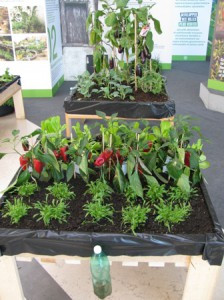
There’s a great exhibit from the Food for the Cities project in FAO’s atrium this week on the occasion of the 22nd Session of the Committee on Agriculture. Here’s a quick look at a couple of the little container gardens (microgardens) they’ve created. Seem to be doing very well too.
Nibbles: Protected areas, Sturgeon, Geographic indications, Ugandan yams, Tomato controversy, Maya agriculture, Alternatives to slash-and-burn, Asian veggies, Food composition
- Bird people say: Critical migratory waterbird sites need urgent protection. Tomato and potato crop wild relative people say: What, only the critical ones? You’re lucky, mate!
- Toffs everywhere start stocking up on caviar.
- Tequila and cheese geographically indicated. Foie gras says: Been there, done that, got the t-shirt.
- Uganda Government minister says yams cause cancer. Oh, come now, steady on.
- Are Tomatoes Fruits or Vegetables? Asks mental_floss. Oh no, I’m not going there, says me.
- “…where there is a market, the Maya will work to develop supply capability; where there is no market, traditional subsistence methods are better than the introductions.”
- Building a better slash-and-burn agriculture.
- Nice Asian greens. I’m hungry already.
- Crop Composition Database gets facelift.
Nibbles: Hemp, Wheat, Wheat, Conservation, Liberia, Carnival, Climate change, Satoyama, Leafy greens
- The National Cannabis Collection in Hungary. Undated. Popped up. What can I tell you?
- CIMMYT’s wheat atlas. Still in beta. What can I tell you?
- And here’s a primer on spring vs winter wheat.
- Director of European Crop Protection Association equates biodiversity with wildlife. Well, he would, wouldn’t he?
- Liberian President Sirleaf: “Agricultural growth is more effective in reducing poverty than any effort in any other sector.” h/t NtP.
- New edition of Scientia pro Publica blog carnival.
- Our friend Ehsan’s Seeds for Needs project launches in Papua New Guinea, beating climate change to the punch.
- The Satoyama Initiative has a website. And RSS feed.
- “…traditional food crops … are an important source of community resilience in Zimbabwe—including resilience to climate change and economic turbulence.”