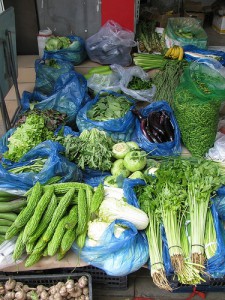
 So, in retaliation for Europe protecting Roquefort, Stilton cheese and Scottish farmed salmon (sic.), among other agrobiodiversity products, the Chinese have slapped Protected Denominations of Origin (PDO) on Guanxi honey pomelos, Shaanxi apples and Longjing tea and a Protected Geographical Indication (PGI) on Liaxian Mashan yams. 1 Well, no, not really, it was all much more amicable than that. And Dongshan asparagus, Jinxiang garlic, Pinggu peach, Yancheng crayfish and Zhenjiang vinegar are waiting in the wings…
Useful useful plants set on Flickr


Plants – crop wild relative, a set by Arthur Chapman on Flickr.
“Plants either used for food and agriculture or relatives of species that are so used. Includes images of plant species taken in fruit and vegetable markets around the world.”
Keeping bees in Hong Kong
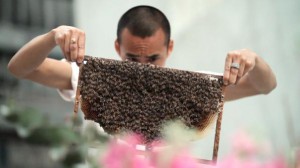 I can’t resist sharing this wonderful video about a guy I found, well, inspirational is the only way I can describe him. And believe me, I don’t often use that word, at least about people. Clicking on the photo will take you to Vimeo. Thanks, Grist.
Climate Change and Indigenous Knowledge Systems: conference
AYSICCIK is, believe it or not, the snappy acronym for the African Young Scientists Initiative on Climate Change and Indigenous Knowledge. And they’re drawing attention to an International Student Conference on Climate Change and Indigenous Knowledge Systems, to be held in Johannesburg, South Africa, on 15-17 August 2011. It is probably too late to apply for a scholarship, but you have until next Tuesday (31 May) to submit an abstract on one of the six conference themes. Food security is in there, as are indigenous knowledge, biodiversity management and other topics dear to us.
So, what are you waiting for? And if you do go, we would welcome reports.
What is and is not going to happen with antimalarial trees
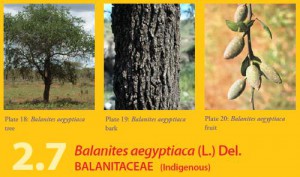 ICRAF’s project and publication on trees with antimalarial properties has made it into the prestigious medical journal The Lancet. Kudos indeed.
 UnLike that article, fortunately, the ICRAF publication is not behind a paywall. The project has been much in the news, and rightly so, but at least one report is inaccurate in suggesting that ICRAF are planning a major effort on ex situ conservation of antimalarial trees. This is how The Star entitled its article when the book was launched: “ICRAF starts trees gene bank project in Nairobi.” And this was their lede:
A project to document genetic properties of more than 3,000 forest trees across the continent has started in Nairobi.
In fact, ICRAF already has a genebank, of about 200 species, and there are no plans to either expand that to 3000 species or specifically focus on collecting antimalarials in the future. According to our sources, The Star correspondent may simply have conflated the malaria book project with the results of a recent meeting at ICRAF on the State of the World’s Forest Genetic Resources.
LATER: My sincere apologies to The Lancet. That paper is NOT behind a paywall. You just need to register. Which takes a bit of time and effort but does not involve the exchange of currency. Sorry!