- Next-generation sequencing strategies for characterizing the turkey genome. It never ends, does it. Meanwhile, we patiently await our jetpacks.
- Community-Based Management of Animal Genetic Resources (AnGR): Constraints and Prospects of AnGR Conservation in the Tropics. Best thing to do is improve the local breeds through village-level schemes. In Nigeria, that is.
- Comparison of seed viability among 42 species stored in a genebank. 80% loss in melon seed viability over 10 years sounds a bit high to me.
- Market Participation and Agro-Biodiversity Loss: The Case of Native Chili Varieties in the Amazon Rainforest of Peru. Selling to local retailers good for diversity, selling to wholesalers not so much.
- Stem and leaf rust resistance in wild relatives of wheat with D genome (Aegilops spp.). They all have it.
- Assessing rice and wheat germplasm collections using similarity groups. You can go quite far in identifying possible duplicates just with. passport data.
- Genetic Distinctiveness of the Herdwick Sheep Breed and Two Other Locally Adapted Hill Breeds of the UK. Close to each other geographically and ecologically, but quite genetically distinct. No word on whether village-level improvement necessary for their continued existence.
- Managing Potato Biodiversity to Cope with Frost Risk in the High Andes: A Modeling Perspective. Fancy maths confirms better to grow mixtures. Andean farmers nonplussed.
- Sweet potato (Ipomoea batatas L.) leaves as nutritional and functional foods. But they taste like shit. Just kidding, they’re good and good for you.
Rice diversity on display
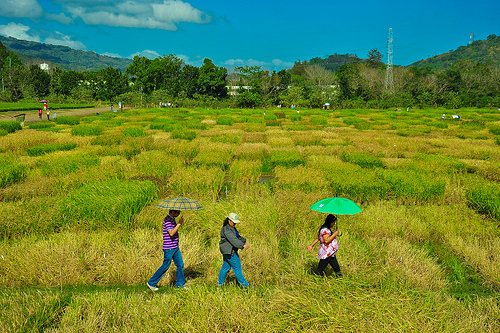
Some great photos of the Genetic Resources Centre Annual Field Day over on IRRI’s Flickr site. IRRI’s breeders are invited to visit the genebank’s seed multiplication plots every year, to see if anything grabs their eye. The chessboard effect is due to sowing early and late varieties in an alternating pattern. I’m assured the contrast “is becoming more pronounced each year as the supporting data improve.” See for yourself by comparing with previous years.
Nibbles: Frances Seymour, She don’t lie, PNG coffee, Rony Swennen, Corridors, Eating bugs, Potato breeding
- Former CIFOR DG interviewed about Global Forest Watch and more. I would have asked why you can’t import your own data or share a map you make.
- A particularly important place to watch the forest is Honduras, because deforestation there is correlated with cocaine trafficking.
- Not clear from this World Bank piece if deforestation in PNG associated with cultivation of another drug, i.e. coffee.
- Better bananas would be good for forests, wouldn’t they?
- Bah, just let them have corridors, they’ll be fine.
- And don’t forget to eat the forest bugs.
- Ok, I can’t figure out how to fit the history of potato breeding into this narrative. Any of it organic, though?
Nibbles: Brazil agrobiodiversity & nutrition, Chinese mummy cheese, Grey forest literature, ICRISAT chickpea, CIAT cassava & forages, Jamaican cassava
- Brazil revises its National Biodiversity and Action Plan and wants to mainstream biodiversity and nutrition.
- That’s a really old cheese.
- Are you conducting projects testing how the presence of trees affects food production and natural resource management? CIFOR would like to hear from you.
- ICRISAT super-chickpea takes over India.
- And CIAT amylose-free starch cassava to take over Brazil. China next?
- Red Stripe to use cassava. Jamaica? No, they really did want to make cassava beer. Well, come on, things are peachy with cassava bread, why not beer?
Eat up all your Okinawa spinach
Speaking of Amanda, she also recently went on the Living with the Land boat ride at the Epcot theme park at Walt Disney World in Florida.
A relaxing 13-minute boat ride takes you on an informative journey through a tropical rain forest, an African desert complete with sandstorm, and the windswept plains of a small, turn-of-the-century family farm. Guests experience the struggles of the past and plans for farming in the future including Hydroponics, Aeroponics and Aquaculture. It’s not just about fruits and veggies, fish farms are on display. Since The Land is a Disney restaurant supplier, You could very well be seeing your entree. Wonder where those Mickey shaped cucumbers in your salad came from? This is where they’re grown. The educational content on this ride is geared more towards adults, but younger guests will love the boat ride and spotting the different fruits and vegetables.
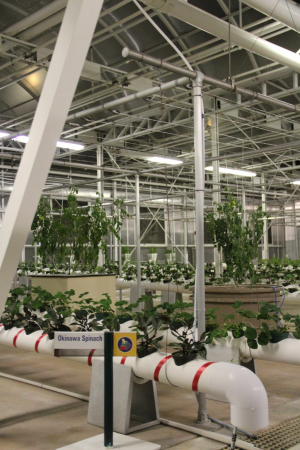
Very educational, I’m sure. Anyway, this photo of hers featuring Okinawa Spinach caught my eye, even more than the Mickey shaped cucumbers, because I’d never heard of the stuff. Turns out to be Gynura bicolor, and to have really few accessions in the world’s genebanks. I wonder why Disney World picked on it in preference to any number of better known Asian vegetables. And whether they sell seeds in the gift shop. But it’s certainly one way to stimulate interest in a neglected species.