Cheap at half the price

…a cost benefit comparison based on the results of this study confirms that the benefits of the GGB, even with the conservative estimation adopted within the current framework, significantly exceeds the costs of its operation. Thus in terms of insurance values generated by the GGB, the flow of annual equivalent values were estimated to represent a minimum of 2.95 million euros whereas operating costs of the GGB currently correspond to less than 3 per cent of this amount on an annual basis. Hence the present study suggests that maintaining and further developing the GGB is an economically justified strategy.

The final report on the “Valuation of the Greek Genebank” (that would be the GBB) project is out. Actually, it may have been out for a while, but I’ve only just now found it. We have blogged about it before. We’ll blog about it again, no doubt, when we’ve digested the results, of which the above quote is the parting shot.
Brainfood: Diverse grasslands, More diverse grasslands, Latitudinal meta-gradients, Acacia barcoding, Cryoconserving recalcitrant seeds, Tree tomato, Modeling parasites, Landscape complexity & services, Genomics & breeding

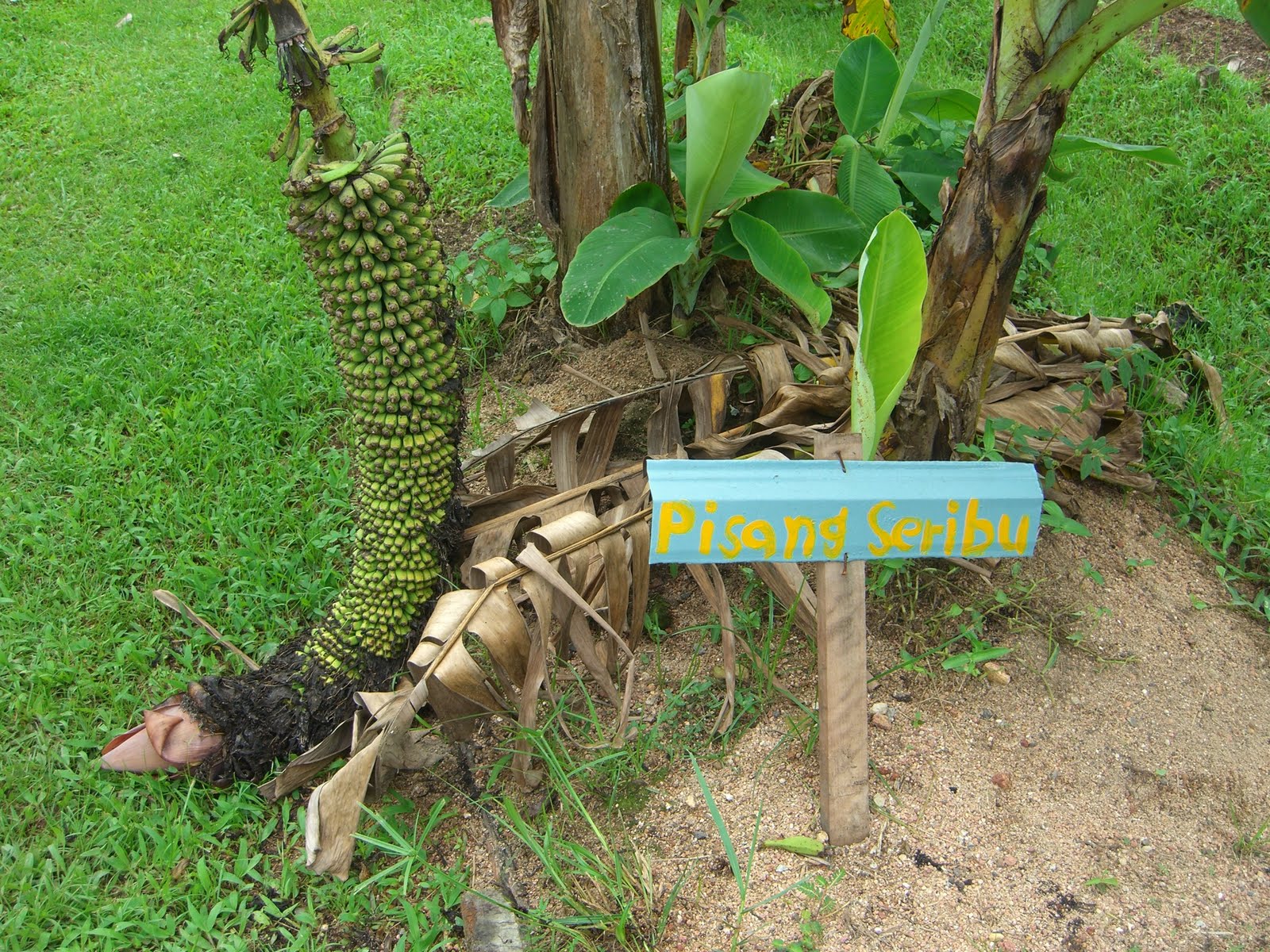
Pisang Seribu in the limelight

You know those websites which do nothing but reproduce photographs of weird and wonderful things, usually as a way of getting you to buy something, often weird but probably not very wonderful? Well, sometimes images get posted from there to Facebook or whatever, and indeed some go viral, no doubt resulting in huge profits for someone or other. The image I saw yesterday didn’t go viral, but it was certainly weird and wonderful enough to do so. It’s of a hugely long bunch of tiny bananas, and you can see it in the original place I saw it, but I’ll reproduce a better photo below.

banana

I was able to find it, 1 at a blog called Smell the Coffee, thanks to our friends at ProMusa. I posted the original link on their Facebook page, and also on Twitter, and within minutes I heard back with the full monty on our strange banana.

The cultivar is called Pisang Seribu in Malaysia and Indonesia, pisang being the Malay word for banana and seribu meaning a thousand. We have it on good authority that the fruit are ‘delightfully edible’. The other unusual thing about this cultivar, besides the high number of fruit, is that the latter didn’t develop from female flowers but neutral flowers, which usually wither away and do not develop into fruit nor produce pollen. Pisang Seribu doesn’t have a Musapedia page yet, but it is featured on the Cultivar Diversity portal… In Vietnam, it is called Chuoi Tram Nai. Chuoi is the Vietnamese word for banana, Tram means 100, and (I think) Nai means hands.

So maybe now the thing will go viral in the agricultural biodiversity community at least. Thanks to ProMusa.