- Mike Jackson gets himself a pulpit. Welcome to the blogosphere, Mike!
- More on the Filipino ex-genebank.
- What they grew in an ancient Israelite garden. Can they really tell Citrus species apart from their pollen?
- More American maps to mashup with obesity and food insecurity: land use, renewable energy sources…. I do hope someone is keeping track. Even of the more esoteric stuff, of course, like the names of softdrinks.
- Yet more on horse domestication.
- Another organic farming externality for your consideration. Thanks, Robert.
- ILRI gets innovative on this whole training thing.
- “The future of chocolate” revealed.
- Boffins look at fossil bison epigenetics to investigate adaptation to climate change. What will they think of next. Well, applying it to chickens, for a start.
- Other boffins move potato anti-nematode genes into bananas. No word on the epigenetics of it all.
- Indian report on how to strengthen role of agriculture in nutrition.
- Kew has money for fieldwork.
- Cleaning messy taxonomic data. Useful in Genebank Database Hell?
Mapping America
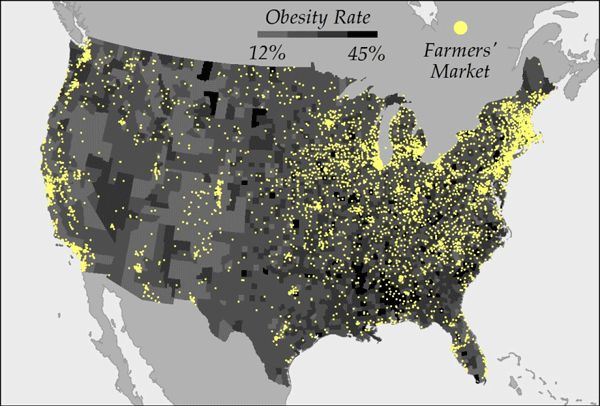
So there I was Scooping away, and what should turn up among the stuff I follow, and almost side by side on the screen to boot? Well, this map of obesity rates and farmer markets in the USA:
And, I kid you not, this map of food insecurity in, you guessed it, the USA.
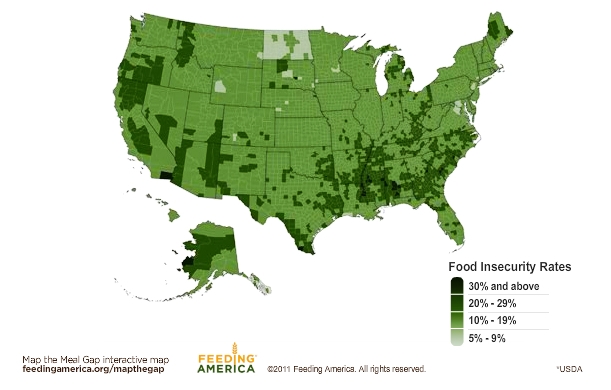
Eyeballing does suggest a certain association between obesity and food insecurity, doesn’t it? Talk about the double burden of malnutrition. Oh the fun one could have mixing and matching such maps, and the no doubt dozens of others that also exist out there, documenting the geographic distribution of McDonald’s, organic farms, drunkenness, gyms, pet ownership, house prices, fizzy drink consumption, weed busts…
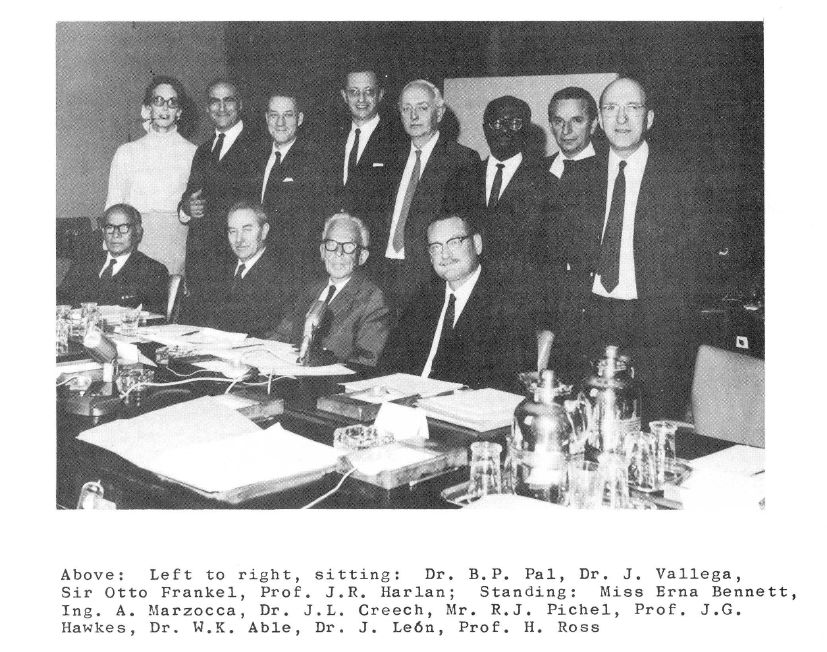
Another photograph of Erna Bennett surfaces
Thanks to Helmut Knüpffer for sending in a scan of the Plant Introduction Newsletter No. 22 (July 1969), featuring a short report about the “FAO Panel of Experts on Plant Exploration and Introduction”. This includes a photograph of the eminent participants, one of whom is Erna Bennett (top left), who died a few weeks back.
How to react to emergencies
From early 2000, various agencies and individuals involved in livestock relief work began to question the quality and professionalism of their interventions.
Wow, thanks for sharing. Anyway, out of that crisis of self-esteem was LEGS born, the Livestock Emergency Guidelines and Standards. It’s not immediately clear to me after a brief browse of the website to what extent agrobiodiversity considerations come into these standards and guidelines, but I’ll explore some more and get back to you. Anyone out there aware of a similarly formalized initiative for seeds? It’s not as if guidelines for seed interventions are not needed. But they may be there already for all I know, embedded in the WFP and FAO seed relief playbooks.
LATER: And indeed they are. Good to know. Thanks to Tom Osborn from FAO.
Crop wild relatives of the USA
I’ve just come across the Jepson Flora Project, which
brings together all of the floristic references and data of the Jepson Herbarium. Resources of the Flora Project are directly linked the the Consortium of California Herbaria, CalPhotos, the California Native Plant Society, California Exotic Pest Plant Council, USDA-Plants database, and many other external sites. The Friends of the Jepson Herbarium help the Jepson Flora project carry out its work.
It doesn’t look particularly nice, but I do like the idea of aggregating all kinds of information about each taxon, like Helianthus californicus for instance, via the Jepson Online Interchange. From that admittedly ugly page you can dig deeper, and for example get a digest of taxonomic, distribution and phenology information based on specimens from members of the Consortium of California Herbaria. They don’t make it particularly easy for you 1 but you can, wonder of wonders, even export the location data to Google Earth, where you can mess with it as you wish.
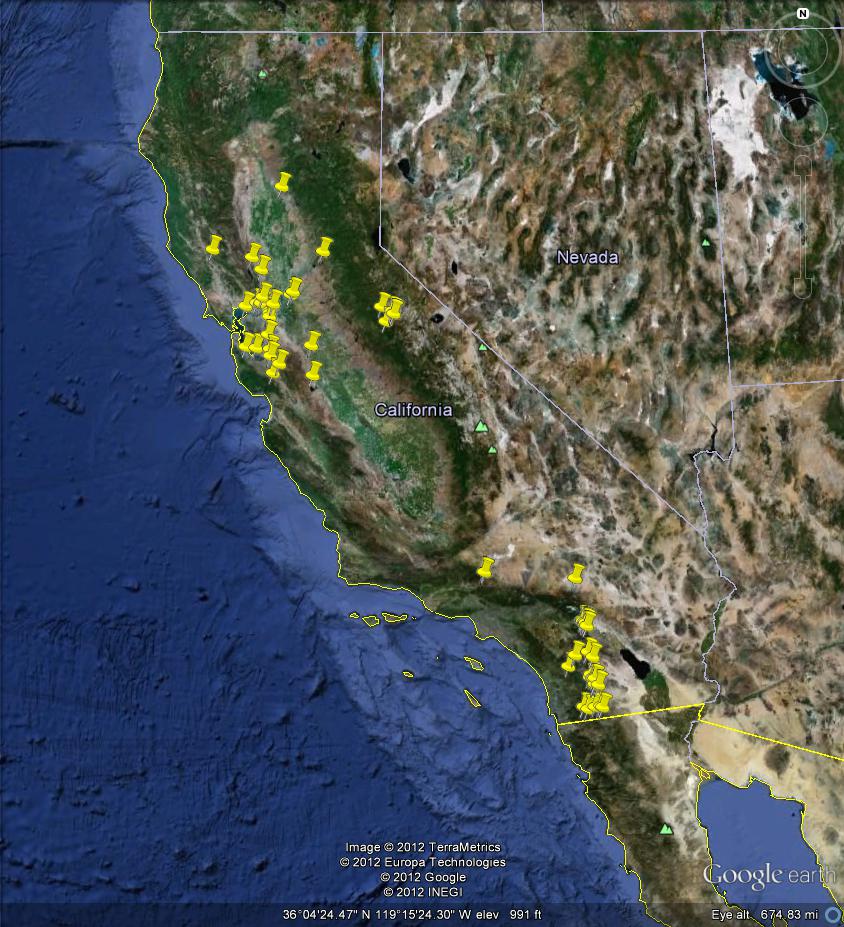
I wonder how many other US states have something similar. And whether all their data on crop wild relatives could then automagically be aggregated up to the national level. Colin, are you there?