- Agricultural landscapes and biodiversity in China. Traditional farming practices good for biodiversity, modern bad. Therefore need intensification, to take pressure off natural habitats. But no, wait, that usually means monocultures and chemicals, which are bad. Oh crap. No mention of genebanks.
- Innovation in input supply systems in smallholder agroforestry: seed sources, supply chains and support systems. Decentralized commercial system probably best for getting quality agroforestry seed to smallholders. Unfortunately, nobody listening.
- Characterization of Italian lentil (Lens culinaris Medik.) germplasm by agronomic traits, biochemical and molecular markers. I object in principle to any paper that says a particular landrace is “the best.”
- The relationship between heterosis and genetic distances based on RAPD and AFLP markers in carrot. It is positive. Was this really not known before in carrots? What am I missing?
- Genetic diversity of taro (Colocasia esculenta (L.) Schott) in Vanuatu (Oceania): an appraisal of the distribution of allelic diversity (DAD) with SSR markers. 10 villages, 344 landraces, 324 distinct multilocus genotypes, genetic pattern reflects social networks. Situation in Andaman Islands not quite so interesting.
- A study of genetic diversity among Indian bread wheat (Triticum aestivum L.) cultivars released during last 100 years. More diversity after Green Revolution than before, but steadily decreasing.
- Ex situ conservation genetics: a review of molecular studies on the genetic consequences of captive breeding programmes for endangered animal species. Restricted access, and you know what? I couldn’t care less.
- Consequences of wooded shrine rituals on vegetation conservation in West Africa: a case study from the Bwaba cultural area (West Burkina Faso). I expect there are some, but with restricted access, what’s the point of even linking?
- Evaluating sweet potato as an intervention food to prevent Vitamin A deficiency. To have an effect, you’d have to replace all the other types with orange-fleshed ones. Well, almost. Wonder whether it will be presented at the “International Scientific Symposium on Food & Nutrition Security Information: From valid measurement to effective decision-making” early next year.
- Evaluation of variability of morphological traits of selected caraway (Carum carvi L.) genotypes. They’re actually breeding this stuff in Poland. But they had to get their germplasm from botanical gardens around Europe.
- Variation in baobab seedling morphology and its implications for selecting superior planting material. There is some.
- Edible Neotropical blueberries: antioxidant and compositional fingerprint analysis. The 5 species involved have different ones.
- Population genomics and speciation in yeasts. There’s a question as to whether yeast species in fact exist in any meaningful sense.
- Cereal–forage rotations effect on biochemical characteristics of topsoil and productivity of the crops in Mediterranean environment. Continuous cereal stressed the soil.
Tweeting the 18th International Botanical Congress
As I’ve just nibbled, the Annals of Botany bloggers are at the 18th International Botanical Congress in Melbourne, and doing a great job of reporting on emerging issues. But there’s lot of other people there too, and many of them are tweeting. You can follow them all on the #IBC18 hashtag.
LATER: Science in Public is “helping run the media program for the event.”
Nibbles: IBC18, Sustainable intensification, Macadamia, Endangered turtle, Transgenic grass skirts
- More on #IBC18 from AoB. Web 2.0 as it should be.
- EurActive.com with massive dossier on sustainable intensification in Europe. Not much diversification there, though, except for intercropping.
- Boffins look for wild macadamias with thinner shells for wimpy consumers. Well, not just that.
- The ancient Maya mixed up their turtles.
- Grass skirts latest GMO fear.
Bringing back local foods in Bolivia
http://www.youtube.com/watch?v=Y6Z7CcFa6_cIn El Alto, Bolivia, Heifer International supported a series of workshops at eight local schools about healthy food made with traditional, local ingredients. The families who attended these workshops then conducted similar workshops in other schools, and later organized a street fair to raise awareness of the importance of local foods.
If you share money, you have half of the money; if you share bread, you have half of the bread; if you share knowledge, you have twice as much!
Photoguide to West African plants online
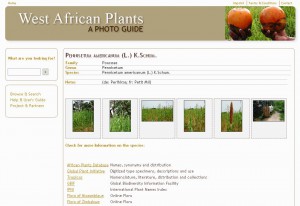
This interactive photographic guide 1 shall help you to identify higher plants from West African ecosystems. It contains images of ferns and seed plants taken in the field. You can browse through a taxonomic hierarchy and/or search according to selected characters you observe on your plant.
Have we linked to this before? I seem to remember doing so, but can’t find the evidence. Anyway, it includes cultivated plants.