Saving the camel through dung

A post on DAD-Net alerts us to a successful attempt to halt the decline in camel numbers in Rajasthan (not that the problem is completely resolved, as another post points out).

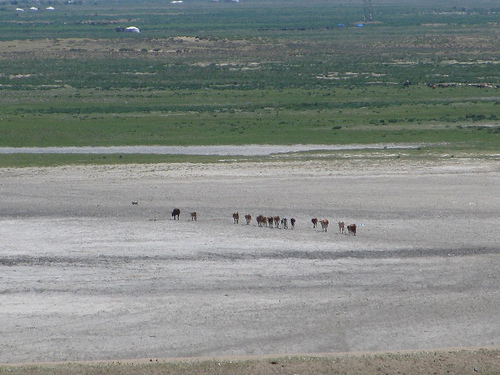
A five year effort by an Indian non-government organisation to halt the decline of the camel population in Western Rajasthan (India) has borne fruit: in the district of Jaisalmer, where the project is located, camel numbers increased by 26.5% between 2006 and 2011. In all other districts of Rajasthan, the camel population continued its quick decline, according to the latest government data. Camel breeders attributed the increase in their herds to a variety of interventions by the project: Quick response to disease outbreaks and easy availability of genuine medicines to control diseases, such as mange — a highly contagious skin ailment that can lead to death if neglected. Other measures were the prosecution of camel thefts by a task force and prevention of accidents between camels and cars by the setting up of road signs. An important aspect was a change in perception about the economic potential of camels, as the project that is implemented by Lokhit Pashu-Palak Sansthan and supported by the Ford Foundation placed emphasis on developing a range of new products from the camel. These include camel milk and ice cream, as well as luxury items made from camel wool, such as shawls, bags, caps and rugs. These products are in various stages of reaching the market. A third product is “Biocultural paper” which is actually paper made from camel dung that contains the seeds and fibres of up to 36 plants that camels graze on. A factory for this handmade paper will be inaugurated in Sadri (Rajasthan) on 16th March in the presence of various dignitaries and media persons.

Ilse Koehler-Rollefson of the League for Pastoral Peoples and Endogenous Livestock Development, and the director of LPP’s Indian organization Lokhit Pashu-Palak Sansthan, Hanwant Singh Rathore, describe some of these efforts to market camel products in this video.

Genebanks and earthquakes

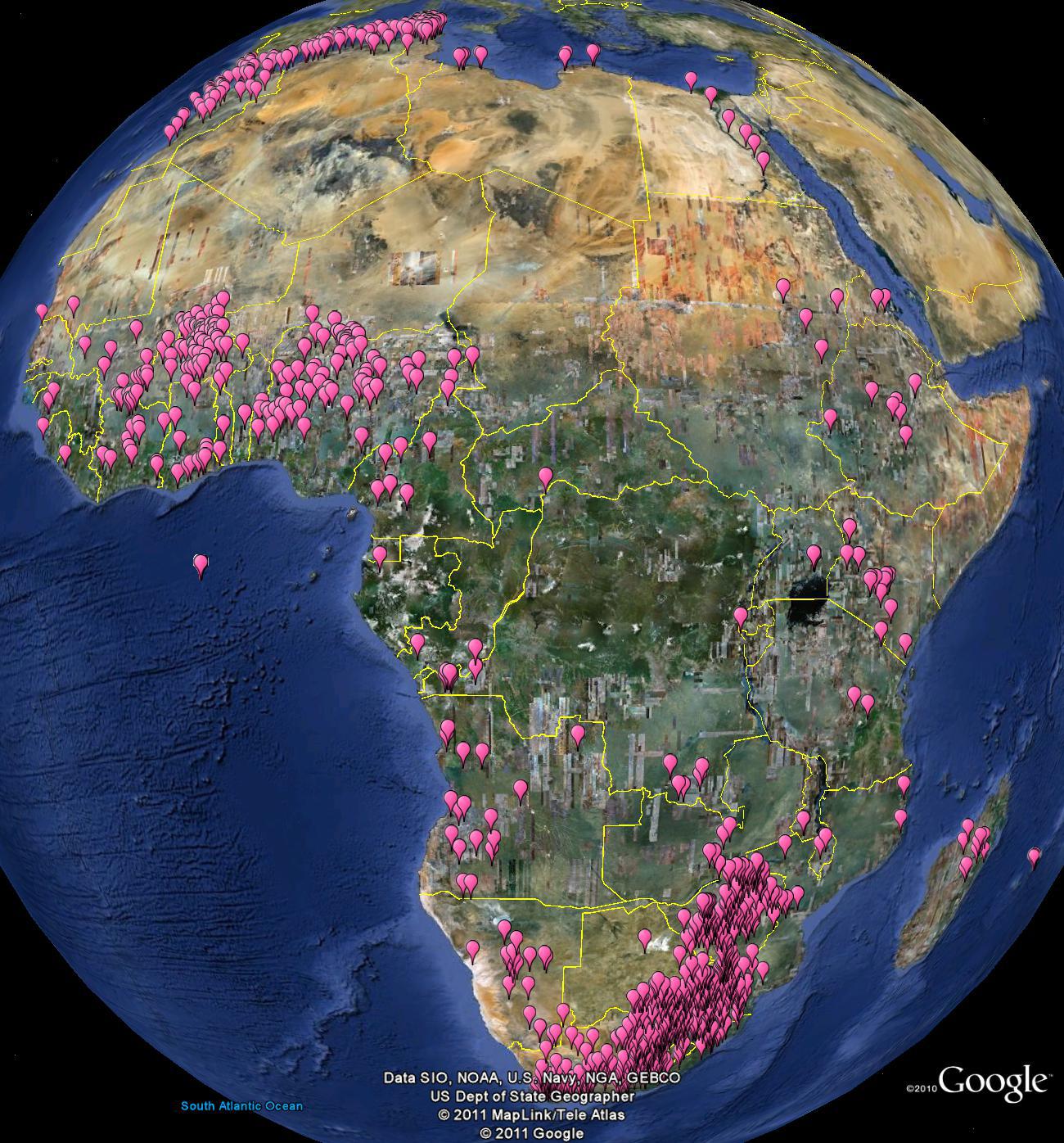
As we watch the devastation wrought by the earthquake in Japan, and mourn the loss of life, we should also reflect on the possible danger to genebanks. The US Geological Survey have a real-time earthquake Google Earth plug-in, and you can download a lot of genebank locations from WIEWS. Mash the two together and zoom in on Japan and you get this.

Fortunately, we’re not getting any indications of damage to Japanese genebanks (the red squares), so far. Something similar could probably be done with threat from tsunamis.

The error of genebanks’ ways

ResearchBlogging.orgThe Crop Science paper by Mark van de Wouw, Rob van Treurena and Theo van Hintum 1 of the Centre for
Genetic Resources, the Netherlands (CGN) probably deserves more than the rather cryptic Nibble we gave it yesterday. It certainly seems to be eliciting some interest in the media.

What van de Wouw and friends did was look in detail at alleged duplicates in a collection, the Dutch collection of old lettuce cultivars to be precise. I say alleged because when the researchers DNA fingerprinted plants from accessions which by all rights should have been identical, they weren’t. Known duplicates turned out to be unknown something elses. About 20% of accessions with the same cultivar name (out of a total of 283 accessions in 124 name groups) were in fact significantly different at the DNA level, and they shouldn’t have been. So, for example, 3 of the 12 accessions labelled Maikönig (or similar) in the collection are probably no such thing:

Lettuce is inbreeding, and “[d]iversity within accessions and accidental crossing is not a major issue for cultivars of a self-pollinating crop…” The researchers therefore blame “mislabeling and seed contaminations during processing and handling of the accessions,” mostly “from the period before uptake in the CGN collection.” Better procedures and better documentation systems now exist, and similar problems are much less likely, at least in properly run genebanks.

But what to do with the existing errors? Just remove the erroneous name from the database? Or get rid of the seeds too?

Removing the seeds might be the preferred option, as maintaining a collection is a costly operation and funds are limited… However, if the nonauthentic accession has been extensively evaluated and shown to have valuable characteristics it might be worthwhile to keep the accession, without the cultivar name, in the collection, provided it is confirmed that the accession was already nonauthentic at the time the evaluations were performed. Alternatively, a seed sample could be reacquired in case authentic material is still available elsewhere.

Was it all worth it? Does the significance of this study go beyond the fact that some accessions of old lettuce cultivars in the Dutch genebank may have got mixed up in the past? Well, there are 7.4 million odd accessions in the world’s genebanks, but they’re not all different. Some have no duplicates at all, others dozens. Maybe only about 2 million are unique. That adds to costs, so it would be worthwhile getting rid of a few duplicates. But only if they are in fact truly duplicates, and can easily be identified as such. As the cost of genotyping declines, detecting duplicates (at least in inbreeders and vegetatively propagated species) is becoming cheaper than maintaining them. That may be the most important message to take home from this thought-provoking paper.

Cloven hoofed agrobiodiversity in W1

An intriguing photo by a Flickr contact set off a spate of googling which quickly led to the discovery that there was a “Savile Row Field Day” in October last year, part of a Campaign for Wool. The prime locality in central London was given over to a flock of Exmoor Horn and Bowmont sheep. It’s not exactly groundbreaking (as it were), as far as marketing ploys go, but I wish I’d been there.

http://www.youtube.com/watch?v=r0LtQBwXW1s