Strategies that minimize one risk…may augment another risk… Peasant farmers are perfectly conversant with such linkages. The neglect of peasant agriculture by both donors and governments is among the deeper causes of current crises, along with the increasing inequality that deprives them of secure tenure to land and other resources, reducing benefits they can expect to receive from stewardship of these resources.
That comes towards the end of a lengthy, information-dense and closely argued paper on cassava’s domestication, evolution and chemical ecology by Doyle MacKey and others. Coincidentally — or perhaps not — McKey also has a paper out just now on the evolutionary ecology of vegetatively propagated crops in general. But that’s something for a future post, perhaps. Back to cassava.
Well, as I say, there’s a lot of stuff in the paper, but let me focus on a just a couple of things here. Some cassava varieties are high in poisonous cyanogens, requiring laborious and time-consuming processing for detoxification, which is almost exclusively done by women and, according to at least one anthropologist, serves to control them, “by limiting their freedom of action, in male-dominated societies.” So let’s replace those high-cyanogen, “bitter” varieties with low-cyanogen, “sweet” varieties, right?
Well, not so fast. ‘‘Interestingly enough, the women that are the custodians of this crop do not perceive the processing or the toxin to be a problem.’’ Bitter manioc is in fact better for food security for at least three reasons: it is protected against pests; immediate processing deters thieving; and the value added through processing reduces the social obligation to share. Overall, therefore, “processing bitter manioc is viewed as a useful and valorizing activity.”
But there are regular epidemics still in some parts of Africa of the paralytic disease konzo, which is “associated with several weeks of almost exclusive consumption of insufficiently processed bitter cassava.” Surely low-cyanogen varieties would be welcome there?
Again, the authors are dubious. They point out that agronomic practices, in particular careful nutrient management, together with adequate processing and a reasonably protein-rich diet are perfectly sufficient to manage the toxicity problem, and in fact normally do so. It is mainly when socioeconomic stability breaks down that konzo erupts. As they trenchantly put it: “This crop needs peace.” And reasonable rainfall. Drought stress tends to increase cyanogen levels. Plus, “[a]s they face food shortage, people may then take short cuts in processing bitter manioc.” In both cases, new, faster, more efficient detoxification methods will have a bigger impact than sweet varieties, with their greater susceptibility to pests.
In general, cassava is expected to be comparatively little affected by climate change, and is being promoted in some quarters as a “food for the future.” Fair enough, say the authors, but this
…will need to be accompanied by the necessary education for processing, as planting less bitter cultivars appears not to be a solution. Farmers have good reasons for preferring bitter varieties.
Indeed they do. So let me end with another heady quote, again from the concluding section of the paper, a little further on from the quote I started with.
We must have the humility and the broad vision to accept that our science can provide essential pieces, but only pieces, of viable solutions. ‘‘Modern’’ science can work in creative ways with folk knowledge. But no technological fix is a ‘‘magic bullet’’.
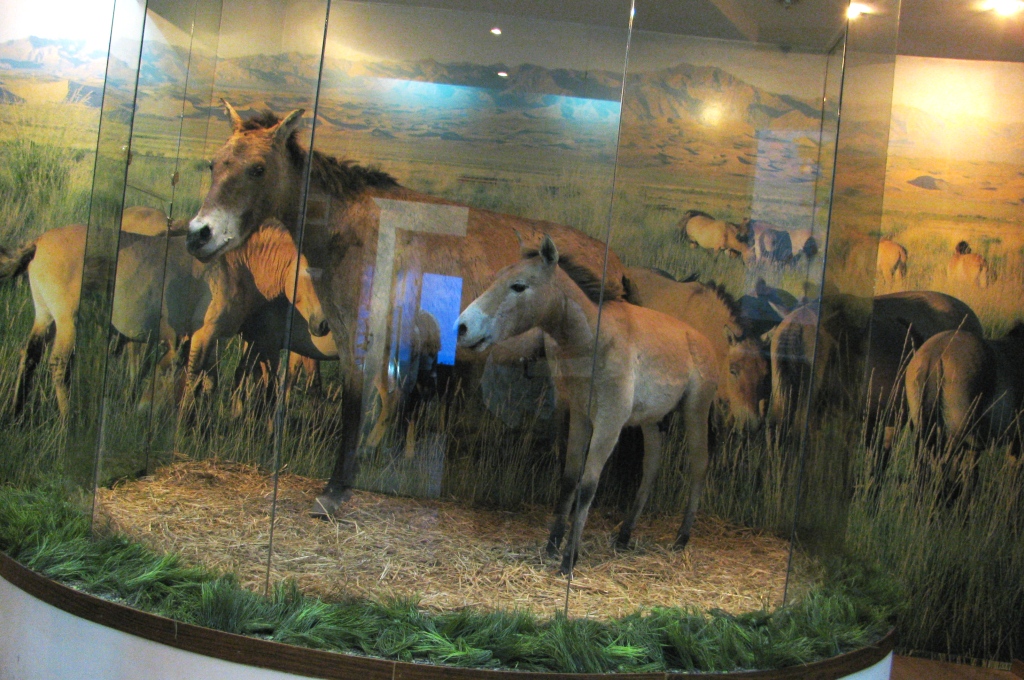
 They may be trying to develop and diversify their agriculture now (well, since the 1950s), but Mongolians are traditionally very much a nomadic herding culture, with the horse at its centre. 1 One expression of that is how early kids learn to ride.