- The Parque de la Papa will save us all.
- David Fairchild tried to save us all.
- Gardens in Florence and Warsaw team up to save citrus oddities.
- Save land through indigenous mapping.
Nibbles: International genebanks, Ahmed Amri, Genebank management, Nutrition stories, Spice nomenclature, Breeding against waste, Cuneiform tablets, Breadfruit, Ag risk, Giant pineapple, Chiles in Mexico, Solanum jamesii, Seed Week, Kenyan community seedbank, Lost apples
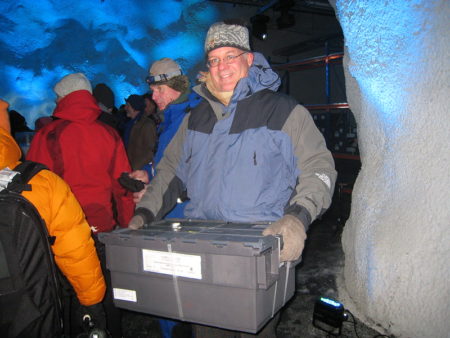
- The CGIAR genebanks in the limelight.
- My friend Ahmed Amri is a big reason for the success of the above.
- The dual role of genebank managers like Ahmed.
- Feel-good nutrition stories needed.
- Rosemary gets a name change. Not many people hurt.
- Fighting food waste through breeding.
- Babylonian cooking deciphered.
- Breadfruit (and Diane Ragone) on TV.
- Maize looks doomed in Zambia. All hail sorghum.
- Food exhibition at the Fitzwilliam.
- Chiltepin culture.
- The forgotten potato of the Four Corners.
- Hey, it’s Seed Week 2019 in the UK and Ireland!
- Something similar in Kenya too, thanks to Bioversity and CCAFS.
- There’s always an apple detective story around this time of year.
Brainfood: Cereal grains, Cerrado threats, Potato conservation, Maize rhizosphere, Coconut diversification, Lombard landraces, Lupinus evaluation, Genetic markers, Pathogen evolution, PAs & productivity, Agricultural expansion, Trade & obesity, ILRI genebank
- Large‐scale GWAS in sorghum reveals common genetic control of grain size among cereals. QTLs for grain size potential (rather than capacity to fill grains) identified in sorghum, turn out to be similar to other cereals.
- Linking global drivers of agricultural trade to on-the-ground impacts on biodiversity. Specific soy buyers with disproportionate impact on endemic and threatened cerrado species identified by fancy maths. Yes, you’re probably responsible for the plight of the giant anteater.
- Long-term conservation of potato genetic resources: Methods and status of conservation. Useful brief roundup.
- Impacts of Maize Domestication and Breeding on Rhizosphere Microbial Community Recruitment from a Nutrient Depleted Agricultural Soil. Hybrids changed the rhizosphere.
- Genome-wide diversity of northern South America cultivated Coconut (Cocus nucifera L.) uncovers diversification times and targets of domestication of coconut globally. Atlantic tall cultivar splits from Pacific cultivars approximately 5400 years ago, then Pacific Tall and Pacific Dwarf cultivars split from a shared common ancestor 1600 years ago.
- Forest pattern, not just amount, influences dietary quality in five African countries. Forests are good for you.
- Plant agro-biodiversity needs protection, study and promotion: results of research conducted in Lombardy region (Northern Italy). 78% of landraces lost in last 70-80 years, 72 left.
- Genomic prediction of grain yield in contrasting environments for white lupin genetic resources. It’s worth genotyping everything…
- Genetics without genes? The centrality of genetic markers in livestock genetics and genomics. …but genotyping-by-sequencing may not be necessary.
- Opportunities from the genetic diversity of the ILRI genebank forage germplasm collection. Genotyping-by-sequencing and morphology used to define mini-core subsets for important forages. So it is necessary for some things?
- The Green Revolution shaped the population structure of the rice pathogen Xanthomonas oryzae pv. oryzae. Strong selection leads to adaptation, fast. Well I never!
- Land productivity dynamics in and around protected areas globally from 1999 to 2013. Productivity increases are most common outside protected areas. But does that increase or decrease pressure on them? See below.
- Assessing the ecological vulnerability of forest landscape to agricultural frontier expansion in the Central Highlands of Vietnam. This is how you find out.
- Weight Gains from Trade in Foods: Evidence from Mexico. Food imports from US explain 20% of the increase in obesity in Mexican women.
Nibbles: CATIE coffee, Cajanus Down Under, Coloured wheat, Rice walk, AnGR in Uganda, Coconut sequestration, Private sector, Hawaiian taro, Going wild sustainably, DATAR, Old yeast, Pharaonic beer, Charley Rick, Liberate Diversity, Cost benefit, Catastrophe now
- The CATIE coffee collection gets a really close look.
- Pigeonpeas for Australia.
- Coloured wheat for India.
- Also in India, a rice institute opens its doors.
- A livestock genebank for Uganda.
- The coconut for the Caribbean.
- Why crop-based businesses should pay for crop conservation. Holding my breath…
- Hawaiians reclaim taro. Breathing again…
- How to use wild species sustainably.
- Diversity Assessment Tool for Agrobiodiversity and Resilience. Yeah, what we need is more software.
- 16th century beer. From Quito, the first city to brew beer in South America.
- Egyptians: I see that and raise you about 6 thousand years.
- You too can drink Leonardo’s wine. Wonder if he liked beer.
- Exploring for wild tomatoes.
- Liberating diversity.
- Agricultural R&D is in the top 3 value-for-money development interventions. Just saying…
- Seconded: “Multiplying the budget of CGIAR, the world’s largest global agricultural innovation network, would be a good start. And, in a time of great disruptions, we ought to prioritize Sustainable Development Goal 2.4, implementing resilient agricultural practices, with a greater focus on smallholder farmers in developing countries.” And 2.5!!!
Payne gains
Many congratulations to Dr Tom Payne, Head of CIMMYT Wheat Germplasm Bank on receiving the Frank N. Meyer Medal, which recognizes outstanding contributions to the conservation and use of crop diversity.