- Signatures of positive selection in African Butana and Kenana dairy zebu cattle. Cattle breeds from marginal environments show signs of selection in genome regions associated with adaptation to marginal environments.
- The extent and predictability of the biodiversity–carbon correlation. Co-benefits in about 20% of tropical regions.
- Consistent effects of biodiversity loss on multifunctionality across contrasting ecosystems. Losing biodiversity has different effects on individual functions across ecosystems, but consistent effects on the overall impact on functionality. If you see what I mean.
- Cassava bread in Nigeria: the potential of ‘orphan crop’ innovation for building more resilient food systems. The end of the value chain is the important bit.
- Scaling up: A guide to high throughput genomic approaches for biodiversity analysis. Will probably need to be revised next year.
- Speed breeding is a powerful tool to accelerate crop research and breeding. Shuttle breeding on steroids.
- A roadmap for breeding orphan leafy vegetable species: a case study of Gynandropsis gynandra (Cleomaceae). Could do with some high-throughput speed breeding focused on the end of the value chain. How’s that for a coincidence (see 3 entries above)?
- Impact of Crop Diversification on Rural Poverty in Nepal. Growing high-value vegetables can help. Is Cleome high enough value, I wonder, not for the first time?
- Planning for food security in a changing climate. Actually it starts with envisioning new crop management systems, then comes breeding (see entry above).
- A global map of travel time to cities to assess inequalities in accessibility in 2015. Over 10 years in the making, I’m told. Let the mashups begin.
- An assessment of threats to terrestrial protected areas. Number of threats increases with accessibility. Somebody mention mashups?
- Self-medication by orang-utans (Pongo pygmaeus) using bioactive properties of Dracaena cantleyi. External application as anti-inflammatory done by both orangutans and local indigenous human populations.
- Yield effects of rust-resistant wheat varieties in Ethiopia. Improved resistant varieties are better, except under abiotic stress, which is why farmers are going back to traditional varieties. But are they comparing apples and oranges (as it were)?
Brainfood: Coffee apocalypse, Barley journey, Haplotype cores, Pollinator conservation, Rooting for tubers, Aussie CWR, European veggies, Capsicum evolution, Wheat genome
- Climate change adaptation of coffee production in space and time. There’s a plan, at least for Nicaragua.
- Journey to the east: Diverse routes and variable flowering times for wheat and barley en route to prehistoric China. Growing in diverse environments pre-adapted barley for its shift to spring sowing and move eastwards to China.
- Capturing haplotypes in germplasm core collections using bioinformatics. Fortunately, “the number of accessions necessary to capture a given percentage of the haplotypic diversity present in the entire collection can be estimated.”
- Pollinator Diversity: Distribution, Ecological Function, and Conservation. 350,000 species!
- Roots, Tubers and Bananas: Planning and research for climate resilience. Much the same, but faster.
- Priorities for enhancing the ex situ conservation and use of Australian crop wild relatives. Go north, young woman.
- Consequences of climate change for conserving leafy vegetable CWR in Europe. Go, err, northwest.
- Phylogenetic relationships, diversification and expansion of chili peppers (Capsicum, Solanaceae). Monophyletic clade which originated along the Andes of W to NW South America and spread clockwise around the Amazon.
- The Aegilops tauschii genome reveals multiple impacts of transposons. The D genome bites the dust.
Nibbles: Joanne Labate, Gebisa Ejeta, David Spooner, Strawberry 101, Mad honey, First figs, Agrobiodiversity maps, School project, Takesgiving, Private investment
- USDA vegetable crop curator tells it like it is.
- $5 million to find more Striga resistance genes in sorghum.
- Wild potato herbarium specimens find good home.
- How two New World strawberries got together in the Old World and then spread all over the world.
- Hallucinogenic honey: what could possibly go wrong?
- First farmers gave a fig.
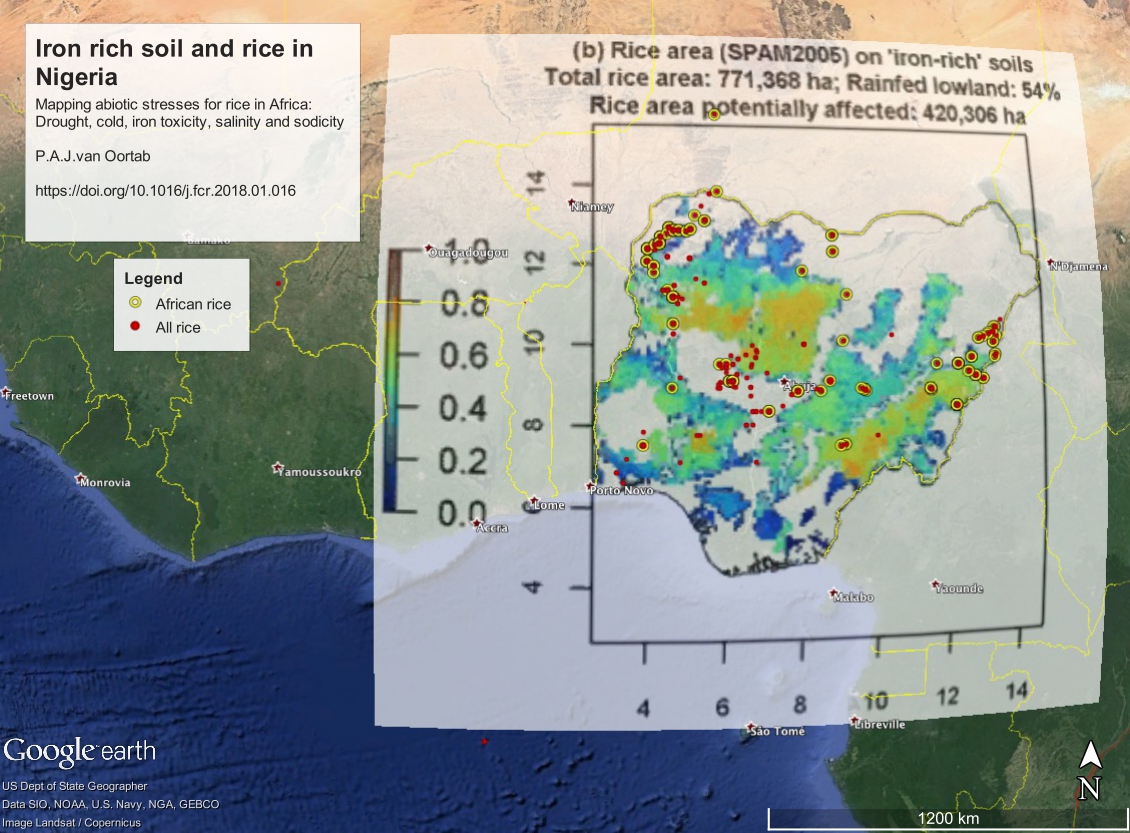
- The other of all agrobiodiversity map mashups.
- Cool school project on crop diversity in Europe.
- In other news, “Columbusing” is a thing.
- Private sector investment in conservation: Turning “small and new” into “big and familiar.”
Brainfood: Banana diversity, Cacao and CC, Coffee and CC, Zosya diversity, Certification, Genetic surrogates, Potato diversity, Food sovereignty, Swiss wheat, Seed storage, Golden potato
- Diversity and morphological characterization of Musa spp. in North Kivu and Ituri provinces, Eastern Democratic Republic of Congo. New cultivars still being discovered.
- A review of research on the effects of drought and temperature stress and increased CO2 on Theobroma cacao L., and the role of genetic diversity to address climate change. We have the diversity. But for how long?
- Climate change adaptation of coffee production in space and time. Gonna need Plans B and C. But do we have the diversity?
- Evaluation and Breeding of Zoysiagrass Using Japan’s Natural Genetic Resources. Stick to morphology.
- Where are commodity crops certified, and what does it mean for conservation and poverty alleviation? Less for poverty alleviation than for conservation. But more and better spatial data needed, especially on organic certification.
- Environmental and geographic variables are effective surrogates for genetic variation in conservation planning. Phew!
- Genome diversity of tuber-bearing Solanum uncovers complex evolutionary history and targets of domestication in the cultivated potato. More diversity in the landraces compared to wild species than in any other crop, few genes involved in early improvement, and different loci for adaptation to uplands and lowlands; also, wild relatives involved in diversification of long-day types.
- Agricultural biodiversity is sustained in the framework of food sovereignty. Peasants feed the world.
- Crop domestication facilitated rapid geographical expansion of a specialist pollinator, the squash bee Peponapis pruinosa. Bee follows crop follows people.
- Unlocking the diversity of genebanks: whole-genome marker analysis of Swiss bread wheat and spelt. Early breeders missed some stuff.
- A probabilistic model for tropical tree seed desiccation tolerance and storage classification. Predict storage behaviour from morphology.
- Potential of golden potatoes to improve vitamin A and vitamin E status in developing countries. Here we go again.
Seeds in motion

I guess it’s an occupational hazard, but whenever I see such maps, as in the new atlas Rural Africa in motion. Dynamics and drivers of migration south of the Sahara from FAO, my first question is: how many of those people are carrying seeds?